How to Drain Pipes for Winter: A Homeowner's Guide
Learn the safest, step-by-step method to drain your home's water pipes for winter. Practical tips, tools, and checks to prevent burst pipes and costly repairs.


Drain and winterize your home's water pipes by shutting off the main supply, draining exterior lines, and removing water from appliances. This two-part approach reduces pressure, prevents bursts, and minimizes repairs. Read on for a detailed step-by-step, safety checks, and pro tips from Drain Guide. Start now to avoid winter damage.
Why winter drainage matters
Winter poses a serious risk to homes with even modest amounts of water in hidden pipes. When temperatures plummet below freezing, any water left in the lines can freeze, expand, and crack copper or PVC pipes. The result is often a slow drip that becomes a flood once the ice thaws, or a sudden burst that floods ceilings and basements. Draining and winterizing your pipes reduces the amount of water that can freeze and creates space for air to circulate, limiting the pressure buildup behind frozen sections. According to Drain Guide, proactive winterization is a prudent investment for homeowners who want to avoid costly repairs and long outages. Remember: the goal is not to dry every inch of pipe, but to reduce water in vulnerable segments—exterior lines, hose bibs, and dead-ends behind cabinets. This foundation sets the stage for the following steps that reduce risk and simplify reactivation in spring.
While some homes are outfitted with heated basements or well-insulated crawl spaces, extreme cold can still find weak points. If you have a well with a pressure tank, a backflow preventer, or a private well pump, these components can be damaged by freezing water, so plan to drain or protect them as well. The key is a methodical approach: identify all fixtures likely to hold water, map a drainage path that ends away from your foundation, and ensure you won’t be draining into an electrical panel or other hazards. This foundation sets the stage for the following steps that reduce risk and simplify reactivation in spring.
Safety and planning before you start
Before you touch a valve, plan the steps and take safety precautions. Shut off the main water supply first; verify the shut-off works by opening a cold faucet slightly to confirm no flow returns. If you have a gas water heater, switch off the gas supply or set it to pilot, and ensure the area around the heater is well-ventilated. If you have an electric water heater, switch off the circuit breaker that powers it to prevent the heating elements from energizing while the tank is drained. Wear non-slip shoes, gloves, and eye protection, and have a flashlight for dim spaces. Gather a bucket, towels, a spare hose, and a few rags so you can direct water away from foundations, electrical outlets, or vents. Finally, check the outdoor environment; if the ground is already frozen or there is snow, you’ll need to adapt by draining more carefully and possibly insulating outdoor lines. Drain Guide emphasizes a calm, deliberate pace to prevent mistakes.
The drainage sequence (overview)
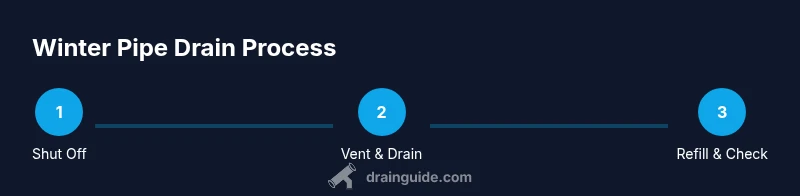
In most homes, the drainage process can be broken into three zones: exterior lines, interior cold-water lines, and appliances including the water heater. Air must replace the water as it leaves, so venting is essential to avoid suction that can slow or stall drainage. Start with exterior lines to limit water exposure in the house, then move to interior lines from the top floor down to the lowest level, and finally drain appliances. After all the water is removed from the main lines, begin a controlled refill, checking for leaks at every fixture. This overview provides the framework that the step-by-step instructions below will expand on with precise actions, order, and timing.
Draining outdoor lines and hose bibs
Outdoor hose bibs are a common source of bursts if left full. Begin by turning off the exterior shut-off valve and opening the spigot to allow air into the line. Run a little water from interior cold taps to push water toward the outdoors until the stream becomes a gentle trickle. Disconnect hoses, drain any remaining water, and replace or cap the bib if possible. If you have a backflow preventer, drain it per the manufacturer’s instructions. Direct the water away from the foundation, meters, and electrical outlets. This step significantly reduces the risk of cracked bibs and burst outdoor piping when temperatures plummet.
Draining interior lines and appliances
Open the highest cold-water valve you can access, usually on an upper-floor fixture, and then gradually open lower fixtures to allow water to exit and air to rise through the system. Use a bucket to catch water and a towel to keep surfaces dry. For the water heater, attach a drain hose to the heater’s drain valve and open slowly to avoid a rapid pressure surge; drain the tank as directed by its manual, then close the valve and detach the hose. For dishwashers and washing machines, run a short draining cycle with the water valves closed to expel residual water from hoses and traps. If you have a sump pump or a well-pump system, follow manufacturer guidance for draining or isolating the pump to prevent freezing.
Refill, test, and finalize
With all lines drained, close any open fixtures and begin a slow, controlled refill by reopening the main shut-off valve. Start with cold lines to push air out before the hot side comes online. As fixtures begin to refill, bleed each one until a steady stream of water flows and air stops escaping. Inspect all visible connections for leaks and re-insulate exposed pipes in unheated spaces. Once the system is full and dry, you can restore power to the water heater and resume normal use. Keep monitoring the system for the first hours of operation to catch any sneaky leaks early. For later reference, label your shut-offs and store your winterization tools in a dedicated spot so you’re ready for next year's cold season.
Authoritative sources
- https://www.energy.gov/energysaver/winterizing-your-pipes
- https://www.thisoldhouse.com
- https://www.familyhandyman.com
Tools & Materials
- Main shut-off valve wrench(To close the home's main water valve)
- Adjustable wrench(For hose bibs and fittings)
- Screwdrivers (Phillips and flathead)(Operate screws on fixtures and hose bibs)
- Pliers(Grip fittings and clamps)
- Bucket(s)(Catch water from open fixtures)
- Garden hose(Direct water away from foundations)
- Rags or towels(Clean spills and dry surfaces)
- Gloves(Protect hands from edges and sharp fittings)
- Hose bib covers/insulation(Optional to protect outdoor bibs)
- Flashlight(Illumination in dark spaces)
Steps
Estimated time: 60-90 minutes
- 1
Shut off the main water supply and power to the water heater
Locate the main shut-off valve and turn it clockwise until fully closed. If you have a gas water heater, switch off the gas and set the unit to pilot; for electric, switch off the circuit breaker. This prevents pressure buildup and ensures the system won’t refill while you drain.
Tip: Double-check by opening a cold faucet to confirm no flow. - 2
Vent the system by opening outdoor and indoor fixtures
Open exterior hose bibs fully and run interior cold faucets enough to allow air to push water out. This venting speeds up drainage and prevents air locks.
Tip: Direct water away from foundations and electrical meters. - 3
Drain main lines from top to bottom
Starting with the highest fixtures, open hot and cold taps to let water escape and air replace it. Move to progressively lower fixtures until water flow slows to a trickle.
Tip: Use a bucket to catch water and avoid spills. - 4
Drain the water heater and appliances
Attach a drain hose to the water heater’s drain valve and open slowly. Drain the tank completely, then close and remove the hose. For washers/dishwashers, run a drain cycle with the valves off to expel residual water.
Tip: Do not open the heater valve too fast; sudden pressure can surge. - 5
Close fixtures and begin controlled refilling
Close all fixtures and slowly reopen the main valve to begin refilling. Start with cold lines, allowing air to escape before restoring hot water usage.
Tip: Refill slowly to watch for leaks and relieve pressure gradually. - 6
Test for leaks and complete final checks
After the system is full, check all exposed connections for leaks and inspect outdoor bibs. Re-cover or insulate outdoor pipes and restore power to the water heater once the system is fully filled and free of leaks.
Tip: Keep an eye on the first cycle of use for any drip or leak signs.
Got Questions?
Do I need to drain the hot water heater when winterizing pipes?
Yes. Draining the tank removes stored water and reduces pressure while the system is idle. Follow the manufacturer’s instructions for safe draining and re-pressurizing the tank.
Yes—drain the tank according to the manual, and re-pressurize slowly after refilling.
Can I blow out pipes with compressed air?
Blowing compressed air into home pipes can cause pipe damage or force water into hidden pockets. It’s generally not recommended for residential winterization.
No. Using compressed air can rupture weak points or push water into places that are hard to dry.
Should I drain every fixture?
Yes. Draining or opening fixtures from the top floor down helps remove most water and air from the system, reducing freezing risk.
Yes—drain or open fixtures, starting high, then moving downward.
What about traps and vents?
Trap seals can dry out during winterization; re-prime them when refilling. Do not bypass the vent system; it’s needed to prevent siphoning and drainage issues.
Keep trap water levels and avoid blocking vents; you’ll re-prime after refilling.
When should I call a professional?
If you encounter persistent leaks, frozen shut-offs, or you’re unsure of the pipe layout, contact a licensed plumber for safety and effective winterization.
If in doubt, call a pro to avoid costly mistakes.
Watch Video
The Essentials
- Stop water flow before starting
- Vent and drain from top to bottom
- Drain outdoor lines to prevent bursts
- Test for leaks after refilling