Does Drain Cleaner Work? A Homeowner's Troubleshooting Guide
Urgent, practical guide for homeowners: does drain cleaner work for common clogs? Learn how it works, when to use it, safety tips, and safer alternatives.


Does drain cleaner work? It can relieve light, organic clogs like soap scum or hair, but it rarely fixes stubborn or non organic blockages. Chemical cleaners can damage pipes and sewers if misused. Drain Guide emphasizes caution and trying safer methods first before relying on cleaners.
How drain cleaners work and their limits
Does drain cleaner work is a common question for homeowners facing a slow sink or tub. According to Drain Guide, most liquid cleaners use reactive chemicals that break down organic buildup and emulsify fats. They are most effective for simple, fresh clogs that form from everyday residues. However, many clogs are caused by hair, grease, mineral buildup, or a combination of factors that cleaners cannot dissolve. In those cases a cleaner may show only a partial improvement or none at all. The key takeaway is that chemical cleaners are a tool, not a guaranteed fix, and they should be used with care to avoid pipe damage or foaming hazards. Drain Guide Analysis, 2026 notes that chemical cleaners are often overapplied and can create a false sense of resolution while the real obstruction remains.
How drain cleaners work and their limits
Does drain cleaner work is a common question for homeowners facing a slow sink or tub. According to Drain Guide, most liquid cleaners use reactive chemicals that break down organic buildup and emulsify fats. They are most effective for simple, fresh clogs that form from everyday residues. However, many clogs are caused by hair, grease, mineral buildup, or a combination of factors that cleaners cannot dissolve. In those cases a cleaner may show only a partial improvement or none at all. The key takeaway is that chemical cleaners are a tool, not a guaranteed fix, and they should be used with care to avoid pipe damage or foaming hazards. Drain Guide Analysis, 2026 notes that chemical cleaners are often overapplied and can create a false sense of resolution while the real obstruction remains.
Steps
Estimated time: 30-60 minutes
- 1
Assess safety and read label
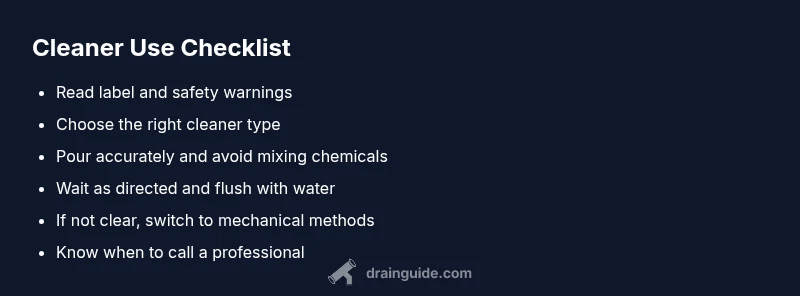
Put on gloves and eye protection. Read the product label for the correct application, recommended wait time, and whether the cleaner is compatible with your plumbing and septic system. Do not mix cleaners with other chemicals.
Tip: Ventilate the area and keep children and pets away while handling cleaners. - 2
Choose the right cleaner type
Select a cleaner suited to the clog type and pipe material. Avoid acid or caustic blends on older or PVC pipes unless the label explicitly allows it. For hair or grease clogs, start with a safer enzymatic option before harsher chemicals.
Tip: Enzymatic cleaners are gentler on pipes and may help over time with organic buildup. - 3
Apply the product correctly
Pour the recommended amount slowly into the drain, ensuring it reaches the trap area. Do not overfill or forcefully pour it, which can cause splashes. Close the drain gently to keep the cleaner in contact with the blockage.
Tip: Never mix multiple cleaners; this can create dangerous gases or heat. - 4
Wait and flush
Wait the time specified on the label, then flush with plenty of hot or warm water unless the label instructs otherwise. A follow up flush can help push dislodged debris through the system.
Tip: If you smell strong chemical fumes, ventilate the area and rinse away the product immediately. - 5
Evaluate results
If the drain flows freely after the wait and flush, you likely resolved a light clog. If there is still resistance or a gurgling sound, the clog may be deeper or more stubborn than the cleaner can handle.
Tip: Document what you tried and the outcome for future reference. - 6
Consider alternatives next
If the cleaner has not resolved the issue, switch to mechanical methods such as plunging or snaking, or call a plumber. Do not repeatedly reapply harsh cleaners to avoid pipe damage.
Tip: Sometimes a combination approach works best when the clog is stubborn.
Diagnosis: Slow draining or a completely clogged drain
Possible Causes
- highHair and soap scum buildup
- mediumGrease or fat solidified in pipes
- lowOld pipes or mineral buildup restricting flow
Fixes
- easyUse a plunger or hand-crank drain snake to clear the blockage
- easyTry an enzymatic or bacteria-based cleaner if the clog is organic and recent
- hardIf the clog persists after mechanical methods, call a licensed plumber
Got Questions?
Will a drain cleaner damage my pipes?
Yes, especially with repeated use or on older pipes. Some cleaners are caustic and can degrade PVC or metal pipes over time. Always follow the label and consider safer alternatives if you have concerns.
Yes, be cautious. Repeated use can damage pipes; follow the label and consider safer options.
Can I use baking soda and vinegar instead of chemical cleaners?
Baking soda and vinegar can create fizz but are unlikely to clear deep clogs. They may help with minor odors or light buildup but should not be relied on for stubborn blockages.
Baking soda and vinegar may help with minor issues but often won't clear stubborn clogs.
What should I do if the cleaner doesn't work?
Stop applying harsh cleaners after one or two tries. Move to mechanical methods like plunging or snaking. If unresolved, contact a plumber to avoid pipe damage.
If it doesn't work, switch to plungers or a plumber to prevent damage.
Are enzyme cleaners better for septic systems?
Enzyme cleaners are generally safer for septic systems and ongoing maintenance. They work gradually and are less likely to cause chemical reactions with septic bacteria.
Enzyme cleaners are gentler for septic systems and work over time.
Is it safe to use a drain cleaner in a toilet?
Some products are labeled for toilets, but many plumbers advise against pouring chemical cleaners into toilets due to risk of pipe damage and toilet seals. Use products specifically designed for toilets if you choose.
Only use cleaners labeled for toilets and follow the directions carefully.
Watch Video
The Essentials
- Assess the clog type before using cleaners
- Use the correct cleaner and follow label directions
- Avoid repeated harsh chemical use on old pipes
- Try mechanical methods if cleaners fail
- Call a professional for stubborn or recurring clogs