How to Use Drain Cleaner Safely: A Step-by-Step Guide
Learn the safe, proper method to use drain cleaner at home. This Drain Guide guide covers tools, steps, safety tips, and common pitfalls to avoid.


According to Drain Guide, this quick guide explains how to use drain cleaner safely and effectively. You will learn how to choose the right product, protect yourself, apply the cleaner, and verify results. This approach aligns with industry best practices and helps homeowners avoid common mistakes. We also cover safety considerations and when to call a professional. Follow the steps below for a calm, informed approach.
What Drain Cleaners Do and When to Use Them
Drain cleaners are chemical products designed to dissolve organic clogs such as hair, soap scum, grease, and food debris. They differ from mechanical methods like plungers or drain snakes and from enzymatic cleaners that slowly digest organic matter. Use drain cleaners only for clear, plausible clogs in sinks, bathtubs, and showers, and never for pipes that are leaking or completely blocked. If you suspect a more serious issue (e.g., a broken pipe or sewer backup), stop and call a licensed plumber. Drain cleaner effectiveness varies with clog type, pipe material, and the length of the blockage. Always check the product label for compatibility with your plumbing and septic system. According to Drain Guide, improper use can cause pipe damage or hazardous fumes. Safety and label adherence are essential for a safe, successful outcome.
Reading Labels and Choosing a Product
Labels provide essential guidance on how to use drain cleaner safely and effectively. Identify the clog type (organic vs. mineral buildup), determine whether enzymatic cleaners or caustic/preferred cleaners are appropriate, and confirm suitability for your plumbing material (PVC, metal pipes, septic systems). Enzymatic cleaners are gentler and slower but can be safer for regular maintenance, while caustic cleaners act faster but require strict handling and ventilation. Always compare dwell times, the maximum temperature of flush water, and any warnings about mixing products. Drain Guide emphasizes sticking to the label directions and avoiding multi-product mixes to prevent dangerous reactions. If you’re unsure which product to choose, start with an enzymatic option for routine maintenance and consider seeking professional advice for persistent or heavy clogs.
Safety First: PPE and Ventilation
Personal protective equipment (PPE) protects you from splashes and fumes. Wear chemical-resistant gloves, splash goggles, and long sleeves. Ensure good ventilation by opening windows or turning on a fan if you’re using products with strong fumes. Keep children and pets away from the work area. Never mix cleaners with other household chemicals, especially bleach or ammonia-based products, as this can create toxic chlorine or chloramine gases. Drain Guide recommends reading the safety warnings on the label and using products as directed to minimize risk. If you experience dizziness, coughing, or eye irritation, stop immediately and wash exposed skin with soap and water.
Preparing the Area and Planning the Pour
Clear the counter space, place a towel or protective cloth under the drain, and have a bucket or tray handy to catch overflow. Read the full label to determine the correct pour amount and dwell time. Remove standing water from the drain area if the label allows or if you can safely pour a portion of the product away from the drain to avoid splashing. Make sure you understand the exact sequence: pour, wait, then flush. Drain Guide highlights that preparation reduces spill risk and ensures the cleaner maintains contact with the clog for the specified duration.
Step-by-Step Process Overview (What to Expect)
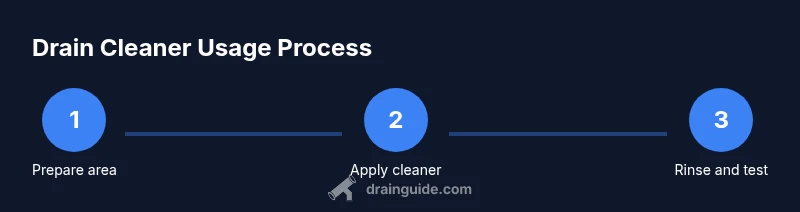
Before you begin, confirm you have the right cleaner and PPE, and study the dwell time specified on the label. The overall process is simple but requires attention: pour the cleaner, wait, flush with water, and test the drain. This overview is designed to set expectations and reduce guesswork. If the clog persists after the recommended dwell time, do not repeatedly top off with cleaner; instead, consider alternative methods or professional assessment. Drain Guide notes that repeated chemical treatments can worsen damage if misused.
Waiting Time and Flushing Habits
Dwell time is the key to effectiveness. Do not rush the process; many products require 15–60 minutes of waiting, depending on the clog and product type. After the wait, flush the drain with a large volume of hot water (or as directed by the label). If the water drains slowly, you may repeat once more with the same product if the label permits; otherwise, stop and pursue other methods. Always finish by running hot water for a few minutes to clear residue and test drain function. Overheating pipes or repeated chemical exposure can cause damage, so follow the recommended limits from the manufacturer. Drain Guide emphasizes patience and label adherence to prevent harm.
What to Do If the Drain Remains Clogged
If a single treatment doesn’t clear the clog, avoid a second heavy chemical application unless the label explicitly allows it. Consider alternative methods such as a plunger, a drain snake, or a professional assessment for stubborn clogs. Repeated chemical exposure can corrode pipes and worsen blockages, especially in older homes. If you have a septic system, use only products labeled safe for septic tanks and avoid those that claim to break down non-degradable materials. When in doubt, consult a licensed plumber to diagnose whether the issue is a clog, a structural problem, or tree roots interfering with a main line.
Authority Sources and Further Reading
- U.S. Environmental Protection Agency (EPA): Home plumbing safety and chemical disposal guidelines. https://www.epa.gov/ entre
- Occupational Safety and Health Administration (OSHA): Chemical safety and PPE basics. https://www.osha.gov
- U.S. Consumer Product Safety Commission (CPSC): Safe use of household cleaners. https://www.cpsc.gov
Practical Tips to Avoid Future Clogs
- Run hot water for a minute after using the sink to help flush residue.
- Use strainers to catch hair and food particles.
- Schedule routine maintenance with enzymatic cleaners for organic buildup.
- Avoid pouring grease or coffee grounds down any drain. Drain Guide recommends regular maintenance as a preventive measure to reduce the need for harsher cleaners.
Tools & Materials
- Liquid drain cleaner (as directed by label)(Choose a product compatible with your plumbing material and septic system if applicable.)
- Rubber gloves(Chemical-resistant, preferably latex-free.)
- Safety goggles(Protect eyes from splashes.)
- Ventilation (open window or fan)(Ventilate the area when using strong fumes.)
- Bucket or tray(Catch drips to protect surfaces.)
- Old towels or rags(Mop up spills promptly.)
- Plunger (optional for post-treatment testing)(Helpful for a quick test after treatment.)
Steps
Estimated time: 60-75 minutes
- 1
Assess blockage and product compatibility
Evaluate the clog type and confirm the chosen cleaner is appropriate for your pipes and septic system. Do not use if you see standing water signs of a larger problem or a possible leak.
Tip: Read the label thoroughly before starting. - 2
Protect yourself and the workspace
Put on gloves and goggles; ensure the area is well-ventilated and clear. Remove children and pets from the area.
Tip: Ventilation is essential for safety. - 3
Pour cleaner into the drain per label
Measure and pour the cleaner exactly as directed. Do not mix products or exceed the recommended amount.
Tip: Accuracy prevents accidents and overexposure. - 4
Wait the recommended dwell time
Allow the cleaner to work for the dwell time specified on the label. Do not rush to test the drain.
Tip: Dwelling times vary by product. - 5
Flush and test the drain
Rinse with hot water as directed and observe drainage. If flow improves, run the water for an additional minute to clear residues.
Tip: A clear flush confirms success. - 6
Escalate if needed
If the clog persists, avoid repeated chemical applications unless the label allows it. Consider mechanical methods or a professional evaluation.
Tip: Persistent clogs may indicate a deeper problem.
Got Questions?
What are the main types of drain cleaners and how do they differ?
Drain cleaners generally fall into enzymatic (biological) and chemical categories. Enzymatic cleaners digest organic material slowly and are milder, while chemical cleaners act faster but require strict handling and ventilation. Always choose based on the clog type and your plumbing.
Enzymatic cleaners digest organic buildup slowly, while chemical cleaners act faster but require careful handling.
Can I use drain cleaner if I have a septic system?
Only use products labeled safe for septic systems. Some cleaners can disrupt beneficial bacteria. When in doubt, consult the product label or seek professional guidance.
Check the label for septic-safe claims or contact the manufacturer.
How long should I wait after pouring the cleaner before testing the drain?
Wait the dwell time specified on the product label, which typically ranges from 15 to 60 minutes depending on the product and clog severity.
Wait the time stated on the label, usually 15 to 60 minutes.
Is it safe to mix drain cleaners with other cleaners?
No. Mixing cleaners can create dangerous gases or reactions. Always use one product at a time and follow the label.
Don't mix cleaners with other products; it can be dangerous.
What should I do if the clog remains after treatment?
If the clog remains, stop applying the chemical and try mechanical methods like a drain snake, or call a plumber. Repeated chemical use can damage pipes.
If it stays clogged, use a snake or call a plumber.
What are safer alternatives to chemical cleaners?
Mechanical methods (plunger, snake), enzyme cleaners for maintenance, and regular flushing with hot water can prevent clogs without harsh chemicals.
Try plungers or enzyme cleaners for ongoing maintenance.
Watch Video
The Essentials
- Protect yourself before starting
- Follow the product label exactly
- Allow the dwell time before flushing
- If in doubt, call a professional
- Regular maintenance helps prevent major clogs