Drain is backing up: Urgent Troubleshooting Guide
A practical, step-by-step guide to diagnose and fix a drain that's backing up. Learn quick fixes, safety tips, and where to turn for professional help when multiple fixtures are affected.


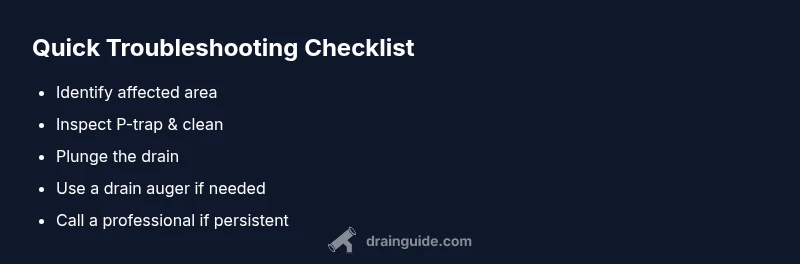
Drain is backing up is usually caused by a clog in the trap or waste line. Start with the simplest fixes: detach and clean the P-trap under the sink, then plunge the drain. If water still backs up, use a drain auger to break the clog. If multiple fixtures are affected, the issue may be a main-line blockage.
Common Causes of a Backing Up Drain
When a drain is backing up, the most frequent culprits are blockages that form in the trap, tailpiece, or horizontal waste line. Hair, soap scum, and food debris are notorious for creating stubborn clogs over time, especially in kitchen and bathroom sinks. In some homes, a buildup can extend into the main line, causing slow drainage in multiple fixtures. According to Drain Guide, preventative maintenance is often more effective than reactive fixes, and understanding the drain path helps homeowners target the right spot quickly. If you notice gurgling sounds, standing water, or a slow drain after a small amount of water is introduced, you’re likely dealing with a partial blockage that needs immediate attention. Remember to work systematically from the open, easily accessible sections toward the main line to avoid creating new clogs in hidden pipes.
Key terms to know: P-trap (the U-shaped pipe under sinks), waste arm (horizontal pipe leaving the trap), and main line (the building’s primary drain). Each plays a role in how the system handles wastewater. Early detection and action can prevent backups from escalating into more expensive problems like sewer backups or water damage.
Common incidents include kitchen sinks with grease buildup, bathroom sinks with hair clogs, and showers with soap scum accumulation. If a backup occurs after using a disposal, avoid running water down the drain while the disposal is jammed, and consider turning off the unit to prevent damage. Having a basic toolkit ready—plunger, adjustable wrench, bucket, and a drain auger—will empower you to address the issue fast while you assess whether a professional is needed.
Quick Checks You Can Do Right Now
If you’re staring at standing water, perform a few safe, quick checks before moving to more invasive fixes. Start by confirming that the trap is accessible and free of leaks. Place a bucket underneath, unscrew the slip-nuts, and inspect for obvious cracks or cracks in the gasket. A loose trap connection can mimic a clogged drain because air escapes and water backs up. Before you dissever the pipes, ensure the water supply is off to avoid accidental spills. If the trap is clear, test the downstream pipe by plunging the drain with a standard plunger—use a wet rag to seal any gaps around the drain opening for an effective seal. If plunging resolves the issue, you’ve likely cleared a minor blockage. If not, it’s time to escalate to a snake or auger. Always avoid chemical drain cleaners as a first line; they can damage pipes and cause a mess if they don’t reach the root of the clog.
Diagnosing the Drain System: A Logical Flow
A systematic diagnostic flow helps you identify the right fix without guessing. Start at the point of use: the kitchen or bathroom sink drain. Observe whether the sink is draining slowly or backing up rapidly. If only one fixture is affected, the problem is likely localized to that branch (P-trap, tailpiece, or a short run). If multiple fixtures back up, the main line or stack could be clogged. Check for venting issues: improper venting can slow drainage and cause gurgling. Inspect for obvious signs of external damage, including exposed sections of pipe that may have shifted or collapsed. A simple test—pour water into different fixtures and listen for changes in flow—can reveal whether a section is draining slowly or not at all. Drain Guide notes that a careful, stepwise approach often reveals the location of the clog and whether professional intervention is needed.
Step-by-Step: Clear a Clogged P-Trap
- Place a bucket under the sink and loosen the P-trap: first the large nut, then the small one. 2) Remove the trap and clean out all debris with a wire brush or old toothbrush. 3) Rinse the trap in clean water and check the washers for wear. 4) Reattach the trap, ensure a snug seal, and run water to test drainage. 5) If water still backs up, proceed to the next step (snake or auger). Pro tip: Clear the trap over the bucket to reduce mess, and keep a spare rubber washer on hand for a tight seal. If the trap shows signs of damage, replace it rather than attempting a repair that could leak later.
Using a Drain Auger or Snake Safely
A drain auger is designed to break through stubborn clogs beyond the trap. Start by feeding the snake into the drain slowly, rotating the handle to advance the tip. When you feel resistance, pull back slightly and rotate to dislodge the clog. Keep the auger in motion to prevent it from snagging on edges. Once you feel the flow improve, remove the auger and run hot water to flush the line. If you experience resistance or the line doesn’t clear, stop and reassess; do not force the auger past a potential bend as you may damage the pipe. For safety, wear gloves and eye protection, and avoid chemical cleaners that may react with the snake.
When to Call a Professional and What to Expect
Professional plumbers are necessary when a simple trap cleanout and snake do not clear the backup, when the main line or sewer stack is involved, or when you notice sewage odors, persistent water backups in multiple fixtures, or wet spots in the yard indicating a sewer line issue. A licensed plumber will perform a camera inspection to locate the clog and inspect the pipe condition. They may use hydro-jetting to clear the line safely, or recommend trenching if the problem lies in older or cracked pipes. Expect a clear diagnosis, a scope of work, and a cost estimate before proceeding. Drain Guide recommends addressing backup early to minimize damage and reduce the risk of sewage exposure.
Prevention: Keeping Drains Clear for the Long Term
Proactive maintenance prevents most backups. Use a drain screen to catch hair and food particles, run hot water after cooking to dissolve fats, and avoid pouring grease down disposal or sink. Periodic flushing with a mixture of baking soda and hot water can slow buildup, followed by vinegar to help with odors. Be mindful of what goes into the disposal—avoid fibrous vegetables, coffee grounds, and starchy foods that tend to cling to pipes. If your pipes are brittle or the home has aging lead or cast iron sections, consult a professional for an assessment. Drain Guide emphasizes routine checks and proper disposal habits to minimize future emergencies.
Common Pitfalls and Safety Precautions
Avoid mixing chemical drain cleaners with each other or with other cleaners; this can produce dangerous fumes or pipe damage. Do not use a grinder or power tools near live electrical outlets. When handling a snake, keep hands away from the shaft and never force the tool through a bend. If you encounter stubborn blockages that require cutting the pipe or replacing sections, turn off the main water supply and call a licensed plumber. Always wear gloves and eye protection when dealing with wastewater, and dispose of any contaminated materials safely.
Steps
Estimated time: 60-90 minutes
- 1
Identify the affected area
Observe which fixture is backing up and whether others are affected. A localized backup points to the trap or short run, while multiple fixtures suggest a main line issue.
Tip: Document which fixtures are affected to help the plumber diagnose quickly. - 2
Inspect and clean the P-trap
Place a bucket underneath, loosen the nuts, remove the trap, and clean out debris. Reassemble and test with water before moving on.
Tip: Keep a spare washer handy for a tight seal. - 3
Plunge the drain
Seal around the drain and vigorously plunge to dislodge a minor clog. If the water drains slowly, repeat a few times and test again.
Tip: Use a wet rag to seal the plunger for best suction. - 4
Use a drain auger
Feed the auger into the drain, rotate as you advance, and pull back to break the clog. Flush with hot water afterward.
Tip: Do not force the auger through a bend; stop and reassess if resistance remains. - 5
Evaluate professional options
If the clog persists or multiple fixtures back up, schedule a professional inspection and follow their recommendations.
Tip: Ask for a written estimate and scope of work before proceeding.
Diagnosis: Drain backing up across fixtures
Possible Causes
- highLocalized clog in P-trap or tailpiece
- mediumGrease or soap buildup in the main line
- lowSewer line or venting issue
Fixes
- easyClean the P-trap and use a plunger to clear minor clogs
- mediumUse a drain auger to break through deeper blockages
- hardCall a licensed plumber if multiple fixtures back up or odors appear
Got Questions?
What should I do first if a sink is backing up?
Begin by inspecting and cleaning the P-trap, then plunge the drain. If water still backs up, try a drain auger. If multiple fixtures are affected, call a professional.
First, check the trap and plunge the drain. If it still backs up, use a snake, and if the problem remains, contact a licensed plumber.
Can chemical cleaners fix a clogged drain?
Chemical cleaners can provide a temporary fix but may damage pipes or traps and often fail for deeper clogs. Use them sparingly and only as a last resort.
Chemical cleaners aren’t ideal for deep or stubborn clogs and can harm pipes. Consider mechanical methods first.
Is a backed-up drain always a sewer problem?
Not always. Backups can result from local blockages or venting issues. Sewer problems are more likely when multiple fixtures back up together and emit odors.
Backups don’t always mean a sewer problem, but if several fixtures back up together or you smell sewage, call a pro.
When should I replace a P-trap?
Replace if the trap is cracked, corroded, or leaks after resealing. A faulty trap can cause ongoing backups and leaks.
If the trap leaks after resealing or looks damaged, replace it for a reliable seal.
How can I prevent future drain backups?
Use screens, avoid pouring grease down drains, run hot water after disposal, and perform periodic maintenance with baking soda and hot water.
Keep hair out with screens, avoid grease, and flush monthly with a baking soda and hot water routine.
Watch Video
The Essentials
- Start with local traps before escalating to main lines.
- A plunger and drain snake are essential DIY tools.
- Persistent backups require professional evaluation.
- Prevention reduces future emergencies.