What Do You Use to Unclog a Drain? A DIY Home Guide
Discover safe, effective methods to unclog drains at home. Learn when to use plungers, drain snakes, natural cleaners, and when to call a pro. Drain Guide provides practical, step-by-step advice for DIY drainage issues.


To unclog a drain, start with a plunger or drain snake, then flush with hot water. Add baking soda and vinegar as a natural option, or enzymatic cleaners for organic clogs. If it remains stubborn, call a professional. According to Drain Guide, a systematic approach resolves most clogs without professional help.
What you use to unclog a drain: A practical framework
When a drain gurgles or won’t drain, the safe, effective path is a sequence that starts with mechanical methods and progresses to more hands-on techniques only if needed. Kitchen sinks, bathroom basins, and showers each pose unique challenges: grease buildup, hair, mineral deposits, or soap scum can cause slow drainage or complete blockages. Drain Guide emphasizes a calm, methodical approach to minimize mess and reduce the risk of pipe damage. This guide outlines the core tools and steps used by homeowners, from basic plungers to manual augers, plus how natural cleaners can help without harming pipes. The goal is to restore flow while protecting seals, traps, and joints. We also discuss when DIY stops making sense and professional help is the safer option. Throughout, safety remains a priority—avoid standing water near electrical outlets, wear gloves, and use protective eyewear if you’re dealing with a clogged toilet or aspirated chemicals. With the right plan, most clogs can be cleared without expensive service calls.
A note on context: different fixtures have different considerations. A kitchen drain deals with grease and food particles, while bathroom drains encounter hair and soap scum. Toilets require a flange-plunger and sometimes a toilet auger. If you’re unsure about pipe material or venting, this is a good moment to consult a professional. Finally, remember that routine maintenance—catching debris, avoiding pouring solids or grease down the drain, and keeping strainers in place—greatly reduces the odds of a major clog.
Mechanical methods: Plunger and drain snake
Mechanical methods rely on physical force to move or grab the blockage. A cup plunger works best on flat surfaces like sinks, while a flange plunger is designed for toilets. Create a tight seal and use steady, deliberate strokes—about 8 to 15 pumps without lifting the seal. If repeated plunging doesn’t budge the clog, switch to a hand auger or drain snake. Insert the coil into the drain until you feel resistance, then rotate the handle clockwise while applying gentle pressure. When you feel the obstruction break free or the coil catches debris, slowly retract it, remove the debris, and flush with hot water. For stubborn blockages deeper in the line, you may need to repeat the process a few times. After clearing, inspect the trap under a sink and clear any collected hair or residue. Rinse the area with warm water and test drainage with a cup of hot water or a simple flush. Remember, mechanical methods risk scratching finishes if you press hard; use slow, controlled movements and keep the area dry to prevent slips.
Practical tip: If you’re cleaning a toilet, don’t use a plunger that’s meant for sinks—use a flange plunger to avoid leaks. For best results, unplug the drain by working the snake gently and avoiding aggressive twisting that could push debris back into the pipe. If you’re not seeing progress after a few cycles, it’s time to move to another method or call a professional.
Natural options: Baking soda, vinegar, hot water, enzymes
Natural methods can be surprisingly effective for routine clogs caused by soap scum, grease, or hair. Start with hot water to dissolve fatty blockages. Then try a combination of baking soda followed by a vinegar pour to generate a fizzing action that can help loosen debris. Let the mixture sit for 15 to 30 minutes, then flush with hot water. For organic clogs and slow drains, enzymatic cleaners can be a gentler alternative that digests organic matter without harsh chemicals. Follow label directions for dosage and contact time. Avoid mixing baking soda with bleach or vinegar with ammonia, as these combinations release hazardous gases. If you have a septic system, choose enzyme-based products and avoid caustic or acid cleaners that can disrupt beneficial bacteria. In all cases, natural methods are slower than mechanical means and may need repeated applications. They are best for maintenance or minor blockages rather than a stubborn clog that causes water to back up into fixtures.
A practical workflow for natural methods: flush with hot water, then apply bicarbonate and vinegar, wait, and flush again. If you rely on enzymatic cleaners, plan for multiple applications over several days rather than expecting instant relief. These methods reduce chemical exposure and are kinder to pipes, but they require patience and repeated effort.
Chemical cleaners: Use with caution
Chemical drain cleaners can be effective for severe clogs, but they carry safety risks and can damage pipes, especially older metal or PVC joints. Read the label and follow the manufacturer's instructions precisely. Do not mix chemical cleaners with other products, and never use them in toilets unless the product is rated for that purpose. Open windows and wear gloves, eye protection, and avoid skin contact. If you use a chemical cleaner, flush with plenty of water after the recommended dwell time and never combine with natural cleaners or hot water immediately after. If the clog persists after a single treatment, stop and seek professional help rather than repeating the application, which increases chemical exposure and risk of damage. For homes with septic systems, use products labeled as septic-safe and avoid harsh concentrates that disrupt bacteria.
A note on safety: never mix drain cleaners with bleach or ammonia; doing so can release toxic gases. If you feel dizzy, nauseated, or encounter a strong chemical odor, evacuate the area and seek fresh air immediately.
Safety, maintenance, and when to call a professional
Safety first: water in contact with electricity or outlets can pose a shock risk. If you’re dealing with a toilet or main line, consider turning off the water supply to minimize accidental overflows while you work. If you’re unsure about pipe material or you encounter persistent odors, it’s wise to consult a licensed plumber. DIY methods are most effective for straightforward clogs in accessible pipes. For persistent issues, or if you notice recurring backups in multiple fixtures, professional inspection can uncover root causes such as pipe damage, tree roots, or venting problems. Preventive maintenance matters: install strainers, discard grease in bins, and give drains a quarterly clean with natural cleaners to limit buildup. Keep a simple log of your methods and outcomes to help future troubleshooting and prevent over-reliance on chemical products.
In summary, most household clogs respond to mechanical or natural methods when performed methodically. Save chemical cleaners for when you fully understand the risk and have no alternative. Drain Guide recommends a deliberate, staged approach that prioritizes safety and pipe integrity.
Quick troubleshooting signs and maintenance to prevent future clogs
Signs of a developing clog include slow drainage that worsens over time, gurgling sounds, or water backing up during the rinse cycle. If you notice these indicators, begin with mechanical methods or a natural cleaner. Regular maintenance extends drain life: use microbially based enzymatic cleaners in older pipes, keep traps clean, and avoid flushing solids or grease. Install strainers and clean them weekly. For households with hair, a catch or screen is a practical investment. In septic systems, choose septic-safe cleaners and avoid products that claim to “break down everything.” Regular attention now can save more extensive plumbing repairs later.
Tools & Materials
- cup plunger (sink/plunger with flange)(Choose the correct plunger for the fixture (toilet vs sink).)
- drain snake / hand auger(1/4–1/2 inch coil; 3–5 ft length is common.)
- bucket or container(Catch water and debris; line the area.)
- rubber gloves(Protect hands; choose thick latex or nitrile.)
- old towel or rags(For cleanup and catching spills.)
- wet/dry vacuum (optional)(For stubborn clogs with suction.)
- baking soda(Use with vinegar for a natural reaction.)
- white vinegar(With baking soda; avoid mixing with certain cleaners.)
- hot water(Boiled or simmered water for flush.)
- enzymatic drain cleaner(Gentler alternative; follow label guidance.)
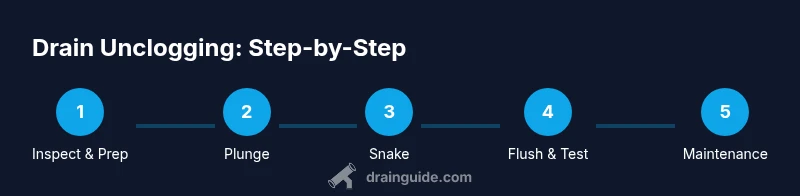
Steps
Estimated time: 60-90 minutes
- 1
Identify the fixture and assess the clog
Determine whether you’re dealing with a kitchen sink, bathroom sink, shower, or toilet. Inspect for visible debris and check if multiple fixtures are affected. This helps you choose the right tool and technique before you start.
Tip: Match the tool to the fixture (toilet vs sink) to avoid ineffective methods or damage. - 2
Prepare the workspace and safety gear
Put on gloves and eye protection. Clear the area, lay towels or rags to catch spills, and place a bucket underneath the drain to collect any water that escapes.
Tip: Ventilate the area and avoid splashing; protect floors and nearby electronics. - 3
Use the plunger correctly
Create a tight seal around the drain opening. For sinks, cover the overflow if present. Pump with controlled pressure for 8–15 strokes without lifting the seal, then attempt to flush with hot water.
Tip: A good seal and steady pumping maximize pressure to dislodge the clog. - 4
Try the drain snake if needed
Insert the coil slowly, rotate the handle clockwise as you push forward, and pull back debris with the coil. Repeat as necessary until you feel the blockage clear, then flush with hot water.
Tip: Feed slowly; avoid forcing through the blockage which can push debris deeper. - 5
Flush and test the drain
Run hot water or a natural cleaner to clear any remaining material. Observe drainage and repeat steps if necessary. If water still backs up, switch to another method or consider professional help.
Tip: Test with a full flow of water to confirm clearance. - 6
Maintain and prevent future clogs
Once clear, clean the area, reinstall any removed components, and establish a regular maintenance routine (strainers, periodic flushes, enzyme cleaners).
Tip: Prevention reduces future calls and preserves pipe integrity.
Got Questions?
What is the quickest way to unclog a clogged kitchen sink?
Start with a plunger or a drain snake if needed, then flush with hot water. If grease is involved, a reported approach is to repeat the process after a short wait. For stubborn clogs, move to a natural cleaner or call a pro.
Plunge first, then try a snake if needed, and flush with hot water. If it doesn’t clear, consider a natural cleaner or a professional.
Can baking soda and vinegar clear a clogged drain?
Baking soda and vinegar can help with minor clogs by creating fizz and loosening debris, but they’re not a guaranteed fix for stubborn blockages.
Baking soda and vinegar can help for light clogs but may not fix stubborn ones.
Is it safe to use chemical drain cleaners?
Chemical cleaners are effective but can damage pipes and fixtures, especially older ones. Use them sparingly and never mix with other cleaners; septic systems require special considerations.
Chemical drain cleaners can damage pipes and should be used with caution; follow the label and avoid mixing.
What should I do if a clog returns quickly?
Recurring clogs may indicate a deeper problem in the line. Document treatments and consider scheduling a professional inspection to diagnose root causes.
If clogs come back quickly, you likely need a professional to look for deeper issues.
When should I call a plumber for a clog?
Call a plumber if plunging and snaking fail after several attempts, if you hear gurgling in the main line, or if sewage backs up.
If DIY fails or you hear gurgling or sewage backup, it’s time to get a professional.
What maintenance helps prevent clogs?
Use strainers, avoid pouring grease, flush with hot water periodically, and consider enzyme-based cleaners for regular maintenance.
Keep drains clear with strainers and regular flushing using safe cleaners.
Watch Video
The Essentials
- Start with mechanical methods before chemicals
- Use the right tool for the fixture (toilet vs sink)
- Avoid mixing cleaners and follow safety guidance
- Regular maintenance prevents future clogs