Why Is Your Dishwasher Not Draining? Quick Troubleshooting
Practical, urgent guidance to diagnose and fix dishwasher drainage problems. Learn safe checks, common causes, and maintenance tips from Drain Guide to restore proper drainage fast.


Most likely, the dishwasher isn’t draining due to a clogged filter or pump screen, which traps debris and blocks water flow. Start by unplugging the unit, removing the lower rack, and taking out the filter to wash out gunk. Reassemble, run a short drain cycle, and watch for improved drainage. If water remains, inspect the drain hose and air gap for kinks or backups.
Why is the Drain Not Working? A Quick Context
If you’re asking why is dishwasher not draining, you’re not alone. The most common culprits are blockages and simple installation gaps that prevent gravity from moving water out of the tub. In many homes, a clogged filter, a jammed pump screen, or a kinked drain hose can turn a normal rinse into a standstill. According to Drain Guide, the majority of daytime drainage faults start with routine debris that collects in the filter or near the sump. This is not a signal you should ignore: standing water can lead to unpleasant odors and bacteria growth if left unchecked, so a methodical approach matters. Treat this as a small emergency and begin with basic checks before moving to more advanced steps. If you follow a clear, methodical path, you can often restore proper drainage without specialized tools.
Quick Checks Before You Dive Deeper
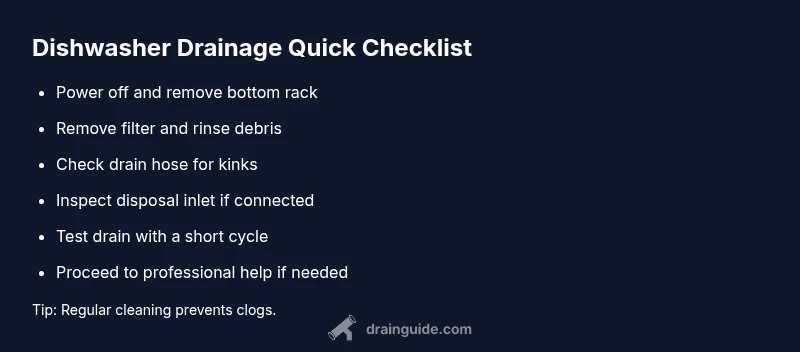
Before tearing into the appliance, perform a few quick checks that cover the majority of easy fixes. First, unplug the dishwasher and switch off the circuit at the breaker to ensure safety. Then remove the lower rack to access the filter and sump area. Take out the filter and rinse it under warm water, removing any visible debris, hair, or food particles. Use a soft brush or cloth to scrub the sump area. Reassemble and run a short drain test. If water still backs up, inspect the drain hose for kinks or clogs, and verify the hose route rises to create a high loop to prevent backflow. Finally, confirm that the disposal or sink connection is clear, as a blocked disposal can back up into the dishwasher.
Common Causes, Ranked by Likelihood
In most cases, drainage problems fall into a few predictable categories. The top cause is a clogged filter or pump screen that stops water from leaving the tub. A second frequent issue is a clogged or kinked drain hose that restricts flow. A third common factor is an air gap or high loop that isn’t properly installed or has debris buildup. Less common but possible are problems with the drain pump, faulty wiring, or an improper pump seal. Drain Guide Analysis, 2026, notes that resolving these items in order can dramatically improve success rates without expensive service calls.
How to Inspect the Filter, Sump, and Pump
Begin by removing the filter housing and taking out any screens. Rinse the filter under warm water, using a soft brush to remove stubborn residue. Check the sump area for granular debris and wash it away. Inspect the pump housing for visible cracks or obvious signs of wear. If you find a loud hum or no movement during a test, the pump may be weak or failing. When you’re done, reassemble carefully and run a short cycle with a small amount of clean water to observe drainage. If the pump hesitates or leaks, note it as a potential fault that may require professional assessment.
Drain Hose and Disposal Connection: Path Matters
The drain hose should run from the dishwasher up to a high point before looping down, which prevents water from flowing back into the tub. Check for kinks, twists, or crushed sections along the hose. If the hose connects to a garbage disposal, ensure the disposal inlet is clear and that the knock-out plug has been removed if this is a new installation. A blocked disposal or a clogged inlet can cause reverse flow and standing water in the dishwasher. Clear any obstructions and re-test drainage.
When to Use Cleaners: Cautions and Best Practices
Chemical drain cleaners are generally not recommended inside dishwashers. They can damage internal seals and components, and most are not designed for appliance use. If debris is stubborn, manual cleaning is safer and more effective. Use warm water, a mild dish soap, and a soft brush to remove residues around the filter and sump. For stubborn clogs, you can temporarily disassemble parts as per the manufacturer’s instructions, but avoid aggressive scrubbing that could damage seals. After cleaning, run multiple cycles with plain water to confirm proper drainage.
Maintenance Habits to Prevent Future Clogs
Preventive maintenance makes drainage issues far less likely. Clean the filter monthly or whenever you notice reduced drainage. Run an empty cycle with a cup of white vinegar and hot water every few months to reduce mineral buildup. Use a mesh drain screen to catch food particles in the sink and dishwasher. Inspect the drain hose and disposal connections yearly, especially after remodeling or changing disposal units. Drain Guide’s ongoing tips emphasize consistency over infrequent, intensive cleaning.
Putting It All Together: When to Move Forward
If you’ve cleaned the filter, checked hoses, confirmed a high loop, and the dishwasher still won’t drain, the fault may lie with the pump or electrical components. Document what you’ve tested, and proceed to a professional inspection if the problem persists after a full cycle. Remember, working with live electrical appliances near water carries risk; if you’re unsure, call a licensed technician. The key is a structured approach: fix the easy items first, retest after each step, and escalate only when necessary.
Steps
Estimated time: 30-60 minutes
- 1
Power off and access the filter
Unplug the dishwasher and pull out the bottom rack to access the filter housing. Remove the filter assembly and set aside for cleaning. Rinse under warm water and inspect for obvious debris.
Tip: Do this step first for safety and to gain access. - 2
Clean the filter and sump area
Wash the filter thoroughly and wipe the sump clean with a soft brush. Ensure no stubborn particles remain in crevices around the impeller area.
Tip: A thorough clean often resolves most clogs. - 3
Inspect and test the drain pump
With the filter removed, listen for the pump when running a test cycle. If you hear a hum but no movement, the pump may be failing.
Tip: Power off before touching the pump; avoid pinching wires. - 4
Check the drain hose path and loop
Follow the drain hose from the dishwasher to the sink drain, looking for kinks or squashed sections. Ensure it forms a high loop to prevent backflow.
Tip: A proper loop is essential to stop backflow. - 5
Inspect disposal connection and inlet
If you have a garbage disposal, check that the inlet is clear and that the knockout plug is removed if applicable. Reattach the hose securely.
Tip: Loose connections can mimic a drain problem. - 6
Run a controlled drain test
Run a wash cycle with minimal loads and observe drainage. Note any water remaining and document the observations for reference.
Tip: Test after each fix to gauge effectiveness. - 7
Decide on next steps
If water still doesn’t drain after these steps, consider professional service to inspect the pump and electrical components.
Tip: Document fixes attempted to aid the technician.
Diagnosis: Water standing in the dishwasher after a cycle; won’t drain
Possible Causes
- highClogged or dirty filter/pump screen
- highKinked or clogged drain hose
- mediumAir gap or high loop not installed/blocked
- mediumGarbage disposal connection clogged or disposal blocked
- lowFaulty drain pump or motor
Fixes
- easyClean or replace filter and sump debris; verify pump housing is clear
- easyUnkink and straighten drain hose; ensure proper routing with high loop
- easyCheck air gap; clean and reseat if debris is present
- easyInspect disposal inlet; clear blockages and run disposal if connected
- hardTest the pump functionality and replace if the pump fails to operate after checks
Got Questions?
What is the most common cause of a dishwasher not draining?
The most common cause is a clogged filter or pump screen. Cleaning these parts usually restores drainage. If the issue persists, evaluate the drain hose and disposal connections.
The most common cause is a clogged filter or pump screen; clean them and re-test drainage.
Can a blocked garbage disposal cause a dishwasher not to drain?
Yes. A clogged disposal can back up water into the dishwasher. Clear the disposal and ensure the inlet isn’t blocked, then re-check the dishwasher hose.
Yes, a blocked disposal can stop drainage; clear it and check the hose.
How often should I clean the dishwasher filter?
Clean the filter at least once a month, or whenever you notice slow drainage. Regular cleaning prevents buildup and improves performance.
Clean the filter monthly or when drainage slows.
Are chemical drain cleaners safe for dishwashers?
Most chemical cleaners aren’t designed for dishwasher interiors and can damage seals. Use manual cleaning instead and avoid caustic drain cleaners inside the appliance.
Avoid caustic cleaners inside the dishwasher; use manual cleaning.
Why does water drain slowly but not completely?
Slow drainage typically indicates a partial clog or a kinked hose. Inspect the filter, hose, and disposal connections and clear debris to restore full drainage.
A partial clog or kinked hose causes slow draining.
When should I call a professional?
If you’ve cleaned filters, checked hoses, and the dishwasher still won’t drain after several cycles, a licensed technician should inspect the pump and electrical components.
If it still won’t drain after basic checks, call a pro.
Watch Video
The Essentials
- Clean the filter first to resolve most clogs
- Check hose path and high loop for backflow
- Test after each fix to gauge results
- Avoid chemical cleaners inside the dishwasher
- Call a pro if the pump or wiring seems faulty