Drain Clean Acid: Safe Home Drain Clearing Guide
A practical, safety-first guide for homeowners on using drain clean acid to clear clogs. Learn when to use it, essential PPE, step-by-step application, and safer alternatives.


Learn how to safely use drain clean acid to clear a clog, including when it’s appropriate, essential PPE, and a step-by-step approach that minimizes risk. This guide emphasizes safety, proper dilution (per product label), and flushing to protect your pipes and family.
Why drain clean acid demands caution
Drain clean acid products are powerful chemical cleaners designed to dissolve organic clogs and mineral buildup. When used improperly, these acids can irritate skin, eyes, and lungs, damage metal pipes, and react with other cleaners to release hazardous gases. The phrase drain clean acid should be treated with respect: read the label, follow dilutions exactly, and never mix with household cleaners or bleach. According to Drain Guide, many homeowners underestimate the hazards of caustic cleaners, which can trap heat and pressure in clogged lines if used aggressively. A cautious, measured approach protects both your plumbing and your family. If you have metal pipes, older sewer lines, or a septic system, consider alternatives first and reserve acid-based methods for stubborn, well-identified blockages.
In this section, you’ll learn how to evaluate whether an acid-based approach is appropriate for your situation and how to prepare your space and tools for safe application.
What is drain clean acid, and how does it work?
Drain clean acid refers to caustic or acidic formulations that dissolve organic matter by hydrolyzing fats, hair, and mineral deposits. They work fastest on light to moderate buildups and are generally more effective when the blockage is near the drain opening or in the immediate trap. However, acid cleaners are not a universal fix. They are not designed for hard plastics or porcelain surfaces if the label warns against it. The chemistry behind drain clean acid involves low pH or high pH reactions that generate heat as the clog breaks down. This heat can stress pipes if overused or left in contact for too long. Always verify pipe material compatibility and product instructions before use. Drain Guide emphasizes that acids should not be used as a first line of defense for severe blockages or in systems with fragile components.
Safety first: PPE and ventilation
Personal protective equipment (PPE) is non-negotiable when handling drain clean acid. Wear chemical-resistant gloves (ideally neoprene or nitrile), splash goggles, and a long-sleeved shirt to prevent skin contact. Ensure adequate ventilation by opening windows or using a fan to pull fumes away from your face. Do not operate near children or pets, and keep a bucket of water nearby in case you need to rinse quickly. It’s also wise to have baking soda or a similar neutralizer on hand in case of accidental spills—but only use neutralizers that are recommended by the product manufacturer. Drain Guide’s approach prioritizes safety, so you can avoid common accidents that occur when people skip PPE or fail to ventilate properly.
When to avoid acid-based cleaners and safer alternatives
Acid-based cleaners are not suitable for all clogs or all home plumbing. They can corrode certain metal pipes, gaskets, or seals over time, and may damage septic systems if used repeatedly. If your home uses older aluminum, copper, or galvanized pipes, or if you’re uncertain about the pipe condition, avoid acids and opt for mechanical methods first (plunger, drain snake) or enzyme-based cleaners that are gentler on pipes. For kitchen sinks with food grease, a physical cleaning plus a gentler cleaner might be more appropriate. Drain Guide advises homeowners to assess the risk and choose the gentler, safer approach whenever possible, reserving acids for verified, stubborn blockages.
Pre-cleaning workspace setup and planning
Before applying drain clean acid, clear the area around the drain. Remove items from under the sink, lay down a protective sheet, and have towels ready for potential spills. Read the product label aloud to ensure you understand dwell time, dilution, and rinsing requirements. If your clog is in a shared line or a multi-story system, consider seeking professional guidance rather than applying aggressive chemicals. The prep phase reduces accidents and helps you apply the product precisely where it’s needed. Drain Guide highlights that a tidy workspace correlates with safer, more effective results.
Step-by-step chemical application concept (high-level)
A careful, measured approach reduces risk. Start by confirming the drain opening is clear of standing water (where safe and practical). Apply the product as directed, typically in small amounts and with patience for dwell time. Do not mix with other cleaners or with hot water unless the label permits. After the dwell time, flush extensively with cold or warm water, following the product guidance. If you detect any unusual hissing, smoke, or strong fumes, evacuate and ventilate the area immediately. Drain Guide stresses patience and compliance with the label to avoid chemical reactions that can harm pipes or people.
Mechanical methods to support chemical action
If you see partial improvement after the recommended dwell time, use a plunger or a hand-crank drain snake to supplement the chemical’s effectiveness. Mechanical methods can help dislodge softened material without additional chemical exposure. Be gentle with snakes to avoid scratching or penetrating the pipe walls. Wet the area first to reduce friction. After using mechanical methods, flush the line again to remove loosened material. This combined approach often yields the best results while limiting repeated chemical use.
Post-cleaning flush and cleanup
Rinse the system with a generous amount of water to remove residual cleaner and dissolved material. Check the drain’s flow to ensure the water clears smoothly without gurgling or backup. If the water still drains slowly, refrain from repeating the same chemical cycle immediately; wait at least several hours and re-evaluate, or switch to a mechanical approach. Clean up PPE and wash hands thoroughly. Dispose of any used rags and containers according to local hazardous waste guidelines and the product label. Drain Guide recommends documenting your process for future reference and safety.
Common mistakes to avoid and safety reminders
Avoid mixing cleaners, as this can cause dangerous gas formation or violent reactions. Never apply acid cleaners to already-sealed systems or blocked drains with unknown configurations. Do not force water down a blockage if you notice pressure buildup; it can push material further into the system. Always follow the label’s dwell times and do not exceed the recommended contact time. Regular maintenance and small, safe fixes can prevent the need for harsh chemicals later. Drain Guide emphasizes safety-first discipline to protect both people and plumbing.
AUTHORITY SOURCES for further reading
- https://www.osha.gov
- https://www.cdc.gov/niosh/
- https://www.epa.gov/
These sources provide guidance on chemical safety, handling hazardous household cleaners, and safe disposal practices. While they aren’t drain-specific, they underpin best practices for using caustic products in homes.
What to do if the clog persists or symptoms worsen
If the clog remains after a carefully executed chemical treatment, stop using the product and reassess. Persistent blockages may indicate deeper pipe issues, a broken line, or septic problems that require professional intervention. Consider consulting a licensed plumber for a detailed diagnosis. Document the steps you took and any observations to share with the professional to speed up the process.
Tools & Materials
- caustic drain cleaning acid (per product label)(Choose a product compatible with your pipe material; never mix with other cleaners)
- chemical-resistant gloves (neoprene or nitrile)(Essential to protect skin from caustic exposure)
- safety goggles or face shield(Protect eyes from splashes)
- long-sleeved shirt and pants(Minimize skin exposure)
- ventilation (open window or fan)(Limit inhalation of fumes)
- plastic bucket and towels(Contain spills and wipes)
- drain plunger (flat and wide)(Useful for initial clearance)
- drain snake or auger(Assists after chemical dwell time)
- plenty of clean water for rinsing(For thorough flushing)
- neutralizing agent (per product label)(Only if recommended)
- flashlight or work light(Inspect inside the drain and trap area)
Steps
Estimated time: 45-60 minutes
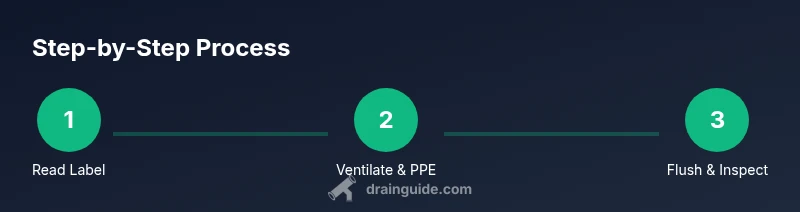
- 1
Read the product label
Carefully review the directions, dwell time, dilution, and any pipe material warnings. Ensure the product is suitable for your specific drain and conditions.
Tip: Don’t guess; misreading the label is a common source of mistakes. - 2
Ventilate and protect yourself
Open a window, turn on a vent fan, and put on PPE before handling chemicals. Clear the area of children and pets.
Tip: If you smell strong fumes, step away and improve ventilation. - 3
Clear the immediate area
Remove standing water if safe and possible. Lay towels to catch spills and prevent chemical contact with other surfaces.
Tip: A dry approach reduces splash risk during application. - 4
Apply the cleaner accurately
Pour or apply the acid cleaner directly into the drain opening per label. Do not splash onto surrounding surfaces.
Tip: Apply slowly to minimize splashes and heat buildup. - 5
Wait the recommended dwell time
Let the product sit for the time stated on the label. Do not rush or extend beyond the recommended period.
Tip: Dwell time is critical for reaction—overexposure can harm pipes. - 6
Flush with water
After dwell time, flush thoroughly with cold or warm water as directed. Use a high-volume flush if available.
Tip: A strong flush helps clear softened material and reduce residue. - 7
Assess flow and repeat if needed
Check drain performance after flushing. If still slow, reassess; repeat only if the label allows, or switch to mechanical methods.
Tip: Avoid repeated chemical cycles without professional guidance. - 8
Use mechanical aid if appropriate
If you opt for a plunger or drain snake, use gentle, controlled motions to avoid pipe damage.
Tip: Mechanical tools can enhance results without extra chemical exposure. - 9
Post-cleanup and disposal
Rinse tools, wipe surfaces, and dispose of empty containers per local regulations and product label.
Tip: Keep containers away from children and pets after use. - 10
Evaluate next steps
If clog persists, do not over-apply chemicals. Contact a licensed plumber for a thorough diagnosis.
Tip: Document observations to share with professionals.
Got Questions?
Is drain clean acid safe for PVC pipes?
Many acid-based cleaners are formulated to be compatible with PVC, but always check the label and test a small area. If unsure, opt for gentler methods or consult a plumber.
Most PVC pipes can handle many cleaners, but always check the label and consider safer options if in doubt.
Can I use drain clean acid with a septic system?
Acid cleaners can disrupt beneficial bacteria in septic systems. Use sparingly and follow label directions; consider alternatives if your system is older or heavily used.
Septic systems may be hurt by harsh chemicals, so use caution and follow the label or seek guidance.
What should I do if I notice gas or a burning smell?
Evacuate the area and seek fresh air. Do not re-enter until fumes dissipate. If the odor persists, contact emergency services and a professional plumber.
If you smell gas or fumes, leave the area and ventilate; call for help if it continues.
Are there safer alternatives to drain clean acid?
Enzyme-based cleaners and mechanical methods are safer for most homes. Regular maintenance and a careful approach to clog management reduce the need for strong acids.
Safer options include enzymatic cleaners and unplugging clogs mechanically.
What should I do if the clog still remains after treatment?
Do not overuse chemical cleaners. If the clog persists, stop and call a licensed plumber for a proper diagnosis and safe resolution.
If it isn’t improving, contact a professional to avoid damaging your pipes.
How should I dispose of leftover drain cleaner?
Follow the product label for disposal. Do not pour down sinks with standing water; keep containers out of reach of children until disposal.
Dispose per label directions and keep products away from kids.
Can I re-use the same drain after using acid cleaners?
Yes, but ensure the pipe is thoroughly flushed and inspect for any signs of damage. If there are lingering odors or corrosion, pause and seek professional advice.
You can, but flush completely and check for damage first.
Watch Video
The Essentials
- Always prioritize safety and read labels before using drain clean acid
- PPE and ventilation protect you from fumes and splashes
- Use acid-based cleaners only for suitable clogs and pipe materials
- Combine chemical and mechanical methods only when appropriate
- If in doubt, call a licensed plumber