Drain Opener Liquid: Safe DIY Drain Clearing Guide
Learn how to choose, use, and maintain drain opener liquids safely for common clogs. This guide covers enzymatic and chemical options, safety tips, wait times, and maintenance to prevent future clogs. Drain Guide provides practical steps for homeowners to clear drains responsibly.


With the right precautions and a proper amount of drain opener liquid, you can clear most minor clogs without harsh mechanical work. This quick answer shows how to choose a product, apply it safely, and wait for it to work before rinsing. For best results, read the label and avoid mixing cleaners.
What is drain opener liquid?
According to Drain Guide, drain opener liquid is a consumer-grade product designed to dissolve clogs through chemical or enzymatic action. It typically comes in two families: enzymatic liquids that break down organic material over time, and caustic or acid-based liquids that dissolve organic residue more aggressively. For most home sinks and showers, drain opener liquid is a convenient option when a clog is slow but not irreversibly solid. When used correctly, drain opener liquid can clear minor clogs without the need for heavy tools. Always read the label to confirm compatibility with your pipes and septic system. The Drain Guide team emphasizes starting with the least aggressive option and avoiding a one-size-fits-all mindset. If you have metal pipes, an older home, or a suspected sewer backup, reconsider using a liquid opener and seek professional help.
How drain opener liquid works
Drain opener liquid works by two broad mechanisms depending on the product type. Enzymatic varieties feed bacteria that gradually digest hair, soap scum, and grease, slowly clearing the path in your drain. Chemical or caustic liquids use stronger reactions to dissolve organic material more quickly. In both cases, the goal is to liquefy the clog so water can flow again. The effectiveness depends on clog type, pipe condition, and proper dosing. Always avoid mixing multiple cleaners and never mix with bleach, ammonia, or other caustic agents, as dangerous gases can form. Remember: drain opener liquid is a tool, not a guaranteed fix for every blockage.
Types of drain opener liquids
There are several categories of drain opener liquids, each with pros and cons. Enzymatic options are gentler on pipes and septic systems but require more time to work. Chemical and caustic liquids act faster on organic matter but carry higher risk if misused or used in older plumbing. Some products are labeled for kitchen sinks, bathroom drains, or toilets; always verify compatibility with your installation. The key is to match the product type with the clog you’re facing and to follow label directions closely. The right drain opener liquid can make a noticeable difference when used correctly.
Safety and compatibility considerations
Safety comes first when handling drain opener liquids. Wear protective gloves and eye protection, work in a well-ventilated area, and keep children and pets away during use. Never mix drain opener liquids with other cleaners, especially bleach or ammonia, as this can create dangerous gases. If your home uses a septic system, choose enzymatic formulas or drain openers explicitly labeled as septic-safe. Avoid using liquid openers on copper or galvanized pipes without verifying compatibility, and never pour any liquid directly into a standing water trap if you see signs of a leak or corrosion. Drain Guide recommends a cautious approach and adhering to product instructions for the best outcomes.
How to use drain opener liquids safely (overview)
Using drain opener liquids safely involves selecting the correct type for your clog, measuring the dose accurately, and allowing sufficient time for the product to work before flushing with water. Do not use more than the label recommends, do not mix products, and ensure good ventilation. If you experience unusual fumes, rinse the area and discontinue use. In many cases, a single treatment is enough, but some clogs may require a second application after a full cycle. The goal is to restore flow with minimal risk to pipes and household members.
Troubleshooting and what to do if it doesn’t work
If the first application doesn’t clear the clog, avoid piling on multiple doses from different products. Instead, reassess the situation: check for standing water volume, verify that you’re addressing the correct drain, and consider mechanical methods if safe and appropriate. Persistent clogs may indicate a more serious issue such as a foreign object or a collapsed pipe. In those cases, contact a plumber rather than attempting risky chemical combinations. Drain Guide emphasizes when in doubt, opting for professional help.
Maintenance and prevention to reduce future clogs
Prevention is easier than remediation. Regular maintenance can significantly reduce the frequency of clogs: use drain opener liquid sparingly as a preventive measure following a deep clean of kitchen drains, run hot water after meals to flush grease, use a hair catcher in bathroom sinks, and avoid disposing of cooking fats or cashing coffee grounds down the drain. Keeping traps clean and scheduling periodic drain checks helps maintain flow. Remember, the goal is consistent, safe use of drain opener liquids in a way that protects your plumbing.
Drain Guide's practical recommendations
Drain Guide stresses treating drain opener liquid as a component of a broader maintenance plan. Always follow the label, test on a discreet section of plumbing if unsure, and consider a backup plan (like a plunger or drain snake) for stubborn clogs before escalating to stronger chemicals. The general principle is to address clogs early and avoid letting them harden into more complex problems. By combining safe use of drain opener liquid with preventive measures, homeowners can keep drains flowing smoothly over time.
Tools & Materials
- Drain opener liquid (enzymatic or chemical)(Choose enzymatic for septic-safe, gentler option; chemical for faster results per label)
- Measuring cup or dosing cap(Use exact dose per label; avoid guessing)
- Protective gloves(Nitrile recommended; protects skin from irritants)
- Safety goggles(Protect eyes from splashes)
- Ventilated area(Ensure airflow; not a physical item, but a safety condition during use)
- Hot water or boiling water(Used for flushing after treatment if label allows)
- Old towel or bucket(Catch spills and keep area tidy)
Steps
Estimated time: 25-60 minutes
- 1
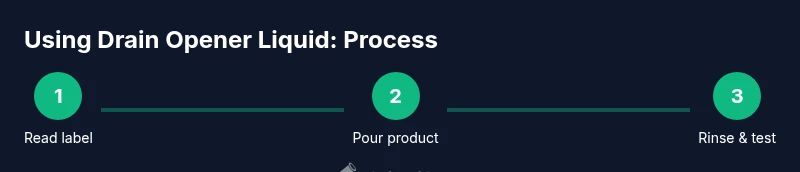
Read the product label
Before taking any action, read the exact instructions on the drain opener liquid you plan to use. Check compatibility with your type of drain, pipe material, and septic system. This step reduces the risk of misuse and ensures you know the waiting time and dosing. Plan the work in a well-ventilated area and have gloves ready.
Tip: Always confirm the product is appropriate for your drain type and never mix products. - 2
Clear standing water if needed
If there is standing water in the sink or tub, remove excess water to expose the drain opening. A clearer drain helps the product reach the clog more effectively and reduces splashes.
Tip: Remove excess water gently to avoid overflow while keeping the area organized. - 3
Measure and pour
Using the dosing cap or measuring cup, pour the recommended amount of drain opener liquid directly into the drain. Do not guess or exceed the label’s dose. Pour slowly to minimize splashing and ensure the liquid enters the drain opening.
Tip: Accurate dosing improves effectiveness and minimizes risk of damage. - 4
Wait for the product to act
Allow the drain opener liquid to work for the time specified on the label. Enzymatic formulas may take longer than chemical ones, so plan accordingly. Avoid running water during this period to let the product do its job.
Tip: Use a timer and do not rush to re-test the drain before the recommended time. - 5
Flush with water
After the waiting period, flush the drain with a steady stream of hot or warm water, if the label allows. This helps rinse away softened material and clears the path for flow. Do not mix with other cleaners during flush.
Tip: Let hot water run for 30-60 seconds to maximize clearance. - 6
Re-test and assess
Run water to see if the drain is flowing freely. If it remains slow, you may repeat once if the label permits, or switch to a different clearing method such as a plunger or drain snake. Do not exceed label instructions.
Tip: If the drain remains sluggish after a second treatment, stop and consider mechanical methods. - 7
Cleanup and storage
Wipe any spills, seal the container tightly, and store it out of reach of children and pets. Wash your hands thoroughly after handling drain opener liquid, even if you wore gloves. Proper storage helps prevent accidents.
Tip: Keep the product in the original container and store away from heat sources. - 8
Document results
Note what worked or didn’t work for future reference. This helps decide whether to attempt another treatment, switch to a mechanical method, or call a plumber if needed. Record the drain type, clog symptoms, and any odors observed.
Tip: A quick note in a home maintenance log saves time later.
Got Questions?
Can I use drain opener liquid in a septic system?
Some enzymatic drain opener liquids are labeled as septic-safe, but always check the product label and consult Drain Guide if you’re unsure. In many cases, enzymatic formulas are better for septic systems than harsh chemical options.
Some enzymatic drain openers are septic-safe, but always check the label. If unsure, consult Drain Guide for guidance.
Is it safe to mix enzymatic and chemical drain openers?
Mixing drain opener liquids is not recommended. Different formulas can react unpredictably, produce gases, or damage pipes. Use one product at a time, and follow label instructions carefully.
Don't mix drain openers. Use one product at a time and follow the label instructions.
How long should I wait after applying drain opener liquid?
Waiting times vary by product but typically range from 15 to 60 minutes. Always follow the label's recommended wait time and avoid running water during that period unless stated otherwise.
Wait the label's recommended time, usually 15 to 60 minutes, and don’t run water during that period unless instructed.
What should I do if the clog persists after using drain opener liquid?
If the clog remains after a full treatment, avoid a second heavy dose. Try a mechanical method like a plunger or drain snake, or contact a plumber for a professional assessment.
If it stays clogged, don’t double-dose. Try a plunger or snake, or call a plumber.
Can drain opener liquid damage pipes or fixtures?
When used as directed, most drain opener liquids are safe for typical household pipes. Misuse or mixing with incompatible products can cause damage, so always follow the label and keep products away from metal fittings that may corrode.
Used correctly, they’re generally safe, but always follow the label to avoid damage.
Is drain opener liquid suitable for kitchen sink drains only?
Many drain openers are formulated for kitchen and bathroom drains, but always verify the label for compatibility with your specific drain type and pipe material. Some products may be labeled for bathrooms only.
Check the label to ensure it matches your drain type and pipe material.
Watch Video
The Essentials
- Choose the right type for your clog and pipe type.
- Follow label directions exactly for dosing and wait times.
- Do not mix cleaners; use safe, compatible products only.
- Combine prevention with routine maintenance to reduce future clogs.