What If Drano Gets on Skin? Essential Safety Guide
Learn exactly what to do if Drano contacts skin, including immediate rinsing, first aid steps, and prevention tips. Drain Guide provides a clear, step-by-step approach for homeowners dealing with chemical cleaners.


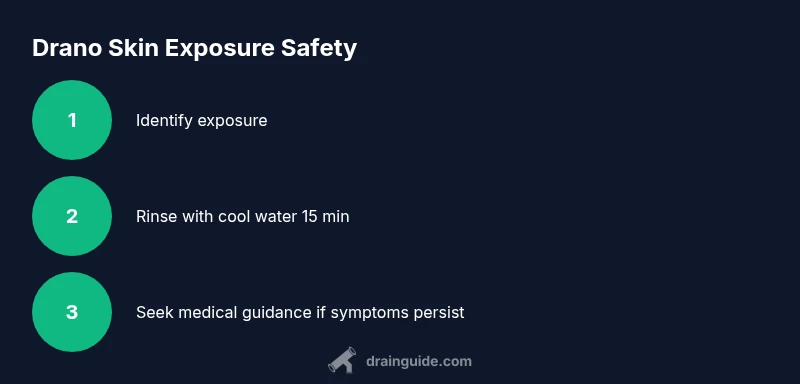
If Drano contacts skin, act quickly to minimize irritation. Rinse the affected area with cool running water for at least 15 minutes, remove contaminated clothing, and avoid scrubbing. Do not apply ointments or neutralizers unless directed by a medical professional. Seek medical advice if burning, persistent irritation, or signs of a reaction appear.
What Drano Is and Why Skin Contact Is Risky
Drano is a household drain cleaner that relies on caustic alkaline ingredients to dissolve clogs. For homeowners troubleshooting drains, it can be a convenient solution, but the same chemicals that break down grease and hair can irritate or burn skin on contact. The Drain Guide team emphasizes that skin exposure can vary from mild irritation to chemical burns depending on concentration, duration, and skin sensitivity. According to Drain Guide, even brief splashes should be treated promptly to minimize damage. Understanding the mechanism helps you respond quickly and reduce injury risk, especially if you have open cuts or sensitive skin. In the following sections, you’ll learn immediate steps, safety best practices, and how to prevent exposure in the future.
Immediate First Aid Steps When Drano Contacts Skin
Act fast, calmly, and methodically. The first action is to remove any contaminated jewelry or clothing that may trap the chemical against skin. Then rinse the affected area with cool running water for at least 15 minutes, avoiding hot water which can increase irritation. Do not scrub the skin; gentle rinsing is enough to dilute and remove the cleaner. After rinsing, dry the area with a clean towel and observe for persistent burning or redness. If available, you can gently wash with a mild soap and water after the initial rinse, but avoid aggressive scrubbing. If pain or burning continues after rinsing, seek medical advice promptly. This guidance aligns with safety best practices for chemical cleaners and is reinforced by Drain Guide's safety recommendations.
Do's and Don'ts During First-Aid Response
Do prioritize rapid rinsing and clothing removal, and seek medical advice if there are signs of a burn or persistent irritation. Do keep the exposure area calm and avoid further abrasion. Do document when the exposure occurred in case you need medical follow-up. Do not apply home remedies, oils, or acidic/alkaline neutralizers unless advised by a clinician. Do not rub the skin aggressively or delay rinsing, as heat and friction can worsen tissue damage. The core message from Drain Guide is to minimize contact time and ensure thorough cleansing to reduce injury severity.
When to Seek Medical Help for Drano Skin Exposure
If burning is severe, if a large skin area is involved, or if symptoms persist after initial rinsing, seek medical attention promptly. Chemical burns may not be immediately visible; reassess over the next several hours. If you have a child or elderly person exposed, or if irritation affects the eyes or mucous membranes, contact a healthcare professional or Poison Control for guidance. Remember that even adults can have delayed reactions, so monitoring changes in skin color, blistering, or increasing pain is important. Drain Guide recommends erring on the side of caution and consulting a clinician when in doubt.
Preventing Drano Skin Contact: Safe Handling and Storage
Preventive measures matter as much as quick responses. Always wear protective gloves when handling Drano and keep the product in its original container, tightly closed, and out of reach of children and pets. Read the label for ventilation requirements and never mix Drano with other cleaners. Store it upright to prevent leaks and have a dedicated cabinet for chemicals. If a spill occurs, ventilate the area and clean up using disposable materials according to the package directions, then wash your hands thoroughly. These practices help maintain safety and reduce the likelihood of accidental contact.
Quick Reference: Post-Exposure Monitoring and Aftercare
Even after an initial rinse and cleanup, observe the exposed skin for several hours. Mild redness may fade, but persistent burning or blistering warrants medical evaluation. Keep a simple log of exposure time, rinse duration, and symptom changes to help healthcare providers assess the situation. If you frequently work with cleaners, consider a formal home safety plan that includes protective gear, safe storage, and clear post-exposure steps.
Tools & Materials
- Cool running water(Rinse for at least 15 minutes; avoid hot water as it can worsen irritation)
- Contaminated clothing(Remove promptly to prevent further skin contact)
- Mild soap (optional after initial rinse)(If advised by a clinician, use gently and rinse thoroughly)
- Clean towel(Pat dry after rinsing; do not rub the skin aggressively)
- Protective gloves for handling Drano afterward(Important when handling products again to prevent re-exposure)
Steps
Estimated time: 15-25 minutes for immediate actions; longer if monitoring or medical evaluation is required
- 1
Stop exposure and remove contaminated items
As soon as exposure is noticed, move away from the spill and remove any jewelry or clothing that may be trapping Drano against the skin. This reduces the contact area and prevents further irritation.
Tip: Do not pull clothing over the head; cut from the back if fabric sticks to skin. - 2
Rinse with cool water for 15 minutes
Place the affected area under cool running water and rinse continuously for at least 15 minutes. Do not use hot water, which can trigger more burning and tissue damage.
Tip: Keep the water gentle and steady; avoid vigorous scrubbing during rinsing. - 3
Optional gentle cleansing after initial rinse
If a clinician recommends it, wash the area with mild soap and water after the initial rinse, then rinse again. Do not apply home remedies or chemicals.
Tip: Only use soap if advised; otherwise simply continue rinsing with water. - 4
Dry and monitor the skin
Pat the skin dry with a clean towel and observe for redness, burning, or blistering over the next few hours. Avoid applying lotions or ointments unless directed by a professional.
Tip: Take note of any changes in color or swelling for medical follow-up. - 5
Seek medical advice if symptoms persist
If burning, pain, or skin changes persist after rinsing, contact a healthcare provider or Poison Control for guidance. Severe reactions require urgent care.
Tip: When in doubt, err on the side of caution and get evaluated. - 6
Return to safety and storage practices
After the incident, wash hands, ventilate the area, and store Drano securely away from children. Review handling steps to prevent future contact.
Tip: Consider updating your home safety plan and using barrier protection next time.
Got Questions?
What makes Drano skin contact potentially dangerous?
Drano contains caustic ingredients that can irritate or burn skin on contact. The severity depends on concentration and exposure duration. Prompt rinsing reduces injury risk.
Drano can burn skin due to caustic ingredients; quick rinsing helps minimize damage, and you should seek medical advice if pain continues.
How long should I rinse if Drano touches my skin?
Rinse with cool running water for at least 15 minutes. Do not use hot water, and avoid scrubbing while rinsing.
Rinse for at least 15 minutes with cool water and avoid scrubbing.
Can I apply soap or a neutralizer to Drano-exposed skin?
Soap can be used after the initial rinse if advised by a clinician, but avoid applying neutralizers or other chemicals at home unless instructed by a professional.
Only use soap if a clinician says it’s OK; don’t try to neutralize the chemical yourself.
What should I do if a child is exposed to Drano?
Treat it as a potential burn. Rinse immediately for 15 minutes, remove contaminated clothing, and seek medical advice if irritation continues or if symptoms worsen.
If a child is exposed, rinse quickly and seek medical guidance if symptoms persist.
When should I contact Poison Control or seek urgent care?
If there’s persistent burning, blistering, or exposure to a large skin area, seek medical help promptly. Eyes or mucous membranes exposure also requires professional evaluation.
Call a clinician or Poison Control if there’s persistent pain or large area exposure.
Can Drano exposure have long-term effects?
Most exposures heal with prompt care, but severe burns can require medical treatment. Long-term effects are uncommon with proper first aid and follow-up.
Most people recover fully with quick care; talk to a clinician if you have ongoing discomfort.
Watch Video
The Essentials
- Rinse immediately and thoroughly after Drano contact
- Avoid home remedies or neutralizers unless directed by a clinician
- Monitor for hours; seek care for persistent burning or broad exposure
- Prevent future incidents with proper storage and protective gear