What If Drano Doesn't Drain? An Urgent Troubleshooting Guide
Urgent guide for when Drano doesn’t drain. Quick checks, diagnostic flow, step-by-step fixes, safety tips, and when to call a pro. Drain Guide teaches you to act fast and safely.


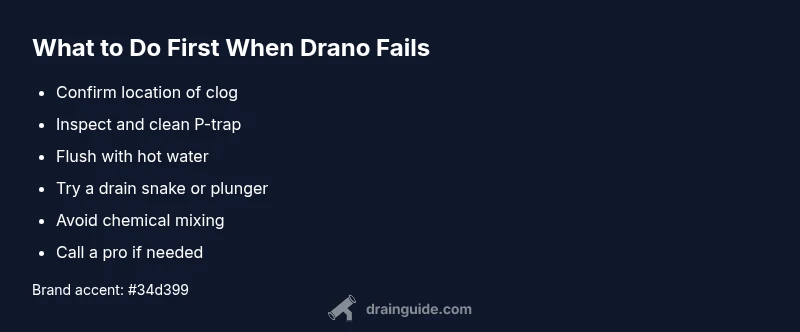
If Drano doesn't drain, start with simple checks: confirm the blockage location, then try the product as directed after waiting the recommended time. If the clog persists, switch to a mechanical method (plunger or drain snake), rinse with hot water, and avoid mixing cleaners. If backups continue, stop DIY attempts and call a licensed plumber.
What Drano Is and Why It Might Not Drain
Drano is a chemical product designed to dissolve organic clogs and break down soap scum. When used as directed, it can help clear a simple blockage in a sink, tub, or shower. But what you do when what if drano doesn't drain? The short answer is: don't assume a quick chemical cure will solve everything. If the drain remains slow or completely blocked after the recommended wait time, the problem is likely a deeper clog, a damaged pipe, or a venting issue. According to Drain Guide, diagnosing a Drano failure begins with simple checks before moving to more aggressive steps. Start by confirming the blockage location and whether other drains in the same fixture are affected. If the water backs up only in one drain, the issue may be localized to that trap. This is a moment where patience and a methodical approach will save time and avoid unnecessary chemical exposure.
Quick Checks You Can Do Before Calling for Help
Before you reach for more products or call a professional, perform a few safe, low-effort checks. First, determine if more than one drain is affected. If several fixtures drain slowly or backup, the problem is usually main-line related and beyond what Drano can fix at home. Next, inspect the P-trap under the affected sink. Place a bucket underneath, loosen the slip nuts, and look for hair, grease, or dental-floss-like debris. Clean it out and reassemble, then run hot water for 30–60 seconds to test flow.
If the trap is clear, you should still avoid mixing products. Use Drano only as directed and never reuse an opened bottle for a different day without following the label instructions. Have a towel ready for splashes, and work in a well-ventilated area. If you see water backing up in multiple fixtures, or the water pressure remains low, this is a sign that the blockage is more serious and may require professional equipment.
Common Scenarios That Cause Drano to Fail
There are several reasons Drano might fail to drain, and not all of them are due to a simple hair clog. Hair and soap scum can form a stubborn hairball in the trap or pipe that a chemical cleaner cannot dissolve fully. Grease or cooking fats can adhere to the inside walls, creating a slick layer that chemicals have a harder time penetrating. Mineral buildup from hard water can also reduce flow, especially in older pipes. Finally, ventilation problems in the drain network can prevent air pressure from balancing, slowing drainage. Understanding which scenario applies helps you pick the right next step and avoid unsafe combinations of products. As Drain Guide notes, most DIY fixes work best on simple, localized clogs rather than structural pipe issues.
Diagnostic Flow: Symptom → Diagnosis → Solution
This section maps common symptoms to likely causes and practical fixes, so you can work through the problem logically. Start with the simplest possibilities first, like a localized clog, then move toward more complex issues such as main-line blockages or venting problems. If you reach the end of this flow and the drain still won’t cooperate, it’s time to escalate concerns and seek professional help. Remember, never mix cleaners or use more than the label recommends. Prioritize safety and accuracy to prevent chemical burns or pipe damage.
Step-By-Step Fix for the Most Common Cause
The most frequent failure after Drano use is a localized clog in the P-trap or immediate drain line. Here are practical steps to address this without immediately resorting to aggressive chemicals:
- Clear the area: pull out any standing water with a cup or bowl and place a towel for spills. 2) Remove the P-trap and clean it thoroughly, checking for hair and debris. 3) Reassemble and run hot water to flush the line. 4) If needed, use a drain snake to probe past the trap. 5) Re-test with hot water and consider a second, careful application of cleaner if the initial clog loosened. 6) If water still backs up, stop and call a plumber. This approach minimizes chemical overuse and reduces risk to your pipes.
Safety and Compatibility: What to Avoid
Safety first is not just a slogan—it's a practical habit. Always wear gloves and eye protection when handling chemical cleaners. Never mix Drano with other cleaners, especially those containing ammonia or acid. Work in a well-ventilated area and immediately flush the area with plenty of water if you feel burning or smell strong fumes. Don’t use excessive amounts of product or a second dose without waiting the label’s recommended time. If your plumbing uses PVC, avoid boiling water and hot solvents that could soften joints. If you’re unsure, stop and consult a professional.
Prevention Tips to Keep Drains Clear
Prevention is easier than treatment. Consider a weekly routine of flushing drains with hot water to dissolve fats and oils. Use a drain screen to catch hair and solids, especially in bathroom sinks. For kitchen drains, avoid pouring grease or coffee grounds down the disposal or drain, and wipe pans before washing. Periodically use a non-caustic enzyme cleaner to maintain a healthy drain environment, and schedule a professional inspection if you notice recurring slow drains across multiple fixtures. Small habits add up to big savings and fewer emergencies.
When to Call a Professional
If the drain remains slow or backs up after a second DIY attempt, you should contact a licensed plumber. A professional can access the main lines, examine venting, and determine whether the clog is in a public sewer line or within your home's pipes. Don’t force tools you’re not comfortable using, as misapplied pressure can damage seals or pipes. Drain Guide recommends seeking expert help when there is wastewater backup in the house or when multiple fixtures are affected. Early escalation reduces damage and provides a safer, faster resolution.
Realistic Expectations and Alternatives
Drano and other chemical cleaners provide a quick, temporary fix for simple clogs, but they aren’t a universal solution. If you’ve exhausted safe DIY steps, consider alternatives like a drain snake or plunger for mechanical clearance. Enzymatic cleaners can be gentler on pipes but require time to work and may not be effective on hair or grease clogs. If the blockage is severe or recurring, the most reliable solution is a professional diagnosis and repair. Drain Guide’s approach emphasizes safety, sensible use of tools, and knowing when to switch from chemical to mechanical methods.
Steps
Estimated time: 60-90 minutes
- 1
Prepare and protect
Put on gloves, gather tools (bucket, plunger, snake). Clear the area and protect the floor from spills with towels or a shop cloth.
Tip: Ventilate the area; open a window if possible. - 2
Remove standing water
Scoop out water with a cup into a bucket. This improves access and reduces splashing during digging and snaking.
Tip: Use a damp cloth to wipe residue after removal. - 3
Check the trap
Place a bucket under the P-trap, loosen the nuts, and inspect for hair or debris. Clean thoroughly before reassembling.
Tip: Keep the trap aligned to avoid leaks. - 4
Flush with hot water
Run hot water for 30–60 seconds to help loosen the clog and rinse the trap. Re-test drainage.
Tip: Do not use boiling water on PVC pipes. - 5
Use a drain snake
Insert the snake to clear the line beyond the trap. Rotate steadily and pull out debris slowly.
Tip: Avoid forcing the snake; if resistance, stop and reassess. - 6
Evaluate and decide
If water flows freely, the clog is resolved. If not, stop and call a plumber. Do not repeatedly reuse chemical cleaners.
Tip: Record what you tried to inform the pro.
Diagnosis: Drain is slow or not draining after using Drano
Possible Causes
- highBlocked P-trap or immediate drain line
- mediumGrease buildup deeper in the pipe
- lowVentilation issue or air lock in the drain system
- lowDamaged or collapsed pipe in the main line
Fixes
- easyUse a drain snake or plunger to mechanically clear the trap and accessible pipe
- easyRinse thoroughly with hot water and consider enzymatic cleaners for residual buildup
- mediumCall a plumber to inspect venting and main-line condition
- hardIf pipe damage is suspected, professional assessment and repair are required
Got Questions?
Can I reuse Drano if the first dose didn’t work?
Reusing the same bottle or applying a second dose is not recommended unless the label explicitly allows it. In many cases, repeated chemical applications can irritate pipes or trap materials deeper. Follow the product directions and consider mechanical methods first if the clog remains.
You should not reuse it unless the label says it's ok. If it’s still clogged, try mechanical methods and consult a professional if needed.
Is it safe to mix Drano with other cleaners?
No. Mixing cleaners can create dangerous fumes or reactions. Always run one product at a time and flush the line with water between attempts.
Never mix cleaners. Use one product at a time and rinse well between attempts.
What should I do if water backs up after Drano?
If water backs up, stop using the drain and avoid forcing more chemicals. Try mechanical methods and check other fixtures. If backups persist, call a plumber.
If water backs up, don’t DIY further with chemicals. Try a plunger or snake, then call a pro if needed.
Why doesn’t Drano work on grease clogs?
Grease often forms a sticky layer that chemicals can’t dissolve completely. Mechanical removal plus hot water flushes are more effective for grease obstructions.
Grease clogs are tough for chemicals; use mechanical methods and hot water instead.
Are enzymatic cleaners a safe alternative?
Enzymatic cleaners can be gentler on pipes and help with organic buildup over time, but they aren’t instant fixes and may not work on hair or grease clogs. Use them as a preventative measure.
Enzymatic cleaners are safer long-term and slower; good for prevention but not for urgent clear-outs.
Watch Video
The Essentials
- Address clogs with simple checks first
- Use mechanical methods before reapplying chemicals
- Know when to escalate to a professional
- Prevent future clogs with routine maintenance