What to Do If Drano Doesn't Go Down: Troubleshooting Guide
Learn why Drano may fail to clear a clog and follow a safe, step-by-step troubleshooting plan to fix common sinks and drains. Includes when to call a plumber and practical alternatives.


Most likely, the drain is partially clogged or the trap is blocked, and Drano can’t move the blockage. Start with the simplest fixes: remove the stopper, pour hot water, and use a plunger. If that doesn’t work, try a drain snake or auger. Avoid mixing cleaners; if the problem persists, stop and call a pro.
Understanding why you might be asking 'what if drano doesn't go down'
If you’re facing a sink that won’t drain after using Drano, you’re not alone. When people ask what if drano doesn't go down, they’re usually dealing with a partial clog that Drano can’t fully break up. The key is to identify whether the blockage is near the surface, in the P-trap, or deeper in the waste line. Drano can help with hair, soap scum, and grease when the path is clear, but thick layers of buildup or a jammed trap can stall the flow. External factors like a slow vent or a bad connection can also make liquids back up or drain slowly, making it seem like the chemical failed. The moment you observe standing water in the sink, take it as a sign to pause chemical use and switch to mechanical methods. By methodically ruling out simple causes—such as a clogged stopper or an obstructions in the trap—you preserve the pipe life and avoid hazardous chemical mishaps. In short, recognizing the exact spot of the blockage helps you choose the right technique, reduces wasted product, and keeps your plumbing safer.
Quick checks before chemical cleaners
Before grabbing another bottle of Drano, run through these quick, non-chemical checks. They often resolve the problem without harsh cleaners and are safer for your plumbing and home. - Remove and clean the drain stopper: a hair-filled stopper can block the flow even when the pipe is clear, so lift it out and rinse. - Clear the P-trap: place a bucket beneath the trap, loosen the slip nuts, and remove debris that causes a stubborn clog. - Flush with hot water: slowly pour near-boiling water in two stages to push grease and soap scum through the line. - Try a plunger: if you have a single sink, seal the flange well and plunge with steady pressure; for double sinks, block the other drain. - Check for obvious surface drains: if water backs up into other fixtures (basin, tub), the issue may be a shared line or venting problem that needs professional help.
Diagnostic flow at a glance
To diagnose a slow drain, adopt a simple, repeatable flow: observe the symptom, perform quick checks, differentiate between surface clog and trap issue, evaluate venting, and choose the safest next step. Start with low-risk moves (stop using chemical cleaners if the cause is unknown) and progressively move to mechanical methods. Document each test and result; this helps you avoid repeating unsuccessful steps and clarifies what’s left to try. Common signs include gurgling sounds, standing water, or water backing up into other fixtures. A systematic approach helps you avoid wasting product and reduces the risk of pipe damage.
Step-by-step fixes for common causes
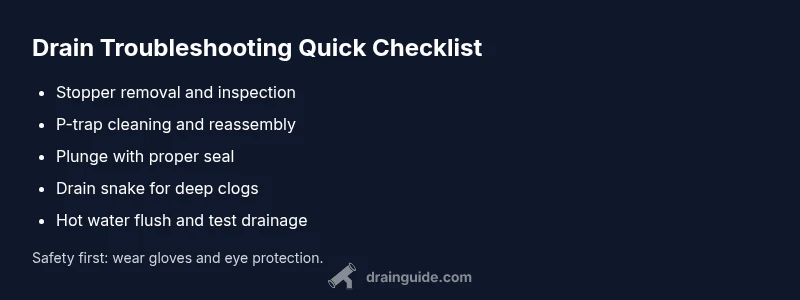
The most common causes of Drano not going down are hair buildup, grease, and a partially blocked trap. Use this sequence to tackle them safely. 1) Remove debris from the stopper. 2) Clear the P-trap. 3) Plunge the sink. 4) Use a drain snake to grab deeper hair. 5) Flush with hot water. 6) If needed, repeat the flush and inspect the trap again. This order minimizes chemical exposure and reduces risk to pipes.
Safety, warnings and when to call a pro
Safety should come first. Always wear gloves and eye protection when handling drain cleaners, and never mix different products. If you smell gas, hear banging in the lines, or the water backs up into multiple fixtures despite your best efforts, stop and call a licensed plumber. Drains in older homes with galvanized pipes can be more prone to damage from aggressive cleaners. In the meantime, avoid running hot water continuously for extended periods after a failed chemical attempt, as this can push loosened debris further into the system. If you’re uncomfortable with any step, it’s wise to contact a professional early rather than risk a more serious issue.
Prevention tips to avoid future clogs
Preventing clogs is easier than fixing them. Install a fine-mesh stopper screen or hair catcher on every sink, especially in bathrooms. Run hot water briefly after brushing teeth or washing face to dissolve soap scum, and avoid pouring grease or food waste down kitchen drains. Schedule regular maintenance checks for venting and traps, and consider a monthly, light-duty flush with hot water and a splash of baking soda to slow buildup. If your drains frequently slow down, it may indicate a larger issue with the sewer line or venting that requires professional assessment.
Common myths vs realities and practical alternatives
Myth: Drano fixes every clog. Reality: It often fails on thick hair and grease blocks, and can damage old pipes if misused. Myth: If Drano doesn’t go down, the pipe is broken. Reality: More often, it’s a partial clog or trap issue that needs mechanical cleaning. Practical alternative: use a plunger or snake first, and reserve chemical cleaners as a last resort following label instructions. Regular maintenance (hair catchers, routine flushing) reduces the frequency of clogs and prolongs pipe life.
Steps
Estimated time: 45-60 minutes
- 1
Prepare and gather tools
Before you start, gather a bucket, towels, rubber gloves, plunger, bottle of hot water, and a drain snake. Clear the area around the sink and remove any items that could spill. This prep reduces mess and helps you work safely.
Tip: Lay towels to catch splashes and protect the countertop. - 2
Remove the drain stopper and inspect
Lift or unscrew the stopper to reveal the drain opening. Clean any visible debris from the stopper and the drain mouth. If hair or gunk blocks the opening, remove it carefully with disposable gloves or a small hook.
Tip: Keep a bucket underneath to catch dropped debris. - 3
Disassemble the P-trap
Place a bucket under the P-trap and slowly loosen the nuts. Remove the trap and inspect for clogs inside the curve. Clean out any buildup with a brush and run warm water through the section before reattaching.
Tip: Hand-tighten nuts first, then snug with a wrench—don’t overtighten. - 4
Plunge the drain effectively
Seal the sink and apply firm, vertical plunging strokes. Use about 10–15 strong pushes, then test the drain. If the water begins to move, continue with several more cycles until flow improves.
Tip: If you have a double sink, plug the other side to maximize suction. - 5
Try a drain snake for deeper clogs
Insert the snake and rotate as you push forward. When you feel resistance, pull back gently to capture hair or debris. Retrieve and clean the snake, then run hot water to flush.
Tip: Take your time—avoid forcing the snake through tight bends. - 6
Reassemble and flush
Reattach the P-trap, ensure all connections are tight, and run hot water for several minutes. Check for leaks and confirm the drain clears. If the problem returns, record what you tried and seek professional help.
Tip: Keep notes on what worked for future reference.
Diagnosis: Drain slow to clogged; Drano won't fully clear
Possible Causes
- highPartial hair/grease clog near the surface
- mediumBlocked or dirty P-trap
- lowVenting issue or shared sewer line
- lowDamaged or separated waste line
Fixes
- easyRemove stopper and clean the blockage near the surface
- easyDisassemble and clean the P-trap, then reassemble
- mediumUse a drain snake to remove deeper hair or grease
- mediumInspect venting and consider professional assessment
Got Questions?
What should I do first if Drano won't go down?
Begin with a stopper check, hot water flush, and a plunger. If that fails, move to mechanical methods like a drain snake. Avoid mixing cleaners and stop if you notice repeated failure.
Start with stopper cleaning, hot water flush, and plunging. If that doesn’t work, try a snake and avoid mixing cleaners. If it still fails, call a pro.
Can Drano damage pipes?
Drano can damage older pipes if overused or used improperly. Always follow the label and avoid using it as a long-term solution for stubborn clogs.
Drano can harm old pipes if misused, so follow the label and don’t rely on it for persistent clogs.
Is a drain snake safer than chemical cleaners?
A drain snake is a mechanical method that reduces chemical exposure and can clear deeper blockages. Use it after basic checks and only if you’re comfortable.
A drain snake avoids chemicals and can reach deeper clogs. Use it after basic checks if you’re comfortable.
Why does water back up into another fixture after using Drano?
Backups in other fixtures usually indicate a shared line or venting issue, not just a single drain. It may require professional inspection.
Backups in other fixtures suggest a shared line or venting problem; you may need a pro.
When should I call a plumber for a stubborn clog?
If multiple methods fail, if you notice recurring clogs, or if there are odors or water backups, consult a licensed plumber to prevent damage.
Call a plumber if several methods fail or you notice backups or odors.
Watch Video
The Essentials
- Diagnose before applying more chemicals.
- Start with mechanical fixes first (stopper, trap, plunger).
- Never mix cleaners; follow label directions strictly.
- Use a snake for deeper buildup, not always Drano alone.
- Call a professional if clogs persist or odors appear.