Drain Pipes Underground: Install & Inspect Guide
A comprehensive DIY guide to installing and inspecting drain pipes underground, covering planning, materials, safety, testing, and maintenance for homeowners.


You will learn how to plan, install, and inspect drain pipes underground with confidence. Start by mapping existing lines, checking codes, and choosing durable PVC piping. The guide covers typical layouts, required tools, proper slope, backfill, venting, and leak testing to prevent future issues.
Why underground drain pipes matter
Underground drain pipes form the backbone of a home's wastewater and vent system. Properly installed and buried piping helps ensure gravity drains work reliably, prevents leaks, and protects against surface erosion. For homeowners tackling DIY drainage, understanding the role of drain pipes underground is essential.
According to Drain Guide, the long-term performance of any drainage project hinges on planning for slope, venting, and adequate backfill. The Drain Guide team found that most underground failures trace back to inadequate trench preparation or insufficient slope, which creates standing water, gurgling noises, and eventual clogs. By prioritizing a clear route, durable materials, and careful backfill, you can reduce future maintenance and costly repairs.
Materials and layout options for underground drains
Underground drains can be configured in several common layouts, including single-pipe runs with branch lines and laterals that connect to a main sewer or septic line. The choice of materials matters: PVC drain-waste-vent (DWV) systems are popular for their durability, ease of assembly, and chemical resistance. When selecting pipe size, plan for anticipated flow, future expansion, and compatibility with your existing system. Consider a protective trench bed made of compacted gravel to prevent pipe deformation and provide drainage.
The layout you choose should align with your property’s slope and the location of fixtures like sinks, washers, and toilets. Maintain consistent slope (typically 1/4 inch per foot) to prevent standing water and blockages. For longer runs, a vent line that terminates at the roof or ties into the main vent stack is essential to prevent siphoning and maintain proper drainage. In all cases, insulate or shield pipes crossing cold soils to minimize frost-related issues. Drain Guide emphasizes testing each segment after installation to catch leaks or misalignments early.
Sizing, slope, and drainage efficiency
Sizing the underground drain lines correctly is critical for avoiding backups and gurgling. Oversized or undersized pipes can cause unnecessary costs or performance problems. A practical approach is to match pipe diameter to fixture drainage and expected peak loads, then verify with local codes. A well-sized system maintains steady flow and reduces the risk of clogs.
Slope determines how quickly wastewater travels through the pipe. In most residential applications, a steady slope of about 1/4 inch per foot is recommended for horizontal runs. Too steep a slope can cause water to siphon away solids, while too shallow a slope invites sediment buildup. In clay soils or areas with high groundwater, extra attention to trench depth and backfill quality helps maintain consistent performance. Drainage efficiency also depends on proper cleanouts, trap placement near fixtures, and timely venting to prevent airlocks that slow drainage.
Planning, permits, and safety considerations
Before digging, plan the route and document it on a site map. Check with your local building department about permits, inspections, and approved methods for underground drains. Some municipalities require permits for trenching deeper than a certain depth or for any connection to the public sewer.
Safety is a priority when working around utilities and unstable soil. Call utility services to mark lines, avoid underground hazards, and use trench boxes or shoring when deeper trenches are needed. Maintain a clean work area, set up barricades to prevent trips, and wear protective gear including gloves, goggles, and steel-toed boots. Drain Guide highlights that preparedness reduces risks and speeds up the project without compromising quality.
Site assessment and trench planning
A thorough site assessment helps you anticipate obstacles and optimize trench placement. Map existing plumbing lines, identify potential contamination sources, and note soil conditions. In rockier soils, you may need heavier equipment or alternate routes to minimize ground disruption.
Trench planning should include dimensions, slopes, and access points for installation. Plan for adequate trench width to allow you to work, assemble joints, and place backfill without stressing the pipe. If you encounter roots or dense debris, plan for root barriers or trench widening to prevent future damage. Drain Guide suggests running a mock layout with spray paint or string to visualize turns and ensure compliance with property boundaries.
Excavation basics and trench safety
Excavating a trench safely is central to underground drain work. Start by excavating along the planned route, maintaining stable trench walls and avoiding undermining adjacent structures. For deeper trenches, use a trench box or shoring to prevent collapses. Keep a ladder or steps at each end for safe entry and exit and never work alone in a trench.
Inspect soil as you dig; loose, sandy soils may require more support and frequent backfilling checks. If water begins to accumulate, pause, divert water away from the trench, and address the source before continuing. Drain Guide emphasizes a staged approach: level the trench bottom, verify depth, and ensure there’s space to lay pipe with proper bedding.
Pipe installation techniques and joints
With the trench prepared, install the pipe bed and dry-fit sections before gluing or sealing joints. Use solvent cement and primer for PVC connections, following manufacturer instructions for cure times. Maintain linear alignment to preserve slope and minimize flexing at joints.
Install cleanouts at strategic points to ease future maintenance, and connect branches with appropriate fittings (ells, tees, reducers) sized to match your plan. Avoid forcing joints or using excessive solvent, which can weaken the joints over time. After dry-fitting, perform a test fit, then glue and seal, ensuring no gaps or misaligned segments remain.
Backfill, compaction, and cover
Backfilling the trench properly preserves pipe integrity and prevents future settlement. Begin with a coarse layer of fine gravel or sand beneath the pipe for stability, then backfill with excavated soil in lifts of 6–12 inches, compacting lightly after each lift. Avoid heavy compaction that could crack the pipe or damage fittings.
Place a protective cover (gravel, sod, or soil) to restore surface grade and reduce surface erosion. If the trench runs under sidewalks or driveways, consider a rigid frame or concrete slab to distribute load and prevent cracking. Drain Guide notes that consistent compaction and backfill sequencing are key to long-term performance and minimize post-install surprises.
Testing, commissioning, and maintenance
Before declaring victory, test the system for leaks and proper drainage. Run water through each fixture, observe joints, and verify that water flows smoothly to the main line. If you detect leaks, stop, depressurized the line, and reseat joints as needed. After a successful field test, backfill the trench completely and monitor for soil settling over the next few weeks.
Create a simple maintenance plan: periodically inspect exposed joints, cleanouts, and the trench edge for signs of erosion or root intrusion. Document the route and elevations for future repairs, and keep spare fittings and solvent cement on hand for minor repairs. Routine checks boost reliability and reduce the chance of costly, unexpected failures.
Authority sources and external references
For additional guidance, consult government and university resources on underground drainage and trench safety. Local codes may require specific pipe types, burial depths, and venting requirements. Always align your project with official standards to ensure long-term performance and legal compliance. References: U.S. Environmental Protection Agency guidelines on residential drainage, state plumbing codes, and university extension publications that cover DWV systems and soil considerations.
Practical example: small residential trench project
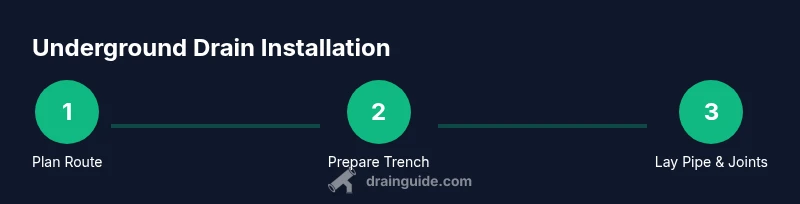
In a typical single-story home, a shallow trench runs from a laundry area to a main sewer line. The route is mapped, utilities marked, and a 3-inch PVC pipe is chosen for the trench. After digging to the required depth, the pipe is laid on a gravel bed with a consistent slope, joints are glued, and the trench is backfilled in stages with proper compaction. A test run confirms clean drainage without leaks, and the surface is restored to its original condition. This example demonstrates the core steps: planning, trenching, piping, testing, and backfill.
Tools & Materials
- Shovel and trenching tool set(Includes trench shovel and narrow spade for precise bottom bed)
- Measuring tools(Tape measure, level, and chalk line for slope accuracy)
- PVC DWV pipe (e.g., 3(Schedule 40 PVC with correct diameter for fixtures)
- PVC fittings (elbows, tees, reducers)(Ensure fittings match pipe size and flow direction)
- PVC primer and solvent cement(Follow manufacturer instructions for curing time)
- Backfill material (gravel or coarse sand)(Bed pipe for stable foundation before soil backfill)
- Protection and safety gear(Gloves, safety glasses, hard hat, steel-toed boots)
- Utility locator service(Mark existing underground utilities before digging)
- Trench shoring or protective support(Needed for trenches deeper than about 4 feet depending on soil)
- Cleaning tools (broom, bucket)(For debris control during installation)
- Compactometer or hand tamper(Used to compact backfill in lifts)
Steps
Estimated time: 6-8 hours
- 1
Plan and map the route
Create a detailed plan of the drainage route, noting the start fixtures and the main line. Verify soil conditions and identify obstacles like roots or rock. This step reduces surprises during trenching and helps maintain proper slope throughout.
Tip: Mark the route with chalk lines and flags before digging to stay on plan. - 2
Check local codes and permits
Consult your city or county building department to confirm required permits, venting rules, and burial depths. Adhering to codes prevents fines and ensures a safe, compliant installation.
Tip: Obtain permits early to avoid project delays. - 3
Mark utilities and schedule tools
Call a utility locator to mark lines and clear a safe digging zone. Gather tools and materials so you can work efficiently once digging begins.
Tip: Never dig without utility markings to avoid dangerous strikes. - 4
Dig the trench with correct depth
Dig along the planned route to the required depth, maintaining a uniform trench floor and sides. Use a level to verify the bottom is flat and free of sharp rocks that could damage pipe.
Tip: Keep the trench as straight as possible to avoid misalignment. - 5
Lay bed and dry-fit pipe
Place a gravel or sand bed, then lay the pipe along the trench to check alignment and slope. Dry-fit all joints and fittings to ensure everything matches before gluing.
Tip: Dry-fit first to catch sizing issues early. - 6
Glue joints and install fittings
Apply primer and solvent cement to all PVC joints per manufacturer instructions. Insert fittings carefully, wipe excess cement, and ensure seals are fully seated.
Tip: Avoid over applying cement to prevent joint slop. - 7
Backfill in lifts and compact
Backfill the trench in 6–12 inch lifts, compacting gently after each lift to prevent settlement. Ensure the trench remains stable and the pipe is not crushed.
Tip: Compact gradually to avoid pipe deformation. - 8
Test the system for leaks
Fill the system with water or run fixtures to check every joint for leaks. If leaks appear, drain, reseat joints, and re-test before final backfill.
Tip: Test under normal usage conditions for accuracy. - 9
Restore surface and document route
Backfill to original grade and repair any surface surfaces. Document the route, elevations, and any deviations for future maintenance.
Tip: Keep a simple map for future reference.
Got Questions?
Do I need a permit to install underground drain pipes?
Permit requirements vary by location. Check with your local building department before trenching. Having the right permits helps ensure compliance and a smoother inspection.
Permit rules vary by area, so check with your local building department before you dig.
What materials work best for underground drains?
PVC DWV pipes are common for residential drainage due to durability and ease of assembly. Ensure compatibility with fixtures and frost considerations in your climate.
PVC DWV is a popular choice for underground drains; make sure it fits your climate and fixtures.
How deep should underground drain pipes be buried?
Depth depends on local codes and frost lines. A typical residential trench aims to stay below frost depth and maintain sufficient cover for backfill stability.
Depth depends on frost lines and local codes; plan with your permit office.
How can I test for leaks after installation?
Fill the system and run water through all fixtures. Inspect joints for moisture and re-seal any suspect joints before backfilling.
Wash and test the system by running water through all connections, then check for drips.
Is trenchless installation possible for underground drains?
Trenchless methods exist but are more complex and may require specialized equipment and permits. For most DIY projects, traditional trenching remains practical.
There are trenchless methods, but they’re usually more advanced and equipment-heavy.
What maintenance is needed after installation?
Regularly inspect exposed joints and cleanouts, watch for settling, and address root intrusion early. Document the layout for future repairs.
Keep an eye on joints and cleanouts, and note the route for future fixes.
Watch Video
The Essentials
- Plan thoroughly before digging
- Use proper slope and backfill to prevent clogs
- Follow local codes and obtain permits as needed
- Test the system before final backfill
- Maintain a documented map of underground routes