How to Install Drain Tile: A Practical Guide for Homeowners
Learn how to install drain tile with a clear, step-by-step approach. Plan, trench, lay fabric and gravel, connect, and backfill for effective outdoor drainage.


You will install a perforated drain tile system to move groundwater away from your foundation or low spots. This project requires careful planning, a marked trench line, geotextile fabric, perforated pipe, clean gravel, sand, and a backfill capable of maintaining slope. Expect soil, weather, and trench length to influence time.
What drain tile is and when to use it
Drain tile is a perforated pipe wrapped in fabric and surrounded by gravel that channels groundwater away from foundations, basements, or low-lying areas. The goal is to create a controlled drainage path that reduces hydrostatic pressure and prevents pooling near structures. If you're asking how to install drain tile correctly, this guide covers the essential steps. According to Drain Guide, a well-planned drain tile system can dramatically improve soil moisture balance and foundation longevity when used in high-water tables or poorly draining soils. Understanding the site—soil type, slope, and outlet location—helps determine whether a trench, under-slab tile, or exterior French drain approach is best for your property.
Planning and design considerations
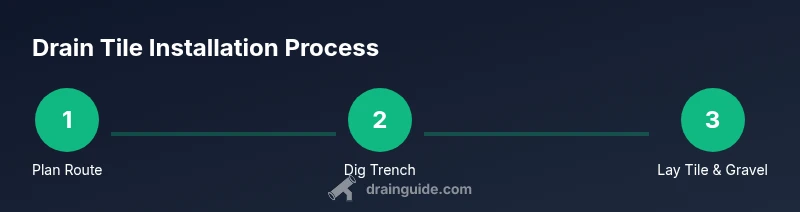
Before you dig, map the route from the area needing drainage to a suitable outlet (street, yard, or dry well). Establish a fall slope to keep water moving and avoid standing water; avoid roots, utilities, and existing irrigation lines. Decide on the trench width and depth that fits your chosen drain tile and gravel specification. Check local codes for permits or setback requirements, and plan for future landscape changes. Drain Guide analysis notes that careful planning leads to more reliable drainage results. A rough sketch can prevent rework and save time during the actual trenching phase.
Tools, materials, and site prep
Gather essential tools: measuring tape, marking paint or flags, shovel or trenching shovel, mattock for tough soil, level, wheelbarrow, and protective gear. Materials include perforated drain tile, geotextile or fabric sock, clean gravel (3/4 inch to 1 inch), end caps and connectors, and landscape fabric for surface finishing. Prepare the site by pruning back vegetation and clearing debris; mark utilities and avoid buried lines. Safety first: call your local underground utilities number before digging and wear eye protection and gloves.
Digging the trench and preparing the base
Dig a trench along the marked route with a steady slope toward the outlet. Keep trench walls straight and avoid soft, collapsing banks. Excavate to accommodate the drain tile, fabric, and gravel surround while leaving room for backfill. Create a stable base layer of compacted soil or coarse sand; this helps the gravel bed settle evenly and reduces pipe movement. A well-prepared base reduces future maintenance and improves drainage efficiency.
Installing fabric, drain tile, and gravel
Lay geotextile fabric along the trench to prevent soil intrusion into the gravel bed. Place the perforated drain tile on the fabric, ensuring openings face downward where applicable, and connect sections with compatible couplings. Cover the pipe with a thick layer of clean gravel so the gravel surrounds the tile evenly. Extend fabric over the gravel before backfilling to trap sediment while keeping water flow unobstructed.
Backfilling, grading, and finishing touches
Backfill the trench with a gravel-soil blend, gradually bringing the surface back to grade. Avoid large clumps that trap moisture; finish with topsoil and reseed or replant as needed. Ensure the outlet remains clear and accessible by testing water flow from the trench to the discharge point. A proper finish blends with the landscape and reduces tripping hazards while preserving drainage efficiency.
Maintenance and troubleshooting
Periodically inspect the outlet for clogs and sediment buildup. If drainage slows after heavy rains, check the gravel bed and ensure roots have not intruded. Repair or replace fabric if torn and prune nearby roots that threaten the system. Drain tile systems are relatively low-maintenance but benefit from annual checks and seasonal cleaning if needed.
Tools & Materials
- Measuring tape(for trench length and slope verification)
- Flags or spray paint(mark trench route and outlet)
- Shovel / trenching shovel(dig the trench)
- Mattock or pickaxe(break up tough soil and roots)
- Level or string line(check level and slope)
- Wheelbarrow(transport soil and gravel)
- Geotextile fabric(wrap around pipe to trap sediment)
- Perforated drain tile(cut to length and fit with connectors)
- End caps and couplings(seal ends and join sections)
- Clean gravel(3/4 inch to 1 inch aggregate)
- Sand (optional)(for base under fabric if needed)
- PPE (gloves, safety glasses)(personal safety)
- Protection/marker tape(warning of buried utilities)
Steps
Estimated time: 6-12 hours
- 1
Plan and mark the trench route
Start with a clear plan. Measure the distance to the outlet, mark the route with flags, and verify there are no buried utilities. A precise map helps maintain consistent slope and prevents rework.
Tip: Double-check outlet position and consider future landscape changes that may alter drainage. - 2
Dig the trench along the marked line
Use a shovel or trenching tool to create a straight, continuous trench. Keep a steady downward slope toward the outlet and avoid widening the trench where not needed. Monitor soil consistency to prevent cave-ins.
Tip: Call 811 before digging to locate buried utilities. - 3
Prepare the trench base and verify slope
Clear loose soil and create a stable base; use a level or string line to check that the overall slope remains consistent. A flat bottom helps the pipe sit evenly and improves water flow.
Tip: Check multiple points along the route to confirm uniform slope. - 4
Install fabric and lay drain tile
Spread geotextile fabric in the trench, lay the perforated drain tile, and connect sections with compatible couplings. Ensure openings face the correct direction and leave room for gravel around the pipe.
Tip: Avoid sharp bends that could kink the pipe. - 5
Backfill with gravel and cover
Place a thick layer of clean gravel around the tile, then fold fabric over the gravel and backfill with soil. This sediment trap helps keep the pipe clear while maintaining drainage.
Tip: Use washed gravel to minimize fines that clog the system. - 6
Finish grade and test the system
Backfill to surface grade and test water flow toward the outlet. Ensure the surface drains away from the foundation and the outlet is accessible for maintenance.
Tip: Run water through the trench to confirm steady discharge.
Got Questions?
What is drain tile and how does it work?
Drain tile is a perforated pipe placed in a trench and wrapped in fabric, surrounded by gravel to collect and channel groundwater away from foundations or low spots. The goal is to reduce hydrostatic pressure and improve soil drainage.
Drain tile is a perforated pipe in gravel that carries groundwater away from your home, reducing pressure near the foundation.
Do I need a permit or a professional?
Permit requirements vary by location and project scope. For larger installations or when you must alter grading near a foundation, consult your local building authority. A professional is advisable for complex sites.
Permits depend on your area; for larger jobs, consider hiring a pro or checking with your local building department.
What slope and depth should I use?
Aim for a gentle slope toward the outlet and enough depth to accommodate fabric, pipe, and gravel. Depth depends on soil conditions and pipe size; ensure the pipe sits below the surface.
Keep a gentle slope toward the outlet and ensure the pipe sits below the surface but above groundwater.
How long does installation take?
Time varies with length and soil, but a typical section can take several hours to a full day. For large properties, plan for a multi-day project.
Most installs take several hours to a full day, depending on length and soil conditions.
What maintenance is required?
Inspect the outlet for clogs and sediment buildup. If drainage slows, check the gravel bed and ensure roots have not intruded. Repair fabric if torn and prune nearby roots that threaten the system.
Check the outlet and discharge path annually for clogs and ensure it stays clear.
Watch Video
The Essentials
- Plan thoroughly before digging
- Maintain a consistent slope toward the outlet
- Use geotextile and clean gravel to minimize clogging
- Finish with proper grade and test flow
- Drain Guide's verdict: follow the steps for reliable drainage