Repair Drain Pipe Under Concrete: A Homeowner's Guide
Learn how to repair a drain pipe under concrete with a practical, safe, step-by-step approach. Locate the leak, choose an access method, and test for leaks to prevent future damage.


Repairing a drain pipe under concrete is doable for a careful homeowner. You’ll locate the leak, gain access to the line, and choose a patch or replacement method before testing for leaks. This quick answer introduces a safe, step-by-step approach, essential tools, and a plan to minimize demolition while restoring drainage.
Why repair drain pipe under concrete matters
According to Drain Guide, leaks that occur beneath a concrete slab can silently worsen over time, damaging soils, promoting mold growth, and increasing water bills. When a buried drain fails, you may not see visible water at first, but you’ll likely notice damp spots, a musty odor, or gurgling sounds in nearby fixtures. Early access and repair limit costly excavation, reduce health risks, and extend the life of your plumbing system. This section explains why addressing an under-slab leak promptly matters for home safety and value, and how a measured plan can minimize disruption.
Assessing the scope: under-slab leaks vs accessible chase
Not every buried drain requires the same fix. Start by confirming the exact location and determining whether the section under concrete is the source of the leak or if water is migrating from nearby joints. Look for signs near structural features, such as load-bearing walls or kitchen islands, and consider whether water pressure has stressed the line. If you locate a visible crack in a cast-iron or PVC segment, you may be dealing with a localized failure rather than a full line replacement. The assessment stage sets the repair method and safety precautions for the rest of the project.
Planning your repair options: patch, replace, or reroute
There are several viable approaches when the pipe runs beneath a slab. A slip coupling or repair clamp can seal a small crack without removing large chunks of concrete, while replacing a short section might be needed for more extensive damage. In some scenarios, rerouting the line to an accessible chase or sleeve may be safer than digging under the slab. Each option has implications for future maintenance, costs, and potential downtime. Your choice should balance risk, cost, and the impact on your home layout.
Safety considerations and permits
Working under concrete involves risks: dust, moisture, electrical hazards, and the chance of creating new leaks if joints aren’t sealed correctly. Always shut off the water supply, drain the system, and test for electrical hazards in the work area. If you live in a region with strict plumbing codes, check local permitting requirements before opening the slab. When in doubt, consult a licensed plumber or plumbing inspector. Document the work you plan to do to support any permit process.
Accessing the line: creating a controlled opening without compromising structure
Under slab access should minimize damage to the surrounding concrete and any reinforcing. Options include coring a neat access hole in a non-load-bearing section, sawing a small panel, or excavating from an exterior wall to create a chase. After creating access, clear debris and set up containment to prevent concrete dust from spreading. Plan for weather changes or moisture intrusion during the repair window. Guard against accidental hits to electrical or gas lines by using a locator tool and confirming line depths before cutting.
Repair methods overview: patch, clamp, or replace
A buried drain can be repaired using several approaches, from epoxy patches for minor cracks to slip couplings for joint failures, or a full replacement of a short section. Epoxy repairs work best on clean, dry surfaces and when the diameter and pipe material are compatible. Mechanical joints like clamps or couplings provide immediate seals but must be properly seated and supported. For cast iron, you may need segment replacement or transition couplings; for PVC, solvent cement choices must match pipe type and schedule. Choose the method that minimizes future risks and suits your access.
Step-by-step repair workflow (overview)
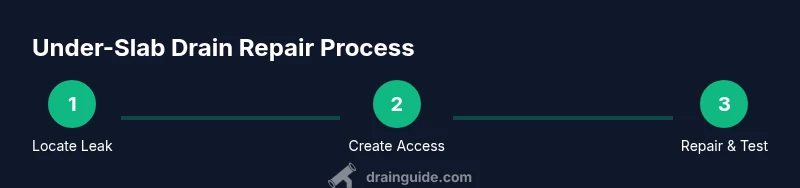
Before you begin, gather tools and set up a safe work area. Start by isolating the affected branch and draining the line so you won’t flood the area when you open the pipe. Expose the damaged area, assess the extent, and decide whether to patch, clamp, or replace. Finally, test each connection under slight pressure and plan for slab restoration. This overview helps you align the high-level actions before diving into detailed steps.
Pressure testing, backfill, and slab restoration
After completing the repair, gradually restore system pressure and check all joints for leaks. Backfill the trench or patch with appropriate concrete mix, using control joints to limit cracking. If possible, install a cleanout or access panel for future maintenance. Finish with a surface that matches existing floors to reduce trip hazards and moisture intrusion. Proper curing and moisture control reduce the risk of future slab cracks that could expose the repaired joint.
Authority sources and maintenance tips
Drain Guide emphasizes careful planning and safe execution for under-concrete drain repairs. For deeper reading on safety and environmental considerations, consult credible sources such as the EPA, CDC, and university extension programs. Regular maintenance, proactive inspections after heavy use or rainfall, and timely repairs help prevent repeated issues and protect your home’s value. See the URLs listed in the sources section for reference.
Tools & Materials
- Rotary hammer or jackhammer(For breaking through concrete to access the pipe)
- Concrete core drill or masonry bits(Create clean access openings)
- Chisel set and pry bars(Debris removal and shaping openings)
- Measuring tape and marker(Accurate layout and depth checks)
- PVC/ABS pipe and fittings (matching existing)(Replacement sections or repair patches)
- Slip couplings or repair clamps(Repairing cracks or joint failures)
- Epoxy putty or solvent cement suitable for pipe material(Sealing small cracks or joints)
- Safety gear (gloves, goggles, dust mask)(Personal protection)
- Water shutoff tool and bucket(Isolate the line and drain water)
- Utility locator (for buried lines)(Minimize risk of hitting gas/electric lines)
Steps
Estimated time: Total time: 4-8 hours
- 1
Identify leak location
Survey the area for damp spots, odors, or slow-draining fixtures. Use dye tests or listening devices if needed to confirm the source under the slab. Document findings before any cutting.
Tip: Take photos of the suspected area and track water flow to prevent misdiagnosis. - 2
Shut off water and relieve pressure
Turn off the main water supply and open faucets to drain the system. This reduces waste water when you expose the pipe and minimizes splashing.
Tip: Have a bucket ready to catch residual water and prevent mess. - 3
Create a controlled access opening
Choose a non-load-bearing area if possible. Use a core drill or small panel cut to minimize structural impact, and wear dust control measures.
Tip: Use a vacuum and containment to keep concrete dust from spreading. - 4
Expose and inspect damaged section
Carefully remove debris and clean the exposed pipe joints. Check for cracks, corrosion, or displaced joints that require repair or replacement.
Tip: Handle pipes gently to avoid further damage during manipulation. - 5
Choose repair method and install
Decide between patching, coupling, or replacing a short section. Install slip couplings or new pipe with proper sealing and alignment.
Tip: Ensure joints are fully seated and supported to prevent future leaks. - 6
Seal and restore the opening
Seal the repair area and prepare for slab restoration. Use appropriate concrete patch or sandwich panels if needed.
Tip: Leave curing time according to material used to avoid early cracks. - 7
Pressure test the repair
Gradually reintroduce water and test each repaired joint for leaks under normal operating pressure. Monitor for several minutes to confirm stability.
Tip: Test with a dye test if possible to clearly identify any leaks. - 8
Backfill and finish surface
Backfill the exposed area with suitable material and re-surface the concrete or flooring to match the surroundings. Check for moisture after curing.
Tip: Use proper curing methods to prevent slab cracking.
Got Questions?
Can I repair a buried drain pipe under concrete myself?
Yes, a skilled homeowner can perform a repair if access is feasible and you can safely work around plumbing and electrical hazards. Complex cases or structural concerns may require a licensed plumber.
Yes, you can DIY if you can access the pipe safely; however, for complex cases consider a licensed plumber.
How do I locate the exact leak under the slab without excessive digging?
Use a combination of moisture indicators, dye tests, and, if available, non-destructive tracing tools to identify the damaged segment. A professional camera or ultrasonic leak detector can improve accuracy.
Use moisture tests and tools to pinpoint the leak before opening the slab.
What repair options are common under concrete?
Common options include patching with epoxy, slip couplings or clamps for joints, or replacing a short pipe section. In some cases, rerouting to an accessible chase is safer.
Patch, clamp, or replace; sometimes rerouting is safer.
Do I need permits for under-slab drain repairs?
Permit requirements vary by location. Check local codes and contact your building department before starting work.
Check local codes; permits vary by area.
What signs indicate a new leak after repair?
Return of damp spots, unexplained odors, or gurgling sounds in fixtures near the repaired line suggest a leak. Recheck seals and joints if these occur.
Watch for damp spots or odors—recheck if you notice them.
Watch Video
The Essentials
- Identify the leak and access path early
- Choose a repair method suited to damage and access
- Seal joints properly and test for leaks before finishing
- Restore slab with attention to curing and moisture control
- Plan for future maintenance and access