Bathroom Sink Drain Cleaning: A Practical DIY Guide
Learn safe, effective bathroom sink drain cleaning with a step-by-step plan, essential tools, maintenance tips, and troubleshooting from Drain Guide for 2026.


To fix a slow or clogged bathroom sink drain, follow a step-by-step cleaning approach using simple tools, a plunger or drain snake, and safe cleaners. Start with removing the stopper, then mechanical cleaning, and finish with a preventive rinse. This guide, from Drain Guide, covers safe methods for common bathroom sinks.
Why bathroom sink drain cleaning matters
According to Drain Guide, maintaining a clean bathroom sink drain helps prevent slow drainage, odors, and unsanitary buildup that can affect daily routines. Regular cleaning reduces the chances of hair, soap scum, and mineral deposits forming stubborn clogs. A well-maintained drain also protects your plumbing from wear and corrosion, saving you time and money in the long run. In this guide, we outline practical, safe approaches to bathroom sink drain cleaning that homeowners and DIY enthusiasts can perform without professional help, while still knowing when to call an expert. By understanding the causes and simple preventive steps, you’ll keep your sink flowing smoothly and avoid messy backups.
Common causes of clogs in bathroom sinks
Bathroom sink drains clog for a few core reasons: hair and soap scum washing down the drain, mineral buildup from hard water, and occasional foreign objects like jewelry or small toiletries accidentally dropping in. Over time, these materials form a dense mass that constricts flow. Drain Guide analysis shows that routine cleaning and mindful use dramatically reduce these issues. Regularly removing the stopper and flushing with hot water can help prevent buildup, while using a hair catcher at the drain reduces debris entering the pipe system. Understanding these causes helps you tailor your cleaning approach and avoid chemical-heavy solutions.
Tools and materials you’ll need
Before you start bathroom sink drain cleaning, gather the essentials so you don’t interrupt the process. A sturdy bucket, rubber gloves, a plunger, a drain snake or hand auger, adjustable wrench, rags or towels, a flashlight, and safe cleaners (baking soda and vinegar or a mild detergent) are often enough. If you suspect a trapped P-trap, you’ll need to access it with the wrench and a towel ready to catch water. Having a small cup or container for catching water and a dedicated brush for cleaning the stopper makes the job cleaner and faster. Keeping a notepad handy helps record what you found for future maintenance.
Step-by-step: basic cleaning method (fast-track)
-
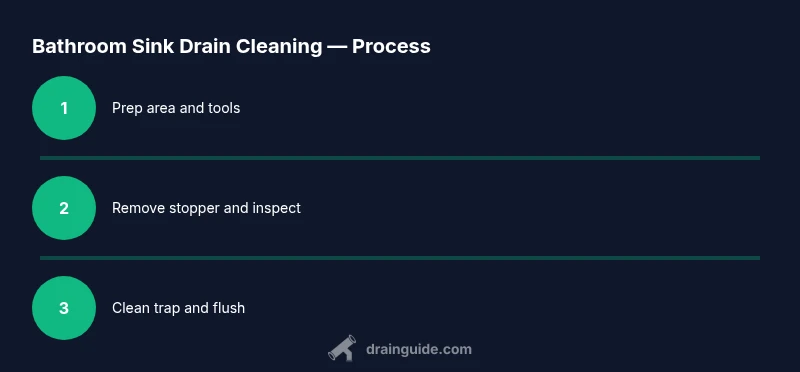
Prep the area: clear the cabinet, place towels, and remove the stopper to access the drain. This step reduces splash and gives you a clear view of the opening. Pro tip: photograph the assembly before disassembly so you can reassemble correctly.
-
Check the P-trap: place a bucket underneath, loosen the slip nuts with a wrench, and remove the trap. Inspect for buildup and rinse the trap with hot water. Pro tip: wear goggles and keep a rag handy to catch drips.
-
Clean the drain and stopper: use a bent wire or small brush to remove hair from the drain opening, then scrub the stopper clean. Pro tip: soak the stopper in warm soapy water for 5–10 minutes to loosen gunk.
-
Mechanical cleaning with a snake: insert the drain snake into the drain, rotate and push to break up clogs, then pull back out to remove debris. Pro tip: work slowly and avoid forcing the snake past resistance.
-
Flush and sanitize: run hot water for several minutes, then flush with a baking soda and vinegar combo if desired. Pro tip: wait 15 minutes after vinegar before running water again.
-
Reassemble and test: reconnect the P-trap, wipe seals, and run water to confirm full flow. Pro tip: check for leaks by running water under pressure.
Deeper cleaning options for stubborn clogs
If the drain remains sluggish after basic cleaning, consider a more thorough approach. A longer drain snake can reach deeper obstructions, and a cup plunger offers better suction on larger openings. Avoid chemical drain cleaners in older pipes or metal fittings, as they can damage seals and corrode metals over time. Instead, repeat mechanical methods, using a flexible brush to scrub the inside of the trap and pipe. For persistent clogs, a professional auger service may be warranted. Drain Guide emphasizes patience and gradual pressure to prevent damage while restoring flow.
Natural vs chemical cleaners: what works best
Natural approaches—baking soda followed by hot water, or a vinegar–hot water rinse—are often enough for routine maintenance and light clogs. These methods are safer for your pipes and the environment. Chemical drain cleaners can be effective for severe clogs, but they pose risks to skin, eyes, and metal fittings, and can damage septic systems when used improperly. If you choose chemicals, follow label instructions exactly, ventilate the area, and never mix products. Drain Guide recommends trying mechanical methods first, reserving chemical solutions for rare cases, and never relying on them as a routine fix.
Maintenance tips to prevent future clogs
Maintenance is simpler than you might think. Use a drain screen to catch hair, wipe down the stopper to prevent soap scum buildup, and run hot water for 15–30 seconds after shaving, brushing, or applying hair products. Treat the drain with a mild weekly rinse of baking soda and water to keep mineral deposits at bay. If you have hard water, consider a yearly professional check of the pipes where you notice slower drainage. By combining regular cleaning with preventative habits, you can significantly reduce the frequency of bathroom sink drain cleaning.
When to call a professional
If you’ve tried mechanical methods with limited success, or you notice signs of a sewer odor, unusual gurgling, persistent leaks, or recurring clogs, it’s time to call a licensed plumber. Complex issues such as a collapsed pipe, a clogged main line, or issues with venting require specialized tools and expertise. Drain Guide’s guidance: seek professional help when DIY methods fail to restore proper drainage or when you encounter persistent backups that you cannot clear safely.
Safety and best practices for DIY drain work
Always wear protective gear, including gloves and eye protection. Work in a well-ventilated area and avoid mixing cleaners, especially products containing bleach and ammonia. Never pour chemical cleaners into a drain that’s already partially blocked, as reactions can cause splashing and pipe damage. Use gentle, mechanical methods first and only escalate to chemical solutions if necessary. Cleaning a bathroom sink drain safely means prioritizing your safety and the longevity of your plumbing.
Troubleshooting common problems after cleaning
If you still notice slow drainage after cleaning, recheck the trap connections for leaks, confirm there are no new blockages in the pipes, and verify that the stopper is seating properly. Ensure the trap is not cross-threaded or cracked, which could maintain a small leak or slow drainage. If water backs up into the sink when you run the faucet, there may be a deeper clog or venting problem. Drain Guide suggests documenting each step you take so a professional can diagnose more quickly if needed.
Tools & Materials
- Rubber gloves(Protect hands from dirty water and sharp edges)
- Bucket(Catch water when removing the P-trap)
- Plunger (cup or flange)(Help loosen and dislodge clogs)
- Drain snake / hand auger(Reach deeper blockages)
- Adjustable wrench(Loosen trap nuts if needed)
- Rags or towels(Clean up spills and dry surfaces)
- Flashlight(Inspect dark pipe areas)
- Old toothbrush or small brush(Scrub stopper and pipe openings)
- Vinegar and baking soda(Use for gentle deodorizing and mild cleaning)
Steps
Estimated time: 45-60 minutes
- 1
Prep the area and assemble tools
Clear the cabinet, lay towels, and set up your tools within reach. Removing the stopper exposes the drain and reduces mess during cleaning.
Tip: Take a quick photo of the stopper assembly before disassembly. - 2
Remove stopper and access drain
Detach the stopper and inspect the opening for obvious hair. If the stopper is stubborn, use a small screwdriver to lift the retaining clip.
Tip: Have a rag ready to catch any standing water. - 3
Inspect and clean the P-trap
Place a bucket underneath, loosen the slip nuts, and remove the trap. Clean out debris by hand and rinse the trap thoroughly.
Tip: Look for cracks or signs of wear—replace if needed. - 4
Snake the drain to break clogs
Insert the drain snake, rotate while advancing, and pull back to remove debris. Repeat until you feel the flow improve.
Tip: Work slowly and avoid forcing the snake through tight bends. - 5
Flush and deodorize
Run hot water to flush the pipe, then optional baking soda and vinegar to deodorize. Do not mix chemicals with bleach.
Tip: Wait a few minutes between steps to let substances work. - 6
Reassemble and test
Reconnect the P-trap, wipe seals, and run water to check for leaks and flow. Address any slow drip immediately.
Tip: Keep receipts or warranties for replacement parts.
Got Questions?
What causes slow bathroom sink drains?
Hair, soap scum, and mineral buildup are the most common culprits. Regular cleaning and a hair catcher significantly reduce the problem.
Hair and soap scum often clog bathroom sinks; regular cleaning helps.
Can I use chemical drain cleaners for bathroom sinks?
Chemical cleaners can damage pipes, seals, and septic systems if used too often. Prefer mechanical methods first and use chemicals only as a last resort.
Avoid chemical cleaners unless necessary; they can harm pipes.
Is removing the P-trap always necessary?
Not always, but it’s often the best way to clear a stubborn clog and inspect for damage. Have a bucket ready and take care with fittings.
You may need to remove the P-trap to clear debris.
How often should I clean the bathroom sink drain?
Aim for a light clean every 1–3 months and a deeper clean every 6–12 months, depending on usage and water hardness.
Clean it every few months, deeper less often.
What if there’s a sewer odor after cleaning?
A sewer odor can indicate venting problems or a dried-out trap. Re-seal joints, refresh the trap water level, and consult a plumber if the odor persists.
Persistent sewer smell means check venting or call a pro.
Will this method fix metal pipes?
For minor clogs, mechanical cleaning can help. Severe corrosion or collapsed sections require professional replacement.
If pipes are old or corroded, a pro is best.
Watch Video
The Essentials
- Use mechanical methods first for safety and effectiveness
- Avoid mixing cleaners to prevent dangerous reactions
- Prevent clogs with a simple routine maintenance
- Know when to call a professional for persistent issues