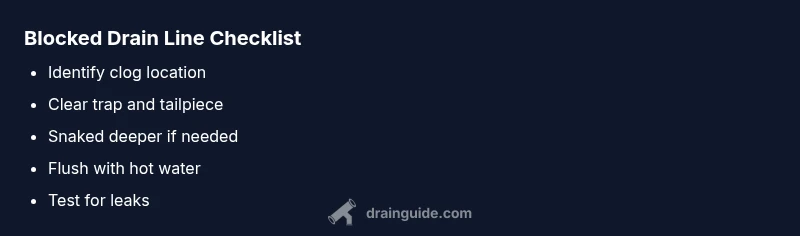
Blocked Drain Line Troubleshooting: Quick Guide
Urgent, practical steps to diagnose and fix a blocked drain line. Safe DIY fixes, when to call a pro, and prevention tips from Drain Guide.


A blocked drain line is usually caused by hair, grease, or soap scum buildup in the trap or immediate drain. For a quick fix, begin with safe, non-chemical steps: clear the trap, flush with hot water, and try a plunger or drain snake. If the clog persists, move to deeper diagnostics or contact a plumber.
Why a blocked drain line happens
According to Drain Guide, a blocked drain line is typically the result of everyday use producing gradual buildup. In most homes the culprits are hair, soap scum, grease, and mineral deposits that collects in the P-trap and along the drain pipe. Over time this buildup slows water flow, causes gurgling, and can emit unpleasant odors. Kitchen sinks, bathroom vanities, and showers are all vulnerable, especially when multiple fixtures drain into the same line. Avoid rushing to chemical cleaners, which can corrode pipes and mask the real problem. Instead, approach the issue with a systematic, safe method that identifies where the clog sits—trap, branch drain, or main line—and uses the right tool. The Drain Guide team emphasizes safety and prevention to reduce recurring clogs. Early intervention saves money and minimizes the risk of a sewage backup, especially in homes with older plumbing.
Common signs of a blocked drain line
Slow draining and gurgling sounds are the first clues. If water backs up in multiple fixtures, the issue is broader than a single trap. A foul odor near the drain often points to trapped debris or sewer gases. If you notice damp cabinets, damp walls, or unexplained wet spots, investigate further. Do not ignore sewage odors; backflow can indicate a serious problem. By recognizing these signals early, you can prevent overflow and costly damage. Drain Guide highlights that addressing a blocked drain line promptly protects your home’s plumbing and indoor air quality.
Safe first steps you can take today
Begin with non-chemical methods and work your way toward more involved fixes. Put on gloves and safety glasses. Clear the visible debris from the trap and inspect the P-trap for buildup. Detach the trap carefully, clean it with warm water and a brush, and reassemble ensuring tight, leak-free connections. Run hot tap water to dissolve grease and flush the line. If a plunger is available, use it on the affected fixture with steady, firm pressure. Avoid mixing cleaners; never combine chemical drain cleaners with other methods. If water still drains slowly after these steps, you’re facing a deeper clog that requires a snake or professional evaluation.
Diagnostic flow: symptom → diagnosis → solutions
Symptoms guide our flow. Start with a slow drain or recurrent backups. The most likely diagnosis is a local trap clog or debris in the tailpiece, followed by a venting issue or a deeper main-line clog. Solutions progress from trap cleaning to snake work, and finally to professional inspection if the problem remains. Document your steps and outcomes so you can communicate clearly with a plumber if needed. Drain Guide stresses approaching diagnosis methodically to avoid unnecessary disassembly and damage.
Step-by-step fix for the most common cause
This section provides a detailed methodology for the typical trap-related clog. You’ll learn how to safely remove the P-trap, clean debris, inspect for misalignment, reassemble correctly, and test the drain. If the clog persists beyond the trap, you’ll have a proven process to extend your effort to the tailpiece and beyond using a drain snake. Remember to shut off water, protect the area with towels, and keep a bucket handy to catch wastewater. This approach minimizes mess and protects your plumbing.
Tools and safety gear you’ll want on hand
Gather a bucket, adjustable wrench, old towels, gloves, and eye protection. A drain snake or auger will extend your reach beyond the trap; a plunger provides extra leverage for a shallow clog. Avoid caustic chemical cleaners and never mix cleaners with other products. Safety comes first—protective gear reduces splash exposure and protects skin and eyes.
When to call a professional and what to expect
If the clog persists after trap cleaning and basic snaking, or if you notice sewage smell, rising water levels in the yard, or frequent backups across multiple fixtures, it’s time to call a plumber. A licensed pro can identify venting problems, inspect the main line, and perform camera inspection if needed. Expect a diagnostic visit to include pipe access, pressure testing, and potential sewer-line cleaning or replacement recommendations. Prompt professional help prevents foot-dragging problems and expensive repairs later.
Steps
Estimated time: 30-45 minutes
- 1
Prepare and protect the work area
Shut off the water supply to the affected fixture. Place a bucket under the trap to catch water, and lay towels to protect the cabinet. This keeps cleanup manageable and prevents slip hazards during the repair.
Tip: Have a flashlight handy to inspect inside the trap and pipe. - 2
Disconnect and clean the P-trap
Loosen the slip nuts with an adjustable wrench and carefully remove the P-trap. Clear all debris, rinse the trap thoroughly, and check the wall tube for buildup. Reassemble the trap with the gaskets seated properly to prevent leaks.
Tip: Keep the trap parts organized to avoid losing small washers. - 3
Inspect further along the line
Inspect the tailpiece and elbow for visible clogs. Use a flexible brush or a gloved hand to dislodge any debris. If the tailpiece is clear, consider the possibility of a deeper clog further down the drain line.
Tip: Do not force debris through the pipe; gentler attempts reduce the risk of damage. - 4
Reassemble and test
Carefully rejoin the trap, tighten all fittings, and run hot water to flush the system. Check for leaks around joints and ensure proper alignment to prevent future seepage.
Tip: Slowly run water on all fixtures to confirm consistent flow. - 5
If the clog remains, try a drain snake
Insert the snake into the drain and rotate the handle to advance the head. Break up debris and pull back sections while feeding more cable into the line. Remove the snake and clean it before testing the drain again.
Tip: Wear eye protection; concealed water can spray during snaking. - 6
Final flush and assessment
Run hot water for several minutes to clear residual debris. If flow improves, monitor for the next 24-48 hours. If slowing returns or odors persist, escalation is likely necessary.
Tip: Document any changes to help a plumber diagnose deeper issues.
Diagnosis: Drain is slow or backs up in multiple fixtures
Possible Causes
- highLocal trap clog (hair, food debris)
- mediumVent blockage or poor venting
- lowMain sewer line clog or septic issues
Fixes
- easyClean and clear the trap; inspect pipe for debris; use auger for deeper clogs; avoid chemical drain cleaners
- hardSnake mainline if accessible or call a plumber
Got Questions?
What is the most common cause of a blocked drain line?
Hair, grease, and soap scum are the usual culprits, often collecting in the trap and shallow piping. Localized clogs respond well to trap cleaning and mechanical methods. If multiple fixtures are affected, deeper investigation may be needed.
Hair and grease are the usual culprits. Start with trap cleaning and mechanical methods before calling a pro.
Can I use chemical drain cleaners to fix a blocked drain line?
Chemical cleaners can damage pipes and septic systems and may not reach deeper blockages. Mechanical methods like plunging or snaking are safer first options. If you choose cleaners, use them sparingly and follow the label instructions exactly.
Chemical cleaners aren’t ideal for most blocked drain lines; try plunging or snaking first and use cleaners only as a last resort following instructions.
Is a blocked drain line dangerous?
Yes, a blocked drain line can lead to sewage backups, health risks, and water damage. If you detect sewage odors or backups, limit use of affected fixtures and seek professional help promptly.
Backups can be hazardous. If you notice sewage odors or backups, stop using the area and get professional help quickly.
How long does it take to fix a blocked drain line at home?
DIY fixes can range from a few minutes to under an hour, depending on the clog’s depth and accessibility. Deeper main-line issues may require professional equipment and time.
DIY fixes can take a short time, but deeper blockages may need a pro and more time.
When should I call a plumber for a blocked drain line?
Call a plumber if the clog recurs after DIY attempts, if you notice sewage odors, or if multiple fixtures back up simultaneously. Early professional evaluation can prevent bigger damage and costly repairs.
Call a plumber if DIY attempts fail or backups happen in multiple fixtures.
Will cleaning the drain automatically prevent future blockages?
Cleaning helps, but prevention also depends on regular maintenance: use drain screens, avoid pouring grease down the drain, and run hot water or a mild cleaning routine weekly to slow buildup.
Regular maintenance plus mindful use prevents most future blockages.
The Essentials
- Identify clog location before heavy fixes
- Start with trap cleaning, then extend efforts if needed
- Avoid chemical cleaners; use mechanical methods first
- Call a plumber for persistent or main-line issues