How to Tell If Your Drain Is Clogged: A Practical Troubleshooting Guide
Learn fast signs of a clogged drain, top causes, and safe steps you can take today. Drain Guide provides clear, practical troubleshooting for homeowners to fix or know when to call a plumber.


Most likely causes are hair buildup, soap scum, and grease that slow or block water flow. Quick fix: remove the trap, clear debris, and flush with hot water. If the blockage persists, try a hand-crank auger or enzyme cleaners, and avoid chemical drains as a first resort to prevent pipe damage. If unsure, call a pro.
Why this guide matters
If you’re dealing with slow drainage or frequent backups, understanding how to diagnose and fix a clogged drain is essential. The question "how to know if your drain is clogged" isn’t just about immediate relief; it’s about preventing water damage, foul odors, and costly repairs. Drain Guide emphasizes that early detection and a calm, methodical approach keep small blockages from turning into major plumbing problems. This guide walks you through signs, causes, and safe steps homeowners can take before calling a professional. By following our step-by-step approach, you’ll gain confidence to tackle routine clogs and know when professional help is truly needed. Expect practical checks, common-sense fixes, and prevention tips you can apply in kitchens, bathrooms, and laundry areas. The goal is to restore flow quickly while protecting your pipes.
Common drainage culprits and how they form
Most household clogs start small and grow with daily use. In bathroom drains, hair and soap scum trap minerals and create a slick, slow-moving plug that catches other debris. In kitchen drains, grease and food particles combine with soap to form a stubborn barrier that resists water flow. In shower drains, a mix of hair, soap, and mineral buildup often accumulates in the drain body. Over time, these blockages become denser, making it harder for wastewater to pass. Understanding these patterns helps you tailor fixes and prevention strategies. Drain Guide analyses show that regular maintenance, not harsh chemical cleaners, yields the best long-term results. Keep a counter of how long water takes to drain and notice any changes that come with seasons or heavy use.
Signs you might be dealing with a clog
Look for slow drainage (water taking longer than normal to disappear), gurgling noises from the drain, standing water in sinks or tubs after draining, and unpleasant odors rising from the drain. If you notice backups in multiple fixtures, the problem could be a deeper blockage or a sewer line issue. Frequent clogs in the same drain suggest a partial obstruction that worsens with time. At the first sign, test different fixtures to determine if the issue is localized or widespread, which helps determine the next step.
Safe initial checks you can perform today
Begin with simple, non-invasive checks. Remove the drain cover and clear visible debris around the opening. Check the P-trap under sinks for standing water and clean out hair or sediment. Rinse the trap with hot water and a mild cleaner. A plunger can help with minor clogs in toilets or sinks—use it in an up-and-down motion to create pressure without splashing water everywhere. If your device is a shower drain, a thin wire or a bent hanger can help loosen hair near the surface. Always wear gloves and eye protection. If the water flow improves after these steps, you’ve likely resolved a partial clog. If not, proceed to deeper diagnostics.
Deeper diagnosis if basic checks fail
When simple checks don’t restore flow, the blockage may be farther in the line or more stubborn than surface debris. Using a drain auger (snake) lets you reach beyond the trap to break up or pull out the obstruction. Slowly rotate the auger while pushing it into the pipe; withdraw and clean debris as it comes out. For kitchens, consider a vent check: a blocked vent stack can slow drainage and cause backup noises. If multiple fixtures are affected or backups occur in the main sewer line, do not force water or chemicals through the system—call a licensed plumber to assess sewer health and avoid pipe damage.
What to avoid and when to call a pro
Avoid chemical drain cleaners as a first resort. They can damage pipes and emit dangerous fumes, especially in older homes. Don’t mix chemical cleaners with bleach or other cleaners; this can create hazardous gases. If you hear gurgling from the sewer line, notice multiple backups, or feel constant pressure in the pipes, it’s time to call a plumber. Pro help is also warranted if you’re uncomfortable handling tools or if the clog recurs after attempted fixes. Regular maintenance and professional inspection can prevent costly emergencies.
Prevention and maintenance to minimize future clogs
Preventive habits save time and money over the long run. Use a sink strainer to trap hair and food particles; clean it daily. Run hot water with a splash of baking soda and vinegar monthly to clear minor buildup (flush with hot water after). Avoid pouring grease down the drain; wipe fats into the trash instead. In bathrooms, remove and clean traps periodically and inspect venting to ensure proper airflow. Scheduling an annual drain inspection can reveal potential issues before they become emergencies.
Steps
Estimated time: 60-90 minutes
- 1
Shut off water and prep the area
Protect the floor with towels or a tray, and turn off the water supply to the affected fixture. This prevents spills while you work. Gather gloves, a bucket, adjustable wrench, and a drain snake.
Tip: Keep a small container handy to collect debris and avoid staining surfaces. - 2
Remove the P-trap
Place a bucket underneath the trap, loosen the slip nuts, and carefully remove the trap. Clear out hair, soap scum, and sediment with a brush. Rinse the trap with hot water before reinstallation.
Tip: Take a photo before disassembly so you can reassemble correctly. - 3
Inspect and clean the trap and connections
Check both ends of the trap and the tailpiece for buildup. Scrub clean and ensure seals are intact. If you find cracks or leaks, replace the trap rather than reusing worn parts.
Tip: Lubricate rubber gaskets lightly to ensure a tight seal. - 4
Snaking deeper lines
Insert the drain snake into the pipe, rotating as you push forward to navigate bends. When you feel resistance, pull back slightly to bring debris with you. Repeat until the drain runs freely.
Tip: Go slow; forcing the snake can damage pipes. - 5
Rinse and flush
Reassemble the trap and run hot water through the system to flush remaining fragments. Add a safe enzymatic cleaner if you want to break down residual organics, then flush again with hot water.
Tip: Never mix cleaners; read labels for compatibility. - 6
Test the flow
Run water and observe the drain for steady flow. If draining remains slow, repeat snaking or consider professional snaking or camera inspection for deeper systems.
Tip: Document what you observe; it helps a pro diagnose later. - 7
Reassemble and monitor
Tighten all fittings, replace the drain cover, and monitor drainage over the next few days. If clogs reappear, plan a professional evaluation to prevent repeated backups.
Tip: Keep an eye on multiple fixtures—symptom patterns guide the next steps. - 8
Prevent future clogs
Adopt preventive practices: strain food, avoid fats, clean traps regularly, and schedule annual drain checks to catch problems early.
Tip: Small routine checks beat major overhauls later.
Diagnosis: Slow-draining sink or frequent backups
Possible Causes
- highHair, soap scum, and mineral buildup in the P-trap or drain line
- highGrease or food particles forming a sticky blockage
- mediumVentilation issue in plumbing (vent stack blocked)
- lowTree roots or sewer line intrusion
Fixes
- easyDisassemble the P-trap and remove debris; reassemble with plumber’s tape as needed
- mediumUse a drain auger to clear deeper obstruction in the pipe
- easyFlush with hot water and an enzymatic cleaner to break down organics
- hardIf sewer backup persists or you notice multiple fixtures affected, call a licensed plumber
Got Questions?
What are the most common signs of a clogged drain?
Slow drainage, gurgling noises, and frequent backups are classic signs of a clog. Odors can also indicate buildup. If multiple fixtures are affected, the problem may be deeper in the system.
Look for slow drainage and gurgling, and note if multiple fixtures back up together.
Can I fix a clogged drain myself?
Yes, for simple clogs you can remove the trap, clear debris, and use a drain snake. Always take safety precautions and avoid pushing too hard. If symptoms persist, seek professional help to avoid pipe damage.
You can fix simple clogs yourself, but stop if it worsens and call a plumber.
Are chemical drain cleaners safe to use?
Chemical cleaners can damage older pipes and release harmful fumes. They should not be the first fix and should never be mixed with other cleaners. Consider enzymatic cleaners or mechanical methods first.
Chemicals can harm pipes; use mechanical methods or enzymes first.
How long does a DIY clearance typically take?
Simple trap cleanouts take about 15-30 minutes. Deeper snaking can take 30-60 minutes depending on blockage complexity. Plan for a bit longer if you’re new to tools.
Most DIY clears take under an hour, longer if the clog is stubborn.
When should I call a plumber?
Call a plumber if clogs persist after DIY attempts, if backups affect the main sewer line, or if you notice sewage odors or wet areas around the foundation. A professional can diagnose venting and pipe health safely.
If a clog keeps returning or you suspect sewer issues, call a pro.
What maintenance helps prevent clogs?
Use drain strainers, limit grease in kitchen drains, run hot water and enzymatic cleaners periodically, and schedule annual drain inspections. Regular maintenance reduces emergencies and costly repairs.
Prevent clogs with strainers, grease control, and monthly maintenance.
Watch Video
The Essentials
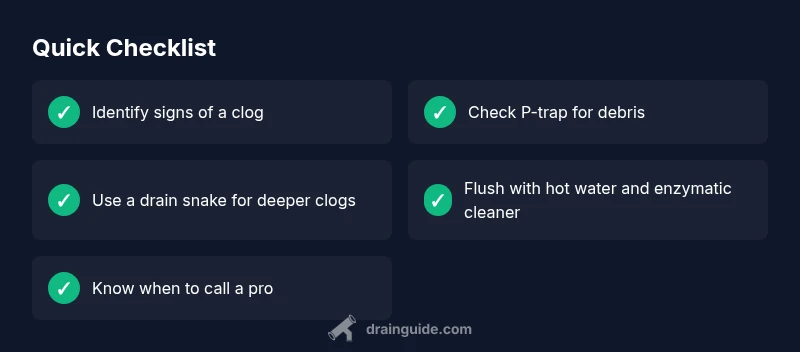
- Identify signs early to prevent bigger damage
- Start with the P-trap; it's the easiest fix
- Use a snake for deeper clogs, not chemical cleaners
- Call a pro if backups persist or multiple fixtures are affected