Can You Drain Coolant While the Car Is Hot? Safe Steps and Warnings
Learn whether can you drain coolant while the car is hot, why waiting matters, and a clear, step-by-step guide to safely drain, refill, and bleed the cooling system.


Can you drain coolant while the car is hot? Not safely. Hot coolant is under pressure and can spray steam or liquid, causing severe burns. Always let the engine cool to near ambient temperature before draining. If you must work on the system, relieve pressure by slowly removing the radiator cap after cooling, then drain through the radiator drain and follow a proper step-by-step guide.
Can you drain coolant while the car is hot?
The short answer is no. Draining coolant while the engine is hot is dangerous because the liquid is still under pressure and temperatures are extreme. A spurting stream or steam can cause severe burns and vapor exposure. The cooling system includes pressurized hoses, a thermostat, and a cap that keeps the coolant at high pressure. Attempting a drain before the engine has cooled can also introduce air pockets that complicate refilling and bleeding. If you are faced with an urgent repair, prioritize safety: do not rush any step, and plan to complete the work only after the car has cooled for a sufficient time. In this guide we explore why waiting matters and lay out a safe, step-by-step process for draining and refilling when the vehicle is cool enough to touch.
How the cooling system works (in brief)
Understanding the basics helps explain why cooling a hot engine before draining is essential. The cooling system circulates antifreeze through the engine to transfer heat to the radiator. The coolant expands as it heats, increasing pressure in the closed loop. A radiator cap seals this pressure, and hoses connect the engine, radiator, and reservoir. When you drain coolant while hot, the pressure can force hot fluid through openings you might not expect, making spills more likely and increasing burn risk. A quick refresher on the hot-to-cool transition helps DIYers plan the drain correctly and reduces the chance of air locks after refilling.
Safety gear and preparation
Before you ever touch the cooling system, assemble safety gear and plan the workspace. Wear chemical-resistant gloves and safety glasses, and have a sturdy drain pan ready. Work on a level surface with the engine off and the keys removed. Keep kids and pets away, and have absorbent towels or shop rags on hand for any spills. If your vehicle uses a sealed coolant reservoir, have a replacement funnel to avoid overfill. Finally, confirm the coolant type and mixing ratio recommended by the manufacturer so you can refill correctly after draining.
Signs the engine has cooled enough to drain safely
To minimize risk, ensure the engine has reached near ambient temperature. Check the hood area and touch components with care—radiator hoses and the expansion reservoir should feel only warm, not hot, to the touch. If heat remains, wait longer and re-check. In cooler environments or with older vehicles, cooling times may be longer. When in doubt, err on the side of patience; rushing this step increases the chance of burns and pressure-related accidents.
Safe draining procedure after cooling
When the engine is safely cooled, proceed with a controlled drain. Position the drain pan under the radiator drain valve or lower hose, then slowly relieve pressure by opening the cap and allowing air to vent. Open the drain valve to start the flow and monitor the coolant level as it empties. If your system uses a pressure cap and closed reservoir, vent or open the reservoir cap to prevent air locks. Close the valve once the flow slows, then prepare to refill.
Refill, bleed, and test after draining
Refilling requires a careful sequence to avoid air pockets. Use the same type of coolant specified by the manufacturer, mix to the correct ratio, and pour slowly through a funnel. Reinstall the radiator cap only after the system is filled and bleed air using the radiator or reservoir as recommended. Start the engine and run to operating temperature, then recheck for leaks and top off as needed. Dispose of drained coolant responsibly and clean any spills completely.
Common mistakes and troubleshooting tips
Common mistakes include starting with a hot engine, ignoring PPE, and overfilling the reservoir. Don’t forget to bleed the system for air pockets, especially if you notice rough idle or overheating after refilling. If you see puddles under the vehicle after a test drive, re-check the drain valve and hose connections for leaks. For stubborn air pockets, a second bleed or gentle revving at idle with the cap off (only when safe) can help evacuate trapped air.
AUTHORITY SOURCES
- U.S. Department of Energy guidance on cooling system maintenance: https://www.energy.gov/
- University automotive service resources: https://www.udel.edu/Engineering/
- National Institute for Automotive Service Excellence (ASE) safety tips: https://www.ase.com/
Tools & Materials
- Drain pan(Large enough to hold 5-8 liters of coolant; stable and leak-proof.)
- Wrench or screwdriver for drain valve(Have metric and standard sizes ready; some vehicles use a hose clamp instead.)
- Funnel(Used to pour coolant back into the radiator or reservoir without spills.)
- Chemical-resistant gloves(Protect skin from hot coolant and chemicals.)
- Safety glasses(Eye protection against splashes.)
- Shop towels or rags(Immediately clean any spills to prevent slips and coolant exposure.)
- Replacement coolant(Use the exact coolant type and mixture recommended by the manufacturer.)
- Hose clamps or pliers(Optional, for securing hoses during drain if needed.)
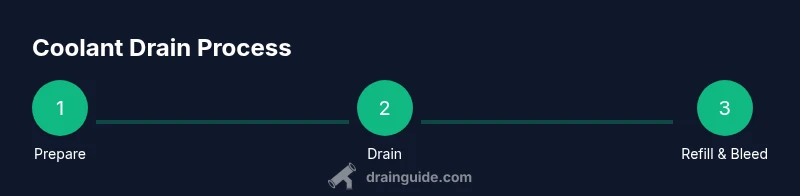
Steps
Estimated time: 60-90 minutes
- 1
Prepare the area and safety gear
Park on a level surface, turn off the engine, and remove the keys. Put on gloves and safety glasses, and lay out the drain pan and towels. Confirm you have the correct coolant type and gather tools before starting.
Tip: Rushing this setup increases spill risk; take a minute to secure your workspace. - 2
Position the vehicle and drain pan
Place the drain pan under the radiator drain valve or lower hose. Ensure the vehicle is stable and won’t roll; use wheel chocks if available. A level pan reduces splash risk.
Tip: Place protective mats under the pan to avoid coolant contact with paint. - 3
Relieve pressure after cooling
Slowly loosen the radiator cap only after the engine has cooled. This releases any remaining pressure and prevents a sudden pressurized spray as you begin draining.
Tip: If the cap doesn’t vent easily, wait longer and re-check for heat. - 4
Open the drain valve and start draining
Open the radiator drain valve or detach the lower hose carefully to begin draining into the pan. Monitor the flow and ensure you have adequate ventilation.
Tip: Keep hands and face away from the drain opening; coolant can squirt out unexpectedly. - 5
Vent the system and drain completely
Open the reservoir cap to vent and continue draining until the coolant level in the radiator drops steadily. Close the drain valve when flow slows to a stop.
Tip: Ventilation helps prevent air pockets that complicate refilling. - 6
Replace drain hardware and begin refilling
Close the drain valve, reconnect hoses if removed, and start refilling with the coolant mixture. Pour slowly to minimize air entrapment.
Tip: Use a funnel to keep the fill clean and avoid spills. - 7
Bleed the cooling system
Run the engine with the radiator cap removed (after reassembly) to bleed air from the system. Watch for steady coolant level and a stable temperature gauge.
Tip: If you see air bubbles, repeat the bleed process until smooth. - 8
Check for leaks and finish
Reinstall the radiator cap, take a short test drive, and inspect for leaks at all fittings and the drain valve. Refill as needed and ensure the coolant level remains within the recommended range.
Tip: Dispose of old coolant at a recycling center; never pour it down the drain. - 9
Document and clean up
Note the type of coolant used and the date of service. Wipe down the area and store tools properly.
Tip: Keep coolant containers sealed to prevent spills and contamination.
Got Questions?
Can you drain coolant while the car is hot?
No. Draining coolant while the engine is hot is dangerous due to high pressure and risk of burns. Wait until the engine is cool before starting.
No. Wait for the engine to cool before draining coolant to avoid burns.
How long should you wait for the engine to cool before draining coolant?
A safe wait is typically 30-60 minutes or longer depending on ambient temperature and engine size. Use touch to verify surface temperature is comfortable.
Wait at least 30 minutes, longer if the engine is very hot, and check that hoses feel cool to the touch.
Is flushing the cooling system necessary after draining?
Flushing isn’t always required. Do it if the coolant is contaminated or you’re performing a full service. Follow the manufacturer’s guidance.
Flushing isn’t always needed; follow your vehicle’s guidance unless you’re sure it’s dirty or degraded.
What are signs of a leak after refilling?
Look for puddles under the vehicle, damp hoses, or steam; also check the radiator cap and drain valve for drips.
Watch for leaks under the car or damp spots around hoses after refilling.
Can I drive the car after draining coolant?
Do not drive until the coolant is refilled and the system bled. Driving with low coolant can cause overheating.
No, wait until you’ve safely refilled and bled the cooling system before driving.
Watch Video
The Essentials
- Wait for the engine to cool before draining coolant.
- Use a level work area and proper PPE to stay safe.
- Bleed air from the system after refilling to prevent overheating.