Clogged Basement Floor Drain: Quick Troubleshooting Guide
Learn fast, safe steps to diagnose and clear a clogged basement floor drain. Drain Guide shows practical fixes, tool use, safety tips, and prevention to avoid future backups in 2026.


A clogged basement floor drain is usually caused by hair, sediment, debris, or a trap that’s lost its seal. Start with the simplest fix: remove the strainer, loosen visible debris, and pour hot water or a mild cleaner to restore flow. If water remains backed up, proceed to a safe diagnostic flow.
What a clogged basement floor drain means for your home
A clogged basement floor drain can quickly turn a small wet area into a bigger water problem if left unaddressed. A clogged basement floor drain blocks the channel that carries water away from your living space, increasing the risk of dampness, musty odors, and potential mold growth. With heavy rainfall or rapid indoor water usage, a blocked drain may cause water to back up into the basement, damaged floors, or even basement flooding. For homeowners, understanding the stakes helps motivate safe, timely action. According to Drain Guide, quick, methodical troubleshooting reduces damage and simplifies the fix. In most homes, the cause is mechanical—debris, hair, soap scum, or an old trap seal that has dried out. By approaching the problem with the right sequence, you can clear the clog, restore proper drainage, and prevent future incidents.
Common causes of a clogged basement floor drain
Most basement drains clog due to everyday household debris that slips past the floor grate. Hair, soap scum, kitchen grease, dirt, and mineral buildup can accumulate over time, narrowing the pipe and slowing water flow. A second frequent culprit is a dried-out trap seal, which allows sewer gas to creep into the space and can make the clog feel stronger as air pushes back through the line. In some homes, the problem is more serious: a sewer lateral clog or main line backup may cause water to back up through the basement drain during heavy rains. Drain Guide notes that while major sewer issues require professional equipment, most common clogs respond to mechanical cleaning and simple maintenance. Inspecting the strainer for trapped debris, then checking the trap for a water seal, helps you distinguish between a surface blockage and a deeper pipe issue. Regular cleaning and protective screens dramatically reduce recurrence.
Immediate safety steps and quick checks
Before you start, ensure electricity or sump pump power is safely managed. Basement water and electrical equipment pose shock risks, so unplug incompatible devices or switch off appropriate breakers if needed, and wear rubber-soled shoes and gloves. Start by removing the drain cover and screen; use a flashlight to inspect for visible debris. Clear any hair, fibers, or dirt you can reach with gloved fingers or a plastic tool. Rinse the opening with hot water or a mild detergent solution to loosen residue. Avoid strong caustic cleaners in enclosed basements, as fumes accumulate quickly. If the water level remains high after these steps, move to a diagnostic flow to identify whether you’re dealing with a surface clog or a deeper pipe issue.
Diagnostic flow: symptom to diagnosis to solution
The diagnostic flow starts with symptoms you observe: slow drainage, gurgling sounds, or water backing up through the drain after rainfall or when other fixtures drain. If you notice the drain clears after a few minutes, the issue is likely surface debris. If water remains in the basin and the trap may be dry, the seal needs restoration. When multiple fixtures show backup, the problem may be in the sewer lateral or main line. A systematic checks list helps you separate these scenarios, guiding you toward the right solution—clear the surface blockage first, then test the trap seal, and finally decide if professional help is necessary. Drain Guide emphasizes following a step-by-step process to avoid missing simple fixes or rushing to invasive methods.
Step-by-step fixes you can try now
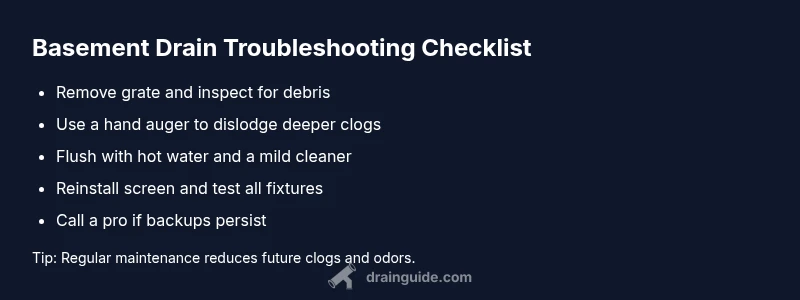
Safety first: wear gloves and eye protection. Gather a bucket, pliers, a drain snake or hand auger, a sturdy brush, and a flashlight. Remove the drain cover and reach into the grate to pull out hair and fibers. Use the snake to probe the pipe a few feet, rotating slowly to break up any obstruction. Re-assemble the strainer, then flush with hot water and a mild detergent mix. If the water still backs up, repeat the snake attempt a touch deeper, and consider enzymatic cleaners to break down organic buildup. Finally, test the drain by slowly running water through the washer or utility sink to verify continuous flow. If the flow doesn’t normalize, escalate to professional service to inspect the sewer line and sump pump connections.
Tools and techniques: when to escalate
A simple surface clog often responds to manual debris removal and a snake. If the clog resists multiple attempts, or you suspect a dried trap seal or sewer backup, escalate to professional service. Do not pour large amounts of chemical drain cleaners into a basement drain; fumes and piping materials can be damaged and safety hazards increase in confined spaces. Regular maintenance with protective screens, gentle cleaners, and periodic flow checks reduces the chance of future clogs. Drain Guide advises documenting the issue for reference and scheduling professional evaluation if backups persist after initial DIY efforts.
Prevention tips and routine maintenance
Preventing clogs starts with simple habits: use a drain screen or grate to catch hair and debris, avoid pouring grease or fibrous materials down the drain, and clean the grate weekly. Periodically flush the system with hot water and a non-caustic cleaner to keep mineral buildup at bay. If you have a sump pump, confirm the discharge line is clear and the pump is operating correctly. Consider a quarterly maintenance check that includes inspecting the trap seal and replacing it if necessary. By establishing a routine, you dramatically reduce the risk of a clogged basement floor drain and keep water moving smoothly away from your living space.
When to call a professional and what to expect
If the clog returns after DIY attempts, or you notice sewer gas, frequent backups affecting multiple fixtures, or standing water that won’t drain, contact a licensed plumber. A professional will perform a camera inspection, check the sewer lateral, and verify the trap seals and venting. Expect a cost estimate, a potential main line cleanout, and guidance on ongoing maintenance. Drain Guide recommends documenting symptoms and actions taken so the plumber can pinpoint the cause quickly and minimize disruption.
Steps
Estimated time: 1 hour
- 1
Prepare and safety check
Put on gloves, goggles, and rubber-soled shoes. Ensure nearby electrical devices and sump pump are safely managed. Clear the area around the drain so you can work freely.
Tip: Know where the main power off switch is in case you need to shut off power quickly. - 2
Remove drain cover and debris
Take off the grate and screen, using a flashlight to inspect inside. Pull out hair, fibers, and loose debris with gloved hands or a plastic tool.
Tip: Do not use metal sharp tools that could damage the pipe. - 3
Flush and test flow
Pour hot water and a mild detergent through the opening to loosen buildup. Observe the water flow and listen for gurgling sounds that indicate drainage is clearing.
Tip: Run a small amount at first to avoid overloading the area. - 4
Use a drain snake if needed
Insert the snake into the pipe and rotate gradually to dislodge deeper clogs. Pull out the debris and repeat a few passes as needed.
Tip: Keep the snake steady; sudden jerks can push debris further. - 5
Reassemble and retest
Replace the screen and drain cover. Run water through the system from different fixtures to ensure consistent flow.
Tip: If the flow remains slow, stop and call a professional. - 6
Check trap seal and vents
Inspect the trap for a water seal; top up if dry. Ensure venting is intact to prevent pressure issues.
Tip: A damaged trap seal often needs replacement by a pro.
Diagnosis: Basement floor drain backs up or drains slowly after rain or during household use
Possible Causes
- highHair, soap scum, sediment buildup narrowing the drain
- mediumDry or damaged trap seal allowing air and gases back into the space
- lowSewer lateral or main line blockage causing backflow into the basement drain
Fixes
- easyRemove visible debris from the drain grate and strainer; rinse with hot water
- easyUse a hand auger/drain snake to break up blockages deeper in the pipe
- easyFlush with hot water and a mild enzymatic cleaner to reduce organic buildup
- mediumIf water remains backed up after DIY attempts, call a licensed plumber for deeper inspection
Got Questions?
What should I do first if the basement drain backs up?
Put on gloves, remove the grate, pull out visible debris, and flush with hot water. If water still rises, move to more in-depth DIY steps or call a professional.
First, wear gloves and remove the debris from the drain, then flush with hot water. If water backs up, consider using a drain snake or contacting a plumber.
Can I use chemical drain cleaners safely in a basement drain?
Chemical cleaners can damage pipes and trap seals in enclosed spaces. Use enzymatic cleaners or mechanical methods, and avoid mixing products.
Chemical cleaners can damage your pipes and trap seals. Use enzymes or mechanical methods instead and avoid mixing cleaners.
When should I suspect a sewer backup rather than a local clog?
If multiple drains back up, or there’s a foul odor, it may indicate a sewer backup. Stop using water and contact a licensed plumber promptly.
If several drains back up or you notice a sewer smell, it could be a sewer backup. Stop using water and call a pro.
Is a plunger effective for a basement floor drain?
A plunger can help if the clog is near the opening but is less effective for deep pipe blockages. Use it with care to avoid splashing.
A plunger can help for surface clogs near the opening but may not clear deep blockages. Use carefully.
What maintenance reduces future basement drain clogs?
Install a drain screen, avoid pouring grease, clean debris regularly, and perform periodic flow checks to catch buildup early.
Install a screen, avoid grease, and clean debris regularly to prevent clogs; schedule periodic checks.
What should I expect from a professional if I call one?
A plumber may perform camera inspection, check the sewer line, verify venting, and provide a replacement plan if needed. Expect a diagnostic estimate and a recommendation for next steps.
A plumber may inspect with a camera, assess the sewer line, and suggest next steps with an estimate.
Watch Video
The Essentials
- Identify if debris is surface level or deeper in the pipe
- Use a drain snake for deeper clogs before replacing pipes
- Avoid caustic cleaners in enclosed basements
- Protect drains with strainers to reduce future clogs
- Consult a pro if backups persist or multiple fixtures are affected