Discount Drain Cleaners: A Homeowner’s Guide to Safe Savings
Explore how discount drain cleaners can save money without sacrificing safety. Compare ingredients, read labels, and learn strategies to maximize value in 2026.


Discount drain cleaners are budget-friendly options for tackling common clogs. They come in caustic, enzymatic, and oxidizing formulas and are sold as store brands or promos. To pick the right product, compare active ingredients, bottle size, and safety instructions, then follow label directions for best results in a 2026 guide.
Why Discount Drain Cleaners Matter
Home maintenance budgets are tight for many households, and drainage issues are a frequent pain point. Discount drain cleaners offer meaningful savings, especially when you’re addressing routine clogs in bathroom sinks or kitchen drains. According to Drain Guide, budget-conscious shoppers can still achieve reliable results by focusing on the active ingredient and correct usage, rather than chasing the highest price tag alone. The Drain Guide team found that price alone isn’t a guarantee of performance; many budget products perform on par with premium options for typical clogs, provided you select the right formula and apply it as directed. When considering discount options, look for transparent labeling, size-to-price ratios, and clear safety instructions. These factors help you avoid surprises like under-dosed bottles or incompatible formulations with your plumbing.
Beyond price, the compatibility of the product with your pipe material and septic system matters. If your home has older PVC or metal pipes, certain harsh cleaners can cause damage when overused. Always read the label for concentration, contact time, and disposal guidance. For many households, a well-chosen discount drain cleaner will handle small to medium clogs effectively, reducing the need for costly professional visits. Drain Guide’s practical approach emphasizes alignment between clog type, cleaning agent, and expected outcome, rather than assuming all discount options perform equally well. In short, discounts are not a magic wand, but when used wisely they can lower overall maintenance costs without compromising safety or outcomes.
Types of Discount Drain Cleaners
Discount drain cleaners come in several broad categories, each with distinct strengths and caveats. Understanding these categories helps you pick the right tool for the job:
- Caustic cleaners (lye-based): These work fast on hair, grease, and soap scum by reacting with organic material. They can be effective for moderate clogs but are more aggressive. Use with caution on older pipes and always ventilate the area. Never mix caustics with other cleaners, as dangerous fumes can form.
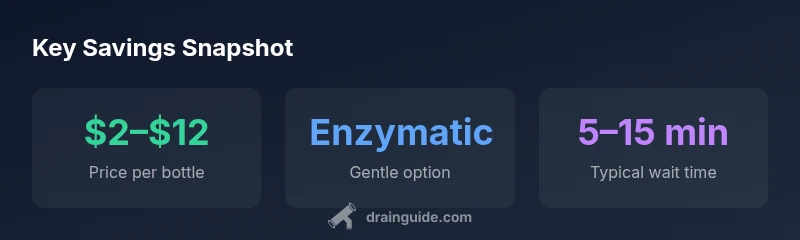
- Enzymatic cleaners: Enzymatic formulas use enzymes to digest organic buildup over several hours. They are gentler on pipes and are often preferred for septic systems. They may require multiple applications and longer wait times, but they’re typically safer for household use and the environment.
- Oxidizing cleaners: These cleaners use oxidizers like sodium hypochlorite to break down organic matter. They can be highly effective on heavy organic buildup but may produce fumes and have stronger chemical odors. They’re useful for stubborn, greasy clogs but should be used in well-ventilated spaces and kept away from bleach-containing products.
When choosing discount options, consider your clog type, pipe material, septic status, and the recommended contact time on the label. Reading customer reviews and evaluating the concentration per ounce can help you separate value from hype. The right choice balances price, safety, and expected performance for your specific drain.
How to Compare Discount Options
Making an informed choice among discount drain cleaners requires a simple, repeatable comparison process:
- Check the active ingredient and concentration on the label. A product with an appropriate active ingredient for your clog type will typically perform better than a generic formula.
- Compare bottle size and price per ounce. A larger bottle may offer better value, but only if you actually use that size before it expires or loses efficacy.
- Identify your clog type. Hair clogs respond differently than grease buildup; match the formula to the problem for best results.
- Review safety features and disposal guidance. Look for warnings about mixing with other products and instructions for septic systems when relevant.
- Consider septic compatibility. If your home uses a septic tank, enzymatic cleaners or those labeled safe for septic systems are usually the safer choice.
- Read credible reviews and verify seller reputation. Consistent reports of strong performance in similar plumbing situations add confidence to a discount purchase.
If you approach discounts with a clear match between clog type and formula, you’ll maximize your chances of a successful, cost-effective outcome without compromising safety.
When Discount Cleaners Are a Smart Choice (and When They aren’t)
Discount cleaners are particularly effective for routine, light-to-moderate clogs caused by soap scum, hair, and organic buildup. They’re a smart choice when:
- You’re dealing with a small to medium clog in a sink, tub, or shower drain.
- You want to avoid a plumber visit for a simple blockage.
- Your plumbing is in good condition and compatible with the chosen cleaner’s chemistry.
However, there are times when discount cleaners aren’t the best option:
- If you’re facing a serious or persistent clog that doesn’t respond after one treatment.
- If you have metal pipes in poor condition or an older home where harsh chemicals could accelerate corrosion.
- If you have a septic system that’s not compatible with certain formulas; enzymatic or septic-safe products are typically wiser choices.
In these cases, it may be worth consulting a plumber or using a non-chemical method (drain snake) to avoid potential damage.
Money-Saving Strategies for Homeowners
Saving money on drain maintenance is about smarter purchasing, not skipping essential steps. Consider these strategies:
- Buy store-brand or retailer-brand products with the same active ingredients and concentration as national brands. The price-per-ounce comparison often reveals substantial savings.
- Look for bulk or multi-pack promotions and loyalty discounts. Small discounts can add up over the year when you maintain multiple drains.
- Use coupons and apps that track promotions; combine with in-store sales to maximize savings.
- Combine chemical treatment with mechanical methods when appropriate. A drain snake or plunger can resolve some clogs more quickly and reduce chemical usage.
- Practice preventative maintenance to minimize future clogging. Regular hot water flushes, baking soda and vinegar routines, or mineral buildup control can extend the time between treatments.
The core idea is to align cost-saving decisions with the actual clog profile and your plumbing system’s characteristics, rather than choosing the cheapest option by default.
Safety, Disposal, and Long-Term Planning
Safety should never be sacrificed for savings. Always wear protective gloves and eye protection when handling any chemical cleaner, and ensure adequate ventilation. Store products out of reach of children and pets, and never mix cleaners with other household chemicals. After treatment, flush the drain with plenty of water as instructed by the label. For septic systems, prefer products explicitly labeled as septic-safe and avoid excessive chemical dosing that could disrupt microbial balance. Finally, keep a simple inventory of which drains you treat and when, so you can adjust future purchases based on actual needs rather than impulse buying. Thoughtful planning reduces waste and protects your home’s plumbing over the long term.
Comparison of common discount drain cleaner types
| Type | Pros | Cons |
|---|---|---|
| Caustic cleaner | Fast action on hair/soap scum | Corrosive; may damage older pipes |
| Enzymatic cleaner | Gentler on pipes; septic-friendly | Slower to act; may require repeat applications |
| Acid-based cleaner | Strong on mineral buildup | Strong fumes; higher safety considerations |
Got Questions?
Are discount drain cleaners as effective as name-brand products?
For many common clogs, discount drain cleaners perform similarly to name-brand options when the active ingredient and concentration match the problem. Always check the label and ensure the product is suitable for your clog type and pipe material.
Discount cleaners can work as well as name brands for common clogs if you pick the right formula and use it as directed.
Can discount drain cleaners damage pipes?
Yes, harsh chemicals can damage pipes if misused or over-applied. Do not mix cleaners, ventilate the area, and follow the label closely. If you have metal or aging pipes, consider gentler options or professional advice.
Be careful with harsh chemicals and always read the label to avoid pipe damage.
Are enzymatic cleaners safe for septic systems?
Enzymatic cleaners are generally safer for septic systems, but it’s important to use products labeled as septic-safe and to avoid overusing chemicals that could disrupt microbial balance.
Enzymatic cleaners are often gentler for septic systems, but check the label before use.
How long should I wait before flushing after using a discount cleaner?
Follow the label’s specified dwell time, typically 15–30 minutes for many liquids, then flush with plenty of water. If the clog persists, avoid repeated harsh treatments in quick succession.
Let it sit as instructed, then flush with water; don’t rush repeated treatments.
Are store-brand cleaners better value than national brands?
Store-brand cleaners often offer similar active ingredients at lower prices. Compare concentration and packaging to determine true value; price per ounce is a reliable metric.
Store brands can be a great value if the concentration and packaging match your needs.
What if a discount cleaner doesn’t work on my clog?
If a single treatment fails, avoid pairing different chemicals in the same drain and consider a mechanical method like a drain snake or consult a plumber for persistent clogs.
If it doesn’t work, don’t mix cleaners—try a mechanical method or call a professional.
“Discount drain cleaners can deliver reliable results for common clogs when chosen with attention to active ingredients and usage directions.”
The Essentials
- Identify clog type before buying to match the formula
- Check label for safety and septic compatibility
- Compare price per ounce rather than just sticker price
- Follow disposal and safety directions to protect plumbing