Whirlpool Dishwasher Drain Pump Troubleshooting Guide
Urgent, step-by-step guidance for diagnosing and fixing a Whirlpool dishwasher drain pump. Learn common causes, safe inspection steps, and when to replace parts to restore proper drainage.


If your Whirlpool dishwasher won't drain, the most likely cause is a clogged drain pump impeller or filter. Power down, remove standing water, and inspect the pump area for debris. Clean any blockages, then test the drain hose for kinks or a clogged check valve. If it still won't drain, check the disposer or air gap.
Why the dishwasher drain pump matters in Whirlpool models
The drain pump is the heart of your dishwasher's drainage system. In Whirlpool models, the drain pump pushes used wash water out of the tub and into the drain hose, allowing the next rinse to proceed. A malfunctioning pump can leave standing water, trigger error codes, and disrupt cycles. According to Drain Guide, consistent debris buildup and clogged impellers are among the most common causes of drain problems in home dishwashers, especially in busy kitchens. When the pump cannot evacuate water properly, you may hear a humming sound or feel resistance as the chamber tries to discharge. The fix is rarely glamorous, but a methodical clean-out often restores full function. Understanding the pump's role helps you decide between cleaning, testing, and replacement, and it keeps your kitchen running smoothly.
In many Whirlpool units, the drain pump is connected to a simple, compact impeller housing. Debris like leftover food, broken glass, or hard-water mineral buildup can jam the impeller, reducing flow or stopping drainage entirely. A clogged pump can also overheat and trigger safety features, delaying cycles. By knowing what to look for, you can prevent a costly service call and extend the life of your dishwasher.
Common symptoms indicating a failing drain pump
Drain pump problems typically show up in predictable patterns. Look for standing water in the tub after a cycle, a buzzing or humming noise when the pump should start, or a pump that runs briefly and then stops without draining. You might also see error codes related to drainage or water level sensors, which can point back to the pump, its impeller, or related plumbing fittings. Slow drainage, water backing up into the sump, or water leaks around the pump housing are additional red flags. If you notice any of these signs, treat them as urgent: drainage issues can lead to overflows and water damage if left unaddressed. Regularly inspecting filters and hoses can help you separate pump issues from upstream clogs.
Safety and prep steps before you open the appliance
Safety first: unplug the dishwasher or switch off the circuit breaker before touching any components. If your model is hard-wired, verify the breaker is fully off and use a non-contact voltage tester to confirm no live current. Place towels and a small bucket to catch residual water when you open the access panels. Remove the toe-kick or lower panel carefully, keeping track of screws and wiring. Avoid using metal tools that could nick wiring insulation, and never work on the unit if you suspect a live circuit. By preparing properly, you reduce the risk of shocks and short circuits while you diagnose the pump.
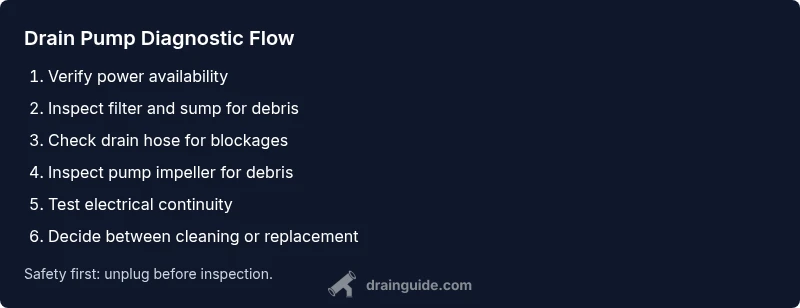
Diagnostic flow: quick flow you can follow
- Step 1: Verify power at the outlet or breaker. Confirm the unit is receiving power before assuming a pump fault.
- Step 2: Check for standing water and visible debris in the sump and filter. Clear any obstructions that could bypass the pump.
- Step 3: Inspect the drain hose for kinks, crushes, or blockages. A blocked hose can mimic pump failure.
- Step 4: Access the drain pump housing and inspect the impeller for hair, food particles, or buildup that could impede rotation.
- Step 5: If accessible, test electrical connections to the pump and, if you have the tools, verify continuity with a multimeter.
- Step 6: Reassemble and run a test cycle. If the unit still fails to drain, consider replacement or professional service.
If this doesn’t resolve the issue, move to the STEP-BY-STEP section for a thorough repair or replacement plan and remember to seek professional help for electrical faults or uncertain wiring.
Accessing the drain pump in a Whirlpool dishwasher
Begin by unplugging the dishwasher and removing the lower front panel to access the toe-kick area. Depending on your model, you may need to remove the lower rack and spray arm to reach the sump and pump housing. Disconnect the wiring harness carefully, noting how each connector fits. Detach the drain hose from the pump coupling, but be prepared for a small amount of residual water. With the pump exposed, inspect the impeller for any obstruction. If you see debris, remove it with non-metallic tools, then recheck that the impeller spins freely. Reconnect hoses and wiring, reassemble the panel, and restore power to test the drainage sequence.
If you encounter resistance or pinched cables, stop and consult the service manual or a professional technician. Models vary, and incorrect reassembly can create new leaks or electrical hazards.
Cleaning, testing, and deciding on replacement
Start with a thorough cleaning of the sump, filter, and impeller housing. Remove clogs from the filter screen and wash it under running water. Use a soft brush to dislodge mineral buildup around the impeller. After cleaning, manually spin the impeller to ensure it rotates smoothly; if it binds, the pump may be worn and require replacement. If the impeller turns but water still won’t drain, inspect the pump’s wiring and test continuity with a multimeter. A pump with no continuity typically needs replacement. When choosing a replacement, match the model number and verify compatibility with Whirlpool dishwashers. Reassemble with care and run a full cycle to confirm proper drainage.
If replacement is needed, consider professional installation to ensure electrical safety and proper seal integrity. In some cases, the entire drain pump assembly is the most reliable option for long-term performance.
Prevention and maintenance to extend pump life
Preventive maintenance saves time and money. Clean the filter and sump monthly or as recommended by your user manual to minimize debris that can jam the impeller. Avoid overloading the dishwasher, which can force larger food particles into the drain system. Use enzyme-based or gentle detergents that reduce mineral buildup. Periodically inspect the drain hose for kinks and ensure it has a downward slope to prevent backflow. If you notice frequent clogs, consider installing a simple inline screen or running a quick cleaning cycle with a dedicated dishwasher cleaner.
Regular maintenance reduces the likelihood of a drastic drain pump failure and keeps your Whirlpool dishwasher functioning efficiently.
Steps
Estimated time: 60-90 minutes
- 1
Power down and gain access
Unplug the unit or switch off the circuit, then remove the toe-kick panel to expose the drain area. Prepare towels and a bucket for water.
Tip: Label screws and set them aside so you can reassemble easily. - 2
Inspect the filter and sump
Remove and clean the filter and inspect the sump for debris. Rinse under running water and reinsert the filter securely.
Tip: A clean filter prevents many drainage issues. - 3
Check the drain hose for blockages
Detach the drain hose from the pump and check for kinks or clogs. Clear any obstruction with a flexible snake or compressed air if safe.
Tip: Do not force a snake too hard; go slowly to avoid damage. - 4
Inspect the pump impeller
Look into the pump housing to see if the impeller spins freely. Remove any trapped debris carefully with non-metal tools.
Tip: Spin the impeller manually to verify smooth operation. - 5
Test electrical connections
With power restored, verify that the pump receives power during the drain phase and test continuity if you are comfortable with a multimeter.
Tip: If you’re unsure about wiring, stop and consult a pro. - 6
Reassemble and run a test cycle
Reconnect hoses and wiring, replace panels, plug back in, and run a drain test cycle to confirm operation.
Tip: Watch for leaks and listen for a steady drain.
Diagnosis: Water won't drain from dishwasher after cycle
Possible Causes
- highClogged drain pump impeller or housing
- highBlocked or dirty filter/sump
- mediumKinked or clogged drain hose
- lowFaulty float switch or water level sensor
- lowElectrical issue or bad pump wiring
Fixes
- easyClean the filter and impeller housing; remove debris blocking the impeller
- easyUnfold or replace the drain hose if crushed or blocked
- mediumInspect and reseat electrical connections; test pump continuity if equipped
- hardReplace the pump assembly if the impeller is damaged or the motor fails
- mediumReplace/adjust float switch if indicating incorrect water level
Got Questions?
What are the most common signs of a failing Whirlpool dishwasher drain pump?
Common signs include standing water after a cycle, unusual buzzing or humming noises, and slow drainage. If you notice these, inspect the pump, filter, and hose for obstructions. Addressing debris early saves parts and prevents leaks.
Common signs are standing water after a cycle and buzzing noises. Check the pump and hose for debris.
Can I repair the drain pump myself safely?
Yes for simple clogs or hose issues, but avoid electrical repairs unless you’re trained. Always unplug first and follow the service manual. If you’re unsure, contact a professional.
Yes for basic clogs, but don’t work on electrical parts if you’re not sure. When in doubt, call a pro.
What tools do I need to replace a Whirlpool drain pump?
Typically a screwdriver and pliers, plus a compatible replacement pump. Ensure model compatibility with Whirlpool dishwashers.
You’ll usually need a screwdriver and pliers, plus a compatible pump.
How can I tell if the pump is clogged vs. a faulty motor?
Check for visible debris in the impeller and attempt a manual spin. If the motor lacks continuity on a test, the pump may need replacement.
Look for debris in the impeller and test with a meter if you’re able.
Is it safe to run the dishwasher with a suspected clog?
No. Running with a clog can overflow and damage floors. Drain the unit before continuing and address the blockage promptly.
Don’t run it with a clog; drain first and fix the blockage.
How can I prevent drain pump failure in Whirlpool dishwashers?
Keep filters clean, avoid overloading, use proper detergents, and perform regular inspections of hoses and the pump area.
Keep filters clean and don’t overload the dishwasher to prevent pumps from failing.
Watch Video
The Essentials
- Assess drain issues safely and systematically.
- Regularly clean filters and impellers to prevent clogs.
- Test hoses and wiring before deciding on replacement.
- Replace with a compatible pump when needed.
- Establish a maintenance routine to prevent future failures.