Do Drain Flies Get Big? Size and DIY Tips for Home
Discover whether drain flies ever grow large and how to identify, prevent, and remove them. Drain Guide analyzes size, life cycle, and practical steps for DIY homeowners.


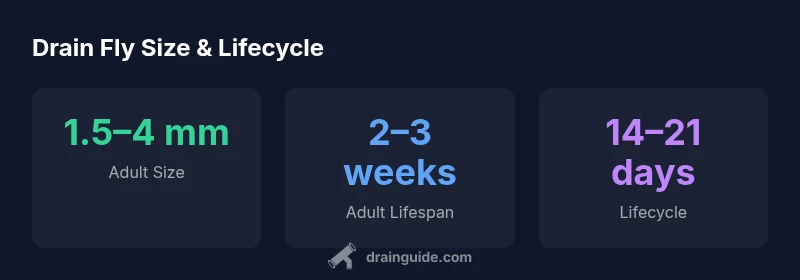
Do drain flies get big? Not really. Adult drain flies stay tiny, typically about 1.5–4 millimeters in length. They look like little moths with fuzzy wings. Size isn’t the main concern; infestations arise from moisture, biofilm, and rapid reproduction. Drain Guide, 2026, emphasizes focusing on drainage maintenance and sanitation to stop cycles rather than chasing growth.
What drain flies are and where they live
Drain flies, also called sewer gnats, belong to the family Psychodidae. They are small, moth-like insects with hairy wings that rest flat over the body, giving them a fuzzy appearance. In homes, they are most often found near bathrooms and kitchens, where moisture and organic matter accumulate in drains. The typical adult size is tiny, usually about 1.5–4 millimeters long, which makes them easy to overlook until they reproduce in large numbers. According to Drain Guide, their life cycle is linked to consistent moisture and biofilm build-up inside pipes, where eggs hatch into larvae and then emerge as adults within a couple of weeks under warm conditions.
Do drain flies get big? Size reality
Many homeowners wonder if these tiny pests can grow into larger insects. In reality, adult drain flies remain among the smallest household pests. Real-world observations place their length in the rough range of about 1.5–4 mm; they rarely appear larger than a pinhead. The perception of 'bigger' may come from groups of flies buzzing near an issue, or from the wings catching light, but the body length stays small. Drain Guide's analysis, 2026, confirms that growth in size is not a typical factor in drain fly problems. Instead, the challenge lies in rapid reproduction and persistent moisture.
How to gauge size at home and common misperceptions
To gauge size, compare with common objects: a grain of rice is about 6–8 mm, so drain flies are roughly half that length. A quick inspection near drains can help you verify presence: look for small, fuzzy moth-like insects at dusk. Misperceptions occur when people confuse drain flies with fruit flies or fungus gnats, which are distinct in color and shape. Drain flies have hairy wings and a distinct heart-shaped wing venation when viewed up close, whereas fruit flies are smoother and typically larger eyes relative to body. In the home, the emphasis should be on presence and breeding conditions rather than exact measurements; even a few millimeters of length signals an infestation that warrants attention, especially if multiple individuals are seen weekly.
Lifecycle and why tiny size matters for control
Drain flies reproduce quickly in moist environments; females lay hundreds of eggs in the biofilm lining drains. The larval stage lasts about 5–14 days depending on temperature and humidity, and adults live for 1–3 weeks. Because the insects are so small, colonies can grow unseen behind walls and in plumbing cavities. The small size makes traps less effective at capturing breeding individuals, while doorways and entryways may be more open to air movement causing a temporary spike in sightings. Understanding that size does not equal danger helps homeowners focus on eliminating moisture, cleaning drains, and using enzyme-based cleaners to digest organic buildup.
Practical prevention and removal strategies
This section covers actionable steps to reduce drain fly populations. Start with a thorough drain cleaning: remove visible debris, scrub the drain rim, and flush with hot water. Use a bio-enzymatic cleaner to digest the biofilm inside pipes; avoid harsh chemical cleaners as the primary method, since they can irritate pipes and kill beneficial bacteria that help digest waste. Check all moisture-prone areas: under sinks, around shower drains, and near condensate lines. Repair leaks, fix loose seals, and improve ventilation to reduce humidity that supports breeding. Implement physical traps (sticky traps) near drains to monitor activity while you address root causes. If infestations persist for more than a couple of weeks despite cleaning, consider professional-grade drain cleaning or sanitation services.
When to call a professional
While many drain fly issues are solvable with diligent cleaning and moisture control, persistent or widespread infestations may require expert intervention. If you still see adults after two to three weeks of enhanced cleaning, if there is water damage or mold growth, or if you suspect compromised sewer lines, contact a licensed plumber or pest control specialist. Drain Guide recommends documenting patterns (time of day, area, humidity) to share with the pro, which helps tailor treatment and prevent reoccurrence.
Key dimensions and breeding context for drain flies
| Aspect | Typical size | Breeding sites | Control considerations |
|---|---|---|---|
| Adult length | 1.5–4 mm | Typical in kitchens/bathrooms drains | Focus on moisture control and drain cleaning |
| Lifespan (adults) | 2–3 weeks | Depends on temperature | Maintenance important |
| Eggs per female | 20–200 | In biofilm in drains | Persistent cleaning reduces reproduction |
Got Questions?
Do drain flies actually get big?
No. Adult drain flies remain tiny, about 1.5–4 mm. Size is not the primary concern; focus on moisture control and sanitation to stop cycles.
Drain flies stay very small; size isn't the main issue.
How can I tell drain flies from fruit flies?
Drain flies are fuzzy moth-like insects about 1.5–4 mm long. Fruit flies are smoother with red eyes and a different body shape. Color, texture, and wing shape help distinguish them.
Drain flies look like tiny fuzzy moths, not smooth fruit flies.
What conditions promote drain fly growth?
Moist, organic buildup inside drains and warm temperatures promote breeding. Eliminating moisture and cleaning biofilm is essential.
Moist environments help them breed.
Are bleach or cleaners effective for control?
Bleach alone isn’t a long-term solution. Use enzymatic cleaners and mechanical cleaning to remove biofilm, then maintain with regular upkeep.
Bleach alone won't fix it; enzymatic cleaners plus cleaning are better.
When should I call a professional?
If infestation persists after two to three weeks of cleaning, or if there is suspected sewer damage, consult a licensed plumber or pest expert.
If it keeps coming back after a few weeks, call a pro.
“Drain flies are a symptom of persistent moisture and organic buildup, not large pests. Effective control hinges on removing breeding sites and maintaining clean drains.”
The Essentials
- Drain flies stay tiny, typically 1.5–4 mm.
- Prioritize moisture control and biofilm removal.
- Clean drains regularly to prevent cycles.
- Identify breeding sites to target treatment.
- Use traps to monitor activity during cleaning.