Do Drain Flies Look Like Fruit Flies? A Practical Identification Guide
Learn to distinguish drain flies from fruit flies with a practical, visual identification guide, habitat cues, life cycles, and proven prevention tips. Drain Guide analysis, 2026.


Do drain flies look like fruit flies at first glance? Not exactly. Drain flies belong to the moth fly family and have fuzzy, moth-like wings, while fruit flies are smaller, with red eyes and a slender body. In most homes, you can differentiate them by habitat, wing shape, and hair on the thorax. Correct identification matters for effective control and prevention.
Visual cues: size, wings, and body shape
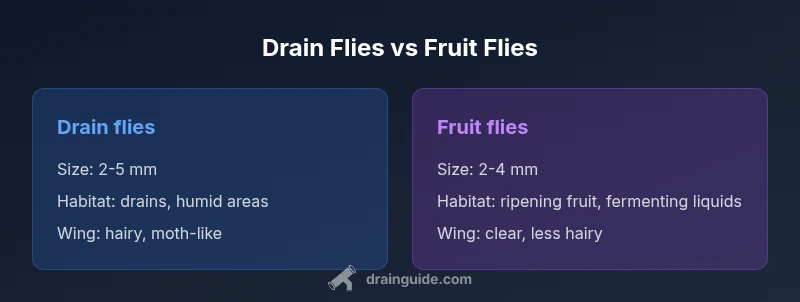
The immediate question homeowners ask is often about likeness: do drain flies look like fruit flies? The short answer is: they share a similar small size, but the overall silhouette tells the story. Drain flies are typically 2–5 mm in length and have a chunky, moth-like shape. Their wings are broad, covered with fine hairs, and held roof-like over the body when at rest. Fruit flies are usually on the smaller end (roughly 2–4 mm) and have a slimmer, more elongated body with visible red eyes in many common strains. Observation of these features alongside behavior can be a strong differentiator: drain flies hover in quick, zigzag patterns near damp surfaces, while fruit flies dart toward exposed fermentable materials.
Because the question do drain flies look like fruit flies is common, it’s helpful to note where you first see the insects, how they behave when disturbed, and whether you spot hair on the wings or a fuzzy thorax. This block uses the keyword exactly to reinforce search intent without overwhelming the reader.
As you proceed, remember that appearance is a guide—not a guarantee—so pairing visual cues with habitat clues yields the most reliable ID.
Comparison
| Feature | Drain flies | Fruit flies |
|---|---|---|
| Common habitat | Near drains, sewer lines, and humid, damp areas | Around ripe fruit, juice spills, and fermenting substances |
| Size (adult) | About 2-5 mm | About 2-4 mm |
| Wing appearance | Hairy, moth-like wings held roof-like over the body | Clear wings with less hair; body is slender |
| Eye color | Typically not prominent; eyes less distinct | Often bright red eyes |
| Flight pattern | Hover with quick, erratic movements near damp zones | Rapid, darting movements near attractants |
| Breeding sites | Organic buildup in drains, gunk behind sinks, and overflow areas | Fermenting fruit, juice spills, and spoiled produce |
| Control emphasis | Address drainage issues, sanitation, reduce moisture | Eliminate attractants, clean spills, monitor with traps |
Positives
- Helps target control plans quickly
- Reduces misapplication of pesticides
- Supports better sanitation decisions
- Improves prevention by mapping habitats
Cons
- Identification can still be tricky in mixed environments
- Misidentification may delay effective treatment
- Overreliance on appearance without habitat cues can mislead
- Requires ongoing monitoring to prevent recurrence
Correct ID is the key to effective control and prevention.
Drain flies and fruit flies are distinct pests. Distinguishing them based on wing shape, body hair, and habitat leads to targeted sanitation and reductions in infestation recurrence. When in doubt, combine visual cues with breeding-site checks.
Got Questions?
What are the distinguishing features of drain flies versus fruit flies?
Drain flies have hairy, moth-like wings and a rounded body, usually hovering near damp drains. Fruit flies are smaller, with a slender body and often red eyes, clustering around ripe fruit or sugary liquids. Visual cues should be combined with habitat checks for accurate ID.
Drain flies have hairy wings and hover near damp areas, while fruit flies cluster around ripe fruit and have red eyes.
Do drain flies only breed in drains?
Drain flies primarily breed in moist, organic film found inside drains and plumbing gaps, but they can also proliferate in other damp organic debris. Inspect all plumbing areas and ensure proper venting and cleaning to prevent breeding.
They mainly breed in moist drains, but other damp organic spots can also support their life cycle.
Can you confuse drain flies with houseplant gnats?
Houseplant gnats and drain flies can look similar at a glance, but gnats are typically longer-legged and light, while drain flies have a broader, moth-like wing structure. Check habitat (soil vs. drains) and wing texture for accurate identification.
Gnats usually live in soil; drain flies live near drains and have fuzzy wings.
How can I safely remove drain flies without chemicals?
Begin with rigorous sanitation: clean and scrub drains, remove standing water, and improve ventilation. Enzymatic cleaners can help dissolve biofilm. Use physical traps to monitor activity and reduce breeding until a more thorough fix is possible.
Clean drains thoroughly and remove standing water; consider non-chemical aids to monitor activity.
What attracts drain flies and fruit flies?
Drain flies are attracted to moisture and organic buildup; fruit flies are attracted to fermenting sugar, ripening fruit, and spilled liquids. Reducing moisture, cleaning drains, and removing food sources can reduce both pests.
Moisture and biofilm attract drains; fruit flies love fermenting fruit and sugary liquids.
When should I hire a professional for a pest issue?
If you cannot identify the pest, if activity persists after sanitation efforts, or if the infestation is widespread, a professional can perform targeted treatments and address underlying plumbing issues safely and effectively.
Call a pro if the problem continues after cleaning or if plumbing issues are suspected.
The Essentials
- Identify wing shape and hair to differentiate pests
- Target drainage sanitation first for drain flies
- Remove attractants and monitor fruit fly habitats
- Combine visual cues with habitat clues for accurate ID
- Proceed to professional help if infestations persist