Drain and Fill Transmission Fluid: A Homeowner’s Step-by-Step Guide
Learn how to safely drain and fill transmission fluid at home with a practical, step-by-step approach. Get tool lists, safety tips, troubleshooting, and maintenance guidance from Drain Guide to protect your transmission.


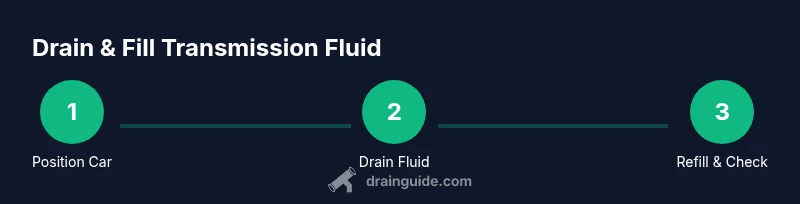
Drain and fill transmission fluid refreshes the majority of the old oil without a full flush. Lift the vehicle, locate the pan drain plug and fill plug, drain the old fluid, reinstall the drain plug, and refill through the fill hole until the new fluid begins to seep out. Use the exact fluid specification from the manual and recheck the level after running through gears.
Drain and Fill Transmission Fluid: Why It Matters
In modern vehicles, transmission fluid does more than just lubricate; it cools gears, cushions clutches, and transmits hydraulic force. Regularly draining and filling the transmission fluid is a practical maintenance task that homeowners can perform to refresh the system without a full, dealer-level flush. According to Drain Guide, performing a controlled drain-and-fill replaces a substantial portion of the fluid and reduces the buildup of varnish and metallic particles that can harm shift quality and longevity. This approach is widely recommended for most automatic and manual transmissions, though some vehicles with sealed or lifetime-fill designs may require different service intervals or professional attention.
For most passenger cars, a drain and fill involves draining fluid from the pan drain plug, replacing the plug, refilling through the fill port, and rechecking level after the engine has cycled through a few gear changes. While done correctly, this service minimizes mess and costs compared with a full flush using professional equipment. It is crucial to use the exact fluid specification your vehicle calls for and to avoid mixing fluids, which can compromise performance and reliability. Always consult the owner’s manual for capacity and procedure nuances specific to your make and model, especially for vehicles with dual-clutch or CVT transmissions, which often have unique fill methods.
Across the board, drain-and-fill is a practical maintenance step for most drivers. It’s a conservative approach that buys you time between more comprehensive services, while giving you the opportunity to inspect the transmission pan and magnets for debris. If you’re unsure about your specific model, start with the owner’s manual and a trusted repair manual to confirm fluid type, capacity, and whether a filter change is indicated.
Tools & Materials
- Floor jack(Stable lift points; use jack stands to support the vehicle securely.)
- Wheel chocks(Place both front and rear wheels to prevent movement.)
- Drain pan (2-5 qt capacity)(Should hold the expected drained fluid plus extra for safety.)
- Wrench or socket set(Size to fit the transmission pan drain plug.)
- Funnel(Wide-mouth funnel helps avoid spills when filling.)
- Rags/paper towels(For cleanups and on-drain inspection.)
- Transmission fluid (manufacturer spec)(Check the owner’s manual for the exact fluid specification.)
- Gloves and eye protection(Protect hands and eyes from hot fluid and debris.)
- Jack stands or ramps(Additional support if you can’t use a floor jack safely.)
- Inspection magnet/flashlight(Useful to inspect for metal particles in pan.)
Steps
Estimated time: 45-75 minutes
- 1
Prepare the vehicle and workspace
Park on a level surface, set the parking brake, and chock the wheels. If you’re lifting the vehicle, use a floor jack to raise it and secure with jack stands. Ensure the engine is cool before you begin to avoid burns from hot transmission fluid.
Tip: Double-check that the vehicle is securely supported before going under it. - 2
Access the drain and fill points
From underneath or by removing the access panel, locate the transmission pan drain plug and the fill plug. Clean the area around the plugs to prevent debris from entering the system. If your vehicle uses a sealed pan, you may need to remove the pan to access the drain; consult the manual for your model.
Tip: If you’re unsure where the drain is, refer to the service manual or a reputable guide for your exact make and year. - 3
Drain the old fluid
Place the drain pan beneath the drain plug and slowly loosen the plug to allow old fluid to drain completely. Do not rush; give it time to flow out so you don’t leave pockets of old, contaminated fluid inside the pan.
Tip: Open the drain plug gradually to avoid a sudden gush that could spill. - 4
Replace drain plug and prepare to refill
Tighten the drain plug to the manufacturer’s torque specification and reposition the vehicle if needed. If the pan or gasket shows wear, replace the gasket to prevent future leaks before you refill.
Tip: A fresh gasket helps prevent leaks after service. - 5
Refill through the fill port
Using the correct transmission fluid, slowly pour into the fill port until the fluid begins to seep from the fill hole or until it reaches the specified level on the dipstick/measurement method for your model. Do not overfill on this step; adding too much can cause foaming and shifting issues.
Tip: Add in small increments and recheck frequently to avoid overfilling. - 6
Cycle gears and verify the level
With the engine running and the transmission warmed, move through the gears to circulate the new fluid. Recheck the level on level ground and add more if needed in small amounts. Record the service and check for leaks after a short test drive.
Tip: A short drive helps settle the fluid and reveals any leaks early.
Got Questions?
Is drain-and-fill better than a full transmission flush?
Drain-and-fill is simpler, usually cheaper, and removes a large portion of old fluid. A full flush uses special equipment to push older fluid out of the system and is more thorough but typically more costly. Choose based on your vehicle’s needs and manufacturer recommendations.
Drain-and-fill is simpler and cheaper for most cars, while a full flush is more thorough but often more expensive.
How often should I perform a drain-and-fill?
Follow the vehicle manufacturer’s recommended maintenance interval in the owner’s manual. In daily driving under normal conditions, you’ll typically schedule this service as part of routine upkeep; in severe conditions, more frequent checks may be wise.
Check the manual for your exact interval, and consider more frequent service in tough driving conditions.
What if I notice burnt odor or dark fluid?
A burnt smell or unusually dark fluid can indicate internal wear or contamination. In such cases, a simple drain-and-fill may not solve the problem, and you should have the transmission inspected by a professional.
Burnt smell or very dark fluid can signal wear; a professional check may be needed.
Do I need to replace the transmission filter during drain-and-fill?
Some automatic transmissions have replaceable filters that should be serviced during a drain-and-fill, while others do not. Check your manual to see if filter replacement is recommended for your model.
Some cars need a filter change with drain-and-fill; check your manual.
What if my car has no drain plug?
If there’s no drain plug, the pan may be sealed or the system requires a different service approach. In that case, you may need to drain via the pan and replace the fluid through a different access point. Always follow the model-specific procedure.
If there’s no drain plug, refer to the manual—the model might require a different method.
Watch Video
The Essentials
- Drain and fill refreshes most old fluid without a full flush
- Use the exact fluid specification from the manual
- Securely lift and support the vehicle before work
- Check level after warming and cycling gears
- Avoid mixing fluids and overfilling for best results