Drain and Spin vs Rinse and Spin: Which Cycle Is Right for Your Load?
A thorough, analytical comparison of drain and spin vs rinse and spin to help homeowners choose the right post-wash cycle for efficiency, fabric care, and cleanliness.


Understanding the Drain and Spin vs Rinse and Spin Landscape
In everyday laundry, the choice between drain and spin vs rinse and spin determines how much detergent residue remains, how dry clothes get, and how quickly you can finish a load. The phrase drain and spin vs rinse and spin captures two common post-wash options. According to Drain Guide, understanding when to use each can improve fabric care, energy use, and drying times. The Drain Guide team notes that most households rely on rinse and spin for routine loads, but drain and spin can be advantageous when you need faster moisture removal or are tackling a damp-laundry backlog. By exploring the mechanics, contexts, and outcomes of each approach, you’ll gain a clearer framework for load-specific decisions. This section lays the groundwork for practical comparisons that help homeowners optimize both cleaning and care outcomes.
How Drain and Spin Works
Drain and spin is essentially a two-step finale: the machine drains the wash water and then spins at high speed to extract as much moisture as possible. The goal is to reduce the remaining water in the clothes without introducing a new rinse. In most modern washers, this is a straightforward option that can be selected when you want to shorten the overall cycle time or when you have a large load that you’re about to line dry. Drain and spin is particularly attractive when you’re working with immediate time constraints or when the laundry area has limited access to running water. While it focuses on moisture removal, it does not add rinse quality, so any detergent residues from the wash may remain on fabrics if the wash did not use sufficient cleaning steps earlier.
How Rinse and Spin Works
Rinse and spin combines a rinse phase with a final spin to remove both soap residues and moisture from fabrics. The rinse cycles flush out suds and soils loosened during washing, while the subsequent spin expels water more aggressively. This sequence is especially helpful for loads that feel slippery or soapy after washing, or for households with sensitivities to detergents. In many machines, rinse and spin can be run as a dedicated option or as part of a standard rinse set. The additional water used in the rinse phase is a trade-off for cleaner fibers and a more predictable dryness level, which can shorten downstream drying time. The overall effect is clothes that feel fresher and less residue-heavy.
Key Differences at a Glance
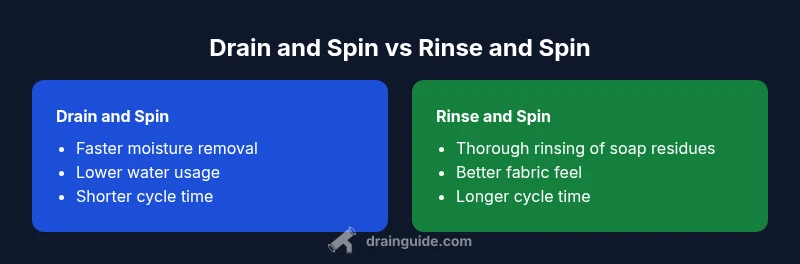
- Main Purpose: Drain and spin removes residual water; rinse and spin adds a rinse before extracting moisture.
- Water Use: Drain and spin uses minimal extra water; rinse and spin uses additional water during the rinse phase.
- Cycle Time: Drain and spin is typically shorter; rinse and spin is longer due to the rinse steps.
- Fabric Care: Rinse and spin reduces detergent residues and may improve feel; drain and spin focuses on speed of moisture removal and can leave some residues if the wash wasn’t thorough.
- Best For: Quick moisture relief after a wash; thorough soap residue removal and freshness for fabrics with scent or allergies.
Water Use, Time, and Energy Considerations
When evaluating these cycles, water use and energy costs are common considerations. Drain and spin generally consumes less water because it omits the rinse phase, which can translate into lower water bills in households with high load volumes. However, energy usage can be similar since both options require spinning, which consumes energy to extract moisture. In contrast, rinse and spin may add hours of cycle time depending on the machine’s buffering and rinse architecture, but it often reduces downstream drying times because clothes exit drier. Drain Guide recommends weighing the importance of water savings versus cleanliness and drying speed, especially in homes with multiple daily loads.
Fabric Care Implications
Soap residues left on fabrics can irritate sensitive skin and affect fabric feel over time. Rinse and spin addresses this by delivering an explicit rinse that flushes out soap and residues before the final extraction. This can be particularly beneficial for lightly loaded sheets, towels, or items washed with highly fragranced detergents. Conversely, drain and spin minimizes cycle complexity, prioritizing speed over residue removal. If your detergents are aggressively concentrated or you notice sticky residues after washing, adopting rinse and spin for those loads is likely advantageous. It’s worth noting that some fabrics may benefit from a gentler spin profile or a prewash cycle to maximize cleanliness while protecting fibers.
When to Use Drain and Spin
Choose drain and spin when you need to reduce total cycle time and remove moisture quickly after washing, such as for sports uniforms, towels that are going to air-dry, or heavily soiled items where the wash cycle already did most of the cleaning work. It’s a practical option for laundry surges, when your drying space is limited, or when you intend to run a longer drying session later. Drain and spin can also be preferable if you’re re-washing within a short window and want to minimize water runoff or energy spent on extended cycles. Drain Guide’s guidance emphasizes matching cycle choice to the load’s moisture requirement and your drying plan.
When to Use Rinse and Spin
Rinse and spin is the go-to choice for loads requiring additional detergent removal, fragrance freshness, or fabric care that benefits from extra rinsing. This is especially true for baby clothes, textiles with fragrance sensitivities, sheets, and items that carried heavy soils or oily residues. If you notice soap residue on fabrics after a wash, or you’re using additives such as fabric softeners that may leave residues, rinse and spin can help ensure a cleaner, softer outcome. In addition, loads with mixed fabrics or delicate fibers may benefit from a more thorough rinse and a controlled spin to preserve texture while removing moisture.
Practical Workflow: How to Integrate Both Cycles Across Loads
A balanced laundry routine often uses both cycles across different loads. Start with rinse-enabled cycles for loads with heavy soils or scented detergents, then switch to drain and spin for loads where you’re aiming to minimize drying time. For households with high-volume laundry, you might reserve drain and spin for quick turnarounds and use rinse and spin for everyday loads that stress cleanliness and fabric feel. Creating a simple decision tree—consider soil level, fabric type, and whether you’ll air-dry or machine-dry—helps you apply the most appropriate option consistently. Drain Guide suggests labeling load types or setting up a routine to reduce decision fatigue and maximize efficiency.
Troubleshooting Common Issues with Spin Cycles
If clothes emerge wetter than expected after a spin, check for issues such as clogged filters, unbalanced loads, or a malfunctioning pump that could affect water extraction. Soap residue after a rinse may indicate inadequate detergent dosing or a poor rinse cycle selection. If you notice a prolonged cycle time, verify that the machine’s auto-detect or sensor settings aren’t overriding your chosen cycle. Regular maintenance like cleaning lint filters and checking hoses helps keep both cycles performing reliably. Drain Guide recommends keeping a small checklist for common spin cycle hiccups to minimize downtime.
Quick Start Guide: Choosing the Right Cycle for Your Load
For most loads, start with rinse and spin to ensure detergent removal and fabric freshness. Switch to drain and spin if you need to shorten cycle length or if you’re transferring clothes to a drying area immediately. Always consider fabric type, soil level, and your drying plan. With practice, you’ll instinctively pick the option that balances cleanliness, speed, and energy use. Drain Guide’s practical rules of thumb emphasize practical testing and observing how loads respond to each cycle.