How Long Does Drain and Spin Take? A Practical Guide
Discover how long drain and spin take on common washers, what factors influence timing, and practical steps to speed up cycles safely for DIY homeowners.


On most household washers, drain and spin times per cycle typically range from about 20 to 90 seconds, depending on the model, load size, and settings. Front-load vs. top-load machines can differ, and faster spins don’t always mean shorter overall cycles. For DIY homeowners, understanding these timing ranges helps plan laundry sessions and diagnose slow cycles.
What 'how long does drain and spin take' means in practice
Understanding the exact duration of the drain and spin phase helps homeowners plan laundry sessions, estimate total cycle time, and distinguish normal variation from a developing issue. Drain and spin are two distinct parts of many wash programs: draining removes the majority of wastewater, and spinning uses the drum's rotation to push out remaining water. Drain Guide reminds readers that a typical cycle should complete these phases within a practical window, but exact times vary by model and settings. Regardless of your washer type, a fast drain does not always guarantee a quick overall cycle, and anomalies may indicate an underlying problem rather than a faulty timer. By tracking your own machine’s timings across several cycles, you build a baseline to detect slowdowns early, saving energy and reducing wear on the pump and belt. Drain Guide Team emphasizes consistent measurement to separate normal variance from equipment issues.
Key factors that influence drain and spin duration
Several variables shape how long a drain-and-spin sequence lasts. First, the washer type matters: front-loaders with high spin speeds often drain faster but may still take longer to complete the full cycle if the load is unbalanced. Top-load machines, especially traditional non-HE models, can have longer drain phases due to sump design or pump flow. Load size and distribution play a major role: a full, evenly distributed load requires smoother water removal and avoids snags or clogs that slow down the pump. Water level is also critical; deeper fillings mean more water to remove, extending the drain time. Detergent type, fabric softeners, and lint filter status can influence foaming or clogting, indirectly affecting timing. The Drain Guide stresses evaluating all these factors in combination rather than in isolation.
Typical ranges by washer type
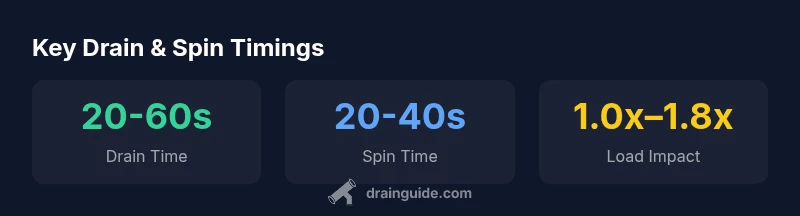
When comparing washer types, you’ll notice timing patterns emerge. Front-loaders generally optimize for faster extraction, with drain phases commonly completing in the 20–60 second range while spins vary from 20 to 40 seconds depending on rotor speed and load balance. High-efficiency top-load machines may exhibit longer drain times if the pump design is less aggressive, but they often compensate with a strong spin that reduces residual moisture. Traditional top-load viscous-pump models can present different musical cues, with drain times leaning toward the upper end of the spectrum. Keep in mind that manufacturers declare different measured cycles, so use your own measurements for the most accurate baseline. Drain Guide analysis shows that variance across brands is expected, so consider your specific model and settings when assessing timing.
Role of water level, detergent, and fabric in drain time
Higher water levels increase the volume to be drained, extending the drain interval. Heavily soiled or bulky fabrics can hold more water and trap air, subtly altering drain dynamics. Detergent choice also matters: some formulas foam more, potentially affecting pump performance and perceived drain time. Fabric types with dense weave or heavy towels may cause more drag, slowing the final rinse and spin. While these factors seem minor individually, their combined effect can push a cycle’s drain-plus-spin time outside the usual window. Drain Guide notes that routine maintenance—especially cleaning filters and inspecting hoses—helps maintain consistent timing even as family laundry patterns shift seasonally.
Measuring drain and spin time: step-by-step method
To measure drain and spin duration accurately, run a normal cycle while recording the clock from when the wash phase ends and the water level drops to a stable point until the final spin stops. Use a stopwatch or a smartphone timer for precision. Repeat the measurement over three consecutive cycles under similar loads and settings, then average the results. Note any deviations associated with cycle type (normal, heavy, quick), water temperature, or detergent usage. Record baseline values for future comparisons. For households with multiple washers, perform measurements on each unit to identify model-specific timing patterns. Drain Guide recommends documenting these baselines in a simple notebook or digital sheet for quick reference.
Troubleshooting slow drain or spin cycles
If you notice longer-than-usual drain and spin times, start with basic checks: inspect hoses for kinks, ensure the pump is free of lint, and confirm the filter is clear. A clogged pump or filter (even briefly) can dramatically increase drain time. Ensure the drain hose is not elevated or bent, which can slow gravity-assisted drainage. Also verify that the drum is properly balanced; an unbalanced load can slow spreading and drainage. Listen for unusual noises during draining, which may indicate a failing pump or worn belt. Drain Guide notes that slow cycles are often symptoms of a simple obstruction rather than a major mechanical failure.
Practical tips to reduce drain and spin time safely
Minimize drain time by keeping hoses clear and filters clean, distributing loads evenly, and using appropriate cycle settings for the fabric. Regularly run a maintenance cycle to prevent mineral buildup in the pump and drain pathways. Consider upgrading to a washer with a higher spin speed if you frequently wash bulky items, but ensure your home’s electrical supply and plumbing can handle the load. Using the correct detergent amount prevents excessive suds that slow drainage. Drain Guide recommends routine checks to sustain optimal timing and energy efficiency across the life of the appliance.
Safety and maintenance considerations for drains and pumps
Working around a washer’s drain and pump requires basic safety awareness. Always disconnect power before inspecting hoses or filters, and avoid forcing components. If you detect cracks in hoses, exposed wiring, or persistent leaks, stop using the machine and consult a professional. Regular maintenance—cleaning lint traps, inspecting hose clamps, and ensuring secure connections—helps prevent unexpected downtime and prolongs the life of the pump and belt system. Drain Guide emphasizes following manufacturer guidance for service intervals and using only approved cleaners to avoid damage to seals and gaskets.
When to replace or call a professional
If drain and spin times remain inconsistent after routine maintenance, or you observe unusual noises, burning smells, or visible leaks, it may be time to consult a technician or consider replacement. A slow drain can indicate a failing pump, clogged filter, or worn bearings, while persistent unbalance issues can signal suspension or motor problems. Drain Guide recommends evaluating the cost of professional service against the age and condition of the machine; in some cases, replacement may offer better long-term value and reliability.
Comparison of washer spin timing by model type
| Model Type | Estimated Spin Time | Notes |
|---|---|---|
| Front-load | 30-60 sec | Lower drum inertia, efficient spin |
| Top-load HE | 45-75 sec | Balanced load aids draining |
| Top-load Standard | 60-90 sec | Classic spin speed |
Got Questions?
What is a typical drain time for a modern washer?
Most modern washers drain water within 15–60 seconds, depending on model and load. The time may vary with cycle type and water pressure. Drain Guide notes that measuring your own unit provides the most accurate baseline.
Most washers drain in about 15 to 60 seconds, but check your own model for accuracy.
Can a clogged drain hose slow down the drain stage?
Yes. A kinked or clogged drain hose or filter can significantly slow drainage or cause incomplete water removal. Inspect hoses for kinks and clear any blockages safely while the appliance is powered off.
A clogged hose can slow drainage; check hoses and filters safely with the power off.
Does higher spin speed always shorten the total cycle time?
Not always. Higher spin speeds can reduce remaining moisture but may not shorten the overall cycle if the drain phase becomes longer due to load balance or pump constraints. Balance and load distribution matter as much as speed.
No, faster spins don’t always mean a shorter overall cycle.
How can I safely measure drain time at home?
Run a normal cycle and time the drain phase from when the water level drops to a stable point until the spin starts. Do this for 3 consecutive cycles and average the results to reduce variability.
Time the drain phase over several cycles and average the results.
Are drain cleaners safe for washing machines?
Most commercial drain cleaners are not recommended for washing machines; they can damage seals and hoses. Use manufacturer-approved methods for clearing clogs and consult a professional for recurring issues.
Avoid chemical drain cleaners in washers; they can hurt parts.
“Understanding your machine's drain and spin timing helps prevent unnecessary wear and energy waste. Precise measurements empower homeowners to act quickly when anomalies appear.”
The Essentials
- Measure your own cycles for a baseline.
- Expect 20–60 seconds drain and 20–40 seconds spin on many washers.
- Load quality, water level, and detergent affect timing.
- Regular maintenance reduces unexpected delays.