How Long Is Drain and Spin Cycle? A Practical Guide for Homeowners
Learn how long the drain and spin phase lasts in typical washers, what factors affect duration, and practical tips to optimize cycle timing for efficient laundry.


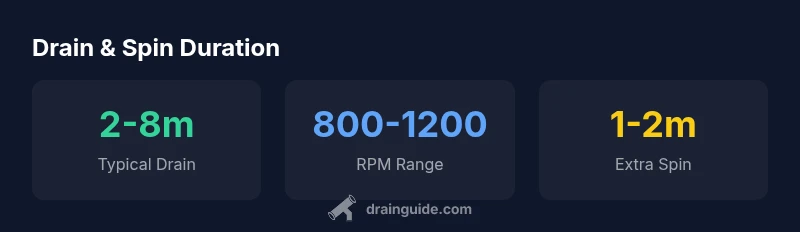
The drain and spin portion of a typical washing machine cycle usually lasts about 2-8 minutes, depending on load size, spin speed, and machine efficiency. Most modern front-loaders spin at higher RPMs, which shortens the drain phase, while heavier loads or slower spin settings can extend it. If you hear unusual noise or slow drainage, timing can vary.
How long is drain and spin cycle in typical washers?
The drain and spin phase is a focused portion of the overall laundry sequence, dedicated to removing as much water as possible before the drum comes to rest. When homeowners ask how long is drain and spin cycle, the quick answer is that most systems fall in a 2-8 minute window. Several factors influence the exact timing, including the type of washer (front-load vs. top-load), the load size, and the selected spin speed. Front-load washers, which typically operate at higher RPMs, generally complete the drain and spin phase quicker than older top-load machines with slower cycles. Heavier or bulkier loads introduce more water to lift out, which can extend the drain period. Modern machines also adjust timing dynamically based on water removal efficiency, so two consecutive cycles on the same setting may not be perfectly identical. Monitoring your own cycles over a few loads provides the most accurate personal benchmark.
Front-load vs top-load: does cycle length differ?
Yes. Front-load washers usually drain and spin faster because they use high-speed, high-efficiency rotation to wring out more water in a shorter time. Top-load models, especially older ones, often operate at lower RPMs and with a gentler acceleration pattern, which can prolong both the drain and spin steps. The net effect is that the same laundry load may finish the drain phase sooner on a front-loader but could require a few extra minutes on a traditional top-loader. When shopping, compare manufacturer cycle times for the same program to get apples-to-apples estimates. Remember that the total laundry time includes wash, rinse, and any extra spin cycles, so the drain/spin window is only part of the picture.
Factors that influence drain and spin duration
Several practical factors influence how long the drain and spin steps take:
- Load size and composition: Larger or heavier items retain more water, increasing drain duration.
- Spin speed setting: Higher RPMs extract more water and shorten the drain phase; lower speeds lengthen it.
- Machine age and efficiency: Newer high-efficiency models optimize water removal with smarter sensors.
- Sensor-driven adjustments: Some cycles adapt timing mid-cycle based on real-time measurements of moisture and load balance.
- Detergent and fabric type: Thick fabrics and extra residue can impact water extraction dynamics.
- Plumbing and pump condition: If the drain line or pump is clogged, the cycle can stall and appear longer.
Understanding these factors helps homeowners anticipate a realistic drain/spin window and adjust expectations accordingly.
How to measure drain and spin time at home
To get a reliable personal benchmark, time a few representative loads:
- Pick a typical everyday load (e.g., mixed towels and garments).
- Start the wash on a standard program with the same spin setting each time.
- Use a stopwatch to time only the drain and spin portion from the point the washer starts draining until the drum stops rotating and the cycle advances to the next step.
- Record the time for several trials and calculate an average.
- Compare your results to the manufacturer’s stated cycle times to gauge whether your machine is within the expected range.
If you notice a consistent lag beyond the expected window, investigate potential causes such as a clogged pump, kinked hoses, or an overstuffed drum. Small routine checks can prevent longer-than-expected drain times in the future.
Diagnosing why drain takes longer than expected
When the drain phase runs long, it’s often because of a mechanical or plumbing bottleneck rather than a simple timing quirk:
- Clogged pump or filter: Debris can slow water extraction; clean the pump filter and check for obstructions.
- Blocked drain hose or standpipe: A partial blockage slows drainage; inspect hoses for kinks and blockages.
- Uneven or overfilled load: Overpacking reduces the drum’s ability to shed water efficiently; redistribute.
- Separated water in pockets: Large items can trap water around folds; re-balance the load mid-cycle if your machine allows.
- Worn seals or bearings: If the drum wobbles or makes unusual noises during drain, service may be needed.
Regular maintenance, including the occasional run of an empty cycle with a descaler or cleaner, helps preserve efficient drainage and reduces cycle variability.
Improved efficiency: adjusting settings and maintenance
Small adjustments can yield meaningful improvements in drain time and overall efficiency:
- Choose the appropriate spin speed for the load; when in doubt, select a higher spin to reduce residual moisture and speed up the drain.
- Use optimal water temperature settings as recommended by the manufacturer; some sensors adjust timing based on moisture and temperature readings.
- Clean lint filters, pumps, and hoses on a routine schedule to prevent slow drainage caused by clogs.
- Level the washer to avoid vibrations, which can affect how evenly water is expelled.
- Consider periodic service checks for high-mileage machines; simple belt or pump replacements can restore performance.
By combining proper loading practices with regular maintenance, you can shorten the drain phase and improve overall cycle times over time.
Model differences and rough benchmarks
Different models and brands implement drain and spin automation differently. HE front-loaders often deliver shorter drain times due to efficient water extraction and sensors that fine-tune cycles. Traditional top-loads may show more variation between cycles and are more sensitive to load distribution. For a transparent comparison, review the cycle timing section in the user manual or on the manufacturer’s website. In many cases, you’ll see a stated drain + spin range per program, but the actual outcome can vary with load size and fabric type. If you’re upgrading, look for models that advertise optimized spin speeds and moisture sensing to minimize drain time while still achieving thorough water removal.
Practical quick checklist to minimize drain time
- Load evenly and avoid overpacking the drum.
- Use a high spin setting for towels and bulky fabrics when appropriate.
- Inspect and clean the pump filter and hoses every few months.
- Check for loud noises, unusual vibrations, or slow draining and address early.
- Run a maintenance cycle with a washing machine cleaner to prevent mineral buildup that can slow drainage.
- If you have persistent issues, consult a technician rather than guessing at fixes.
This checklist helps homeowners reduce unnecessary delays and keep the drain phase running smoothly without sacrificing cleaning performance.
Interpreting durations across brands and models
Cycle durations vary by brand, model, and even production year. The same program may display different drain/spin times across machines due to sensor algorithms, drum design, and pump capacity. When evaluating a new washer, compare the cycle timing charts for the exact model and consider real-world measurements from user reviews. For periodic maintenance, note any drift in cycle duration over time; a gradual increase can indicate emerging pump or hose issues, while sudden changes might signal a blockage or sensor fault. Keeping a simple log of your measured times will help you notice trends and plan interventions before cycles become noticeably longer.
Overview of drain and spin duration benchmarks
| Aspect | Typical Range | Notes |
|---|---|---|
| Drain duration | 2-8 minutes | Depends on load and spin speed |
| Spin speed | 800-1200 RPM | Higher speeds extract more water |
| Total cycle time | 5-15 minutes | Manufacturers vary by model |
| Heavy/bulky loads | 4-10 minutes | Slower dwell times for water extraction |
Got Questions?
What affects drain time on my washing machine?
Drain time is influenced by load size and fabric type, spin speed, model efficiency, and whether the cycle uses sensors that adjust timing. Mechanical issues like clogged pumps or hoses can also extend drain time. Regular maintenance helps keep drain times predictable.
Load size, spin speed, and model efficiency determine drain time. Maintenance helps keep it predictable.
Can a clogged drain extend the spin cycle?
A clogged drain or pump can slow water removal, which can indirectly lengthen the spin portion. In some cases, the machine may pause or adjust the cycle to compensate for drainage resistance.
A clogged drain can slow things down and affect the spin portion.
Do high-efficiency washers drain faster?
High-efficiency washers generally drain and spin more efficiently due to better pump design and moisture sensing. However, actual times still vary by model and load characteristics.
Yes, in many cases HE models drain faster, but it depends on the load.
Is it normal for drain to take longer with large loads?
Yes. Large or bulky items retain more water, which can extend the drain phase. Redistributing items and using a higher spin setting can help reduce this time.
Big loads take longer to drain; spread them out or use a higher spin.
How can I measure the drain time accurately at home?
Use a stopwatch to time the interval from when the washer starts draining to when the drum stops spinning and advances to the next step. Do several trials for accuracy and compare to the manual’s ranges.
Time a few cycles with a stopwatch to get an accurate drain time.
“Understanding cycle timing helps homeowners optimize laundry efficiency and energy use. Even small adjustments to load size and spin speed can shave minutes off the drain and spin phase without compromising cleanliness.”
The Essentials
- Time drain/spin alone by load and setting.
- Heavier loads and lower spin speeds extend drain time.
- Front-loaders tend to drain faster than traditional top-loads.
- Use a home stopwatch to benchmark cycles for accuracy.
- Maintenance prevents unexpected drain delays.