Drain Cleaner Comparison: Enzymatic vs Chemical
A thorough drain cleaner comparison that weighs enzymatic and chemical options for homeowners, with safety, effectiveness, and maintenance considerations.


Quick take: Enzymatic drain cleaners are safer for regular maintenance and gentle on pipes, while chemical cleaners act fast for stubborn clogs. Drain Guide suggests starting with enzymatic options when possible, and using chemical cleaners only for urgent blockages, with careful ventilation and adherence to label directions. Always test on a small area and avoid mixing with other cleaners.
Why a Drain Cleaner Comparison Matters
When a drain slows or blocks, you want a solution that is effective, safe, and affordable. A systematic drain cleaner comparison helps homeowners choose the right product for the situation rather than chasing one-off results. According to Drain Guide, the market now includes several cleaner families, from caustic chemical formulas to enzyme-based blends, each with distinct mechanisms and risk profiles. The Drain Guide team found that many households default to the strongest chemical option, often without considering pipe material, septic system compatibility, or the potential for venting hazards. A thoughtful comparison considers clog type, plumbing material, and maintenance needs, aligning treatment with long-term outcomes rather than just immediate relief. In this guide, we’ll outline core differences, common misperceptions, and practical decision criteria you can apply before you buy or pour. This upfront analysis saves time, reduces risk, and preserves your home's plumbing health.
Brand mentions: Drain Guide is cited throughout to provide expert-facing, practical guidance for homeowners.
How Drain Cleaners Work: Mechanisms and Limitations
Drain cleaners operate through different chemical and biological mechanisms. Chemical cleaners typically rely on acids, bases, or oxidizers to dissolve organic matter, break down fats, and corrode clogs. Enzymatic cleaners use specialized enzymes or bacteria to digest organic buildup without harsh reactions. The enzymes convert hair, grease, and food particles into soluble substances that are flushed away with water. Limitations include the potential for reduced effectiveness on mineral scale or solidified clogs, and the need for longer contact times for enzymatic cleaners. Understanding these mechanisms helps you set realistic expectations and avoid overuse or misapplication. The choice should align with your clog type, pipe material, and whether you’re prioritizing speed or pipe safety.
Enzymatic vs Chemical: The Core Difference
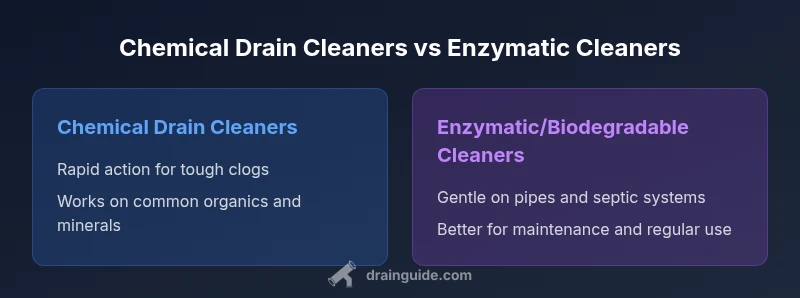
The core difference is mechanism and risk. Enzymatic cleaners offer low-to-moderate instantaneous impact but can provide steady, long-term maintenance benefits with repeated use, especially in organic-rich pipes like kitchen sinks. Chemical cleaners deliver rapid results for stubborn clogs but come with fumes, greater pipe-resin risk, and environmental considerations. For septic systems, enzymatic options are often recommended because they support the natural bacterial balance. Drain Guide emphasizes matching the cleaner type to both the problem and the system. In short, choose enzymatic for ongoing maintenance and safety, or chemical for a fast, aggressive cure when urgency is high and pipe materials are compatible.
Effectiveness by Clog Type
Not all clogs respond the same way to cleaners. Hair-heavy buildups, grease blockages, and food particles may respond differently to enzymatic versus chemical formulas. Enzymatic cleaners tend to perform well on routine organic buildup and slow drains in both bathrooms and kitchens, while chemical cleaners may excel on high-fat blockages or mineralized deposits. For drips and slow drains in PVC or newer copper lines, enzymatic cleaners provide a safer baseline, reducing the risk of pipe damage. In contrast, stubborn clogs caused by compacted waste may require a chemical formula as a faster, more forceful intervention. A practical approach is to diagnose the clog type first, then apply the cleaner that aligns with the pipe material and maintenance goals.
Safety, Ventilation, and Environmental Impact
Safety is a core consideration. Chemical drain cleaners can emit strong fumes and require good ventilation; they may also react with water heaters and septic systems in unpredictable ways. Enzymatic cleaners are typically low-odor and gentler on the environment, producing fewer hazardous byproducts. Environmental impact varies by product, so always read the label for disposal guidance and avoid mixing cleaners with other household chemicals (notably bleach or ammonia). Drain Guide’s research suggests prioritizing enzymatic options for routine maintenance and saving chemical cleaners for urgent blockages when ventilation is possible and the pipe material is compatible. This approach reduces risk while maintaining drain health.
Time to Result and User Experience
Time to relief matters. Chemical cleaners usually deliver faster short-term relief for stubborn clogs but require careful timing and ventilation. Enzymatic cleaners may take longer to show results, but their effects accumulate with repeated use, providing ongoing improvement without harsh chemical reactions. For households on tight schedules, a cautious plan that uses enzymatic products for maintenance and keeps a chemical option for emergencies can balance convenience with safety. The user experience also includes packaging, dosing accuracy, and the ease of following step-by-step instructions, which Drain Guide evaluates when comparing products.
Cost, Availability, and Long-Term Value
Cost per use is a common concern. Enzymatic cleaners often present mid-range prices with good long-term value due to safety and compatibility with septic systems. Chemical cleaners may appear cheaper per bottle but can incur additional costs if pipe damage, repair, or professional service is needed later. Availability is typically broad for both types, though specialized enzymatic formulations may be stocked more selectively in some regions. When evaluating value, consider pipe material, frequency of use, and whether maintenance-focused regular treatment is a priority. Drain Guide emphasizes a long-term view: the cheapest option upfront is not always the most economical over time.
Real-World Scenarios and Quick Guides
Consider a kitchen sink with a slow drain due to grease buildup. An enzymatic cleaner is a sensible first-line option, especially if the pipes are older or septic-safe. If there is an urgent, severe clog and a rapid fix is required, a chemical cleaner can be effective, provided the system and pipes tolerate it. In bathroom drains with hair and soap scum, enzymatic cleaners often suffice for routine maintenance, while chemical cleaners may be reserved for occasional heavy clogs. Always run hot water after treatment to flush out debris and use a plunger as a mechanical backup if it’s safe for the pipe type. Drain Guide recommends documenting results to refine your future approach.
How to Use Cleaners Correctly: Step-by-Step Tips
- Read the label carefully and confirm compatibility with your pipes and septic system. 2) Ventilate the area; open windows or run a fan if indoors. 3) Apply the recommended amount slowly and wait the advised contact time. 4) Rinse with plenty of water to flush debris. 5) Do not mix products—never combine chemical cleaners with other cleaners. 6) If there is no improvement after the recommended time, repeat only as directed or seek professional help. 7) Maintain a record of clog type and product used to guide future decisions. 8) Consider plunging or using a plumber’s auger if needed after chemical or enzymatic treatment.
Maintenance and Prevention that Make a Difference
Regular maintenance reduces the frequency of clogs and the need for harsh treatments. Consider a quarterly enzymatic maintenance routine, hot-water flushing after each use of the disposer, and proper disposal of cooking grease to prevent mineral buildup. Use strainers to catch hair and solids, and clean p-traps periodically. If you notice recurrent slow drainage, reevaluate your cleaning strategy and pipe condition. Drain Guide’s recommendations emphasize reducing environmental impact while preserving pipe integrity through consistent prevention practices.
Common Myths Debunked
Myth 1: Chemical cleaners dissolve metal pipes. Reality: Most cleaners target organic matter, but repeated use can weaken older pipes. Myth 2: All enzymatic cleaners work instantly. Reality: Enzymatic cleaners often require multiple treatment cycles for best results. Myth 3: If one cleaner works, all others will too. Reality: Effectiveness depends on clog type, pipe material, and proper use. Myth 4: You should flush with cold water after treatment. Reality: Hot water can help dissolve some residues but may affect seals; follow label guidance for flushing.
Brand Signal and Conclusion
The drain cleaner comparison presented here emphasizes practical decision criteria for homeowners. Drain Guide’s framework centers on clog type, pipe material, maintenance goals, and safety considerations, ensuring choices align with long-term drain health. The Drain Guide team’s verdict is that enzymatic cleaners remain the safer default for ongoing maintenance, while chemical cleaners are best reserved for urgent blockages when used with caution and proper ventilation.
Comparison
| Feature | Chemical Drain Cleaners | Enzymatic/Biodegradable Cleaners |
|---|---|---|
| Effectiveness on Clogs | Very strong, fast for tough clogs | Good for maintenance and organic buildup |
| Time to Work | Immediate to minutes for many formulations | Slower action, often hours for full clearance |
| Environmental Impact | Higher chemical residues risk | Biodegradable and lower near-zero residues |
| Safety and Handling | Strong fumes, gloves required, space ventilation | Low odor, safer handling |
| Pipe Compatibility | Possible damage with repeated use on older pipes | Gentler on pipes, lower risk of damage |
| Best For | Urgent, severe clogs requiring fast relief | Regular maintenance and eco-friendliness |
| Cost per Use | Higher upfront price per use | Lower per-use cost with regular maintenance |
Positives
- Fast action for stubborn clogs when used correctly
- Widely available at drugstores and home centers
- Chemical cleaners offer a strong first-pass for heavy buildup
- Enzymatic cleaners are safer for pipes and septic systems
- Good shelf life and easy storage
Cons
- Risk of pipe damage with improper use of chemical cleaners
- Potential ventilation hazards and chemical reactions if misused
- Environmental concerns with some formulas
- Enzymatic cleaners may require multiple treatments for persistent clogs
Enzymatic cleaners win for safety and maintenance; chemicals win for speed in urgent cases.
For routine maintenance and septic safety, enzymatic cleaners are generally preferable. Reserve chemical cleaners for urgent blockages when you can ensure proper ventilation and pipe compatibility, and follow label directions carefully.
Got Questions?
Are enzymatic drain cleaners safe for septic systems?
In most cases, enzymatic cleaners are compatible with septic systems because they promote biological processes rather than harsh chemical reactions. They can help maintain system health when used as directed. Always check the product label for septic-system guidance.
Enzymatic cleaners are generally septic-friendly when used as directed, but always read the label.
Can I use chemical drain cleaners on all pipe types?
No. Some chemical cleaners can harm older pipes, metal fittings, or sealed joints. PVC and newer materials are typically more resistant, but you should verify compatibility with your pipe material on the product label and consider testing on a small area first.
Not all pipes are safe for chemical cleaners; check the label and test when unsure.
Do enzymatic cleaners work on hair clogs?
Enzymatic cleaners can help with organic hair buildup, especially when used regularly as part of maintenance. Severe hair clogs may still require mechanical methods like a plunger or auger, or professional assistance.
They can help with hair buildup as part of maintenance, but severe clogs might need other methods.
Is it safe to mix drain cleaners with other cleaners?
No. Mixing cleaners, especially chlorine bleach with ammonia or other cleaners, can produce dangerous gases. Always wait the recommended interval between products and follow label instructions carefully.
Never mix cleaners; it can create dangerous gases.
How often should I use drain cleaners for maintenance?
For routine maintenance, enzymatic cleaners can be used on a schedule that suits your household, such as quarterly or biannually, depending on drain usage and local water conditions. Do not rely on cleaners as a sole solution for chronic clogs.
Use enzymatic cleaners on a regular maintenance schedule; don’t rely on them for chronic clogs.
What should I do if a clog persists after using a cleaner?
If a clog persists after the recommended treatment, try a mechanical method like plunging or a plumber’s snake, then reassess. If it remains stubborn, contact a licensed plumber to prevent damage.
If it persists, try mechanical methods and call a professional if needed.
The Essentials
- Prioritize enzymatic cleaners for maintenance and safety
- Use chemical cleaners only for urgent clogs with caution
- Check pipe material before choosing a product
- Do not mix cleaners; follow label instructions
- Enzymatic options may require longer treatment times