Drain Flies Enzyme Cleaner: A Step-by-Step DIY Guide
Learn how to use a drain flies enzyme cleaner to banish odors and larvae. This step-by-step DIY guide covers product selection, application, safety, and prevention for kitchen and bathroom drains.


By using a drain flies enzyme cleaner, you can target the organic buildup that fuels breeding sites, reducing both odors and larvae. This approach is most effective when paired with regular drain maintenance and immediate attention to suspect sinks. Follow the steps below to apply enzyme cleaner safely and maximize long-term relief.
How enzyme cleaners work on drain flies
Enzyme cleaners use proteases, amylases, and lipases to break down organic matter in pipes. Drain flies breed in the gunk that accumulates in traps and dark bends. By digesting this buildup, the cleaner removes food sources and reduces breeding sites. According to Drain Guide, enzyme-based cleaners specifically target biofilms that harbor larvae, making them a practical part of a broader sanitation plan. This approach is especially helpful in kitchens and bathrooms where organic waste accumulates.
While chemical disinfectants kill bacteria and odors, enzyme cleaners work by a different mechanism. They catalyze the breakdown of proteins, starches, and fats, converting stubborn residue into smaller, water-soluble compounds that flush away. When used regularly, cleaners can help maintain a cleaner drain line and lower the chance of a second generation of flies. For most households, a routine monthly treatment is a reasonable starting point, with more frequent applications during warm, wet months when flies are active.
Important notes: enzyme cleaners do not damage you or the pipes when used as directed, but you should still follow the label. Do not mix with bleach; mixing can reduce enzyme activity and release fumes. Use gloves, and ensure adequate ventilation.
When to use drain flies enzyme cleaner
You should consider using an enzyme cleaner when you notice the telltale signs of a drain fly problem: small flies fluttering around sinks, a musty odor, slimy residue in the drain trap, or water that stagnates and smells. Enzyme cleaners are helpful after heavy cooking, disposal of organic waste, or after plumbing work that may loosen debris. Drain Guide recommends proactive treatment in households with recurring infestations, especially in kitchens and bathrooms where moisture and organic buildup are common.
If you already see live larvae or an ongoing swarm, enzyme cleaners should be used as part of a broader sanitation plan, not as a single cure. Combine with mechanical cleaning (drain brushing or a snake) to physically reduce buildup. Drain Guide Analysis, 2026, notes that enzyme cleaners can support other methods but are most effective when used consistently and as part of a routine maintenance schedule.
Choosing the right enzyme cleaner for drain flies
Look for enzyme cleaners that specify the presence of proteases, amylases, and lipases, which target proteins, starches, and fats in organic residue. Enzyme cleaners are generally preferred over harsh chemical disinfectants for regular maintenance because they work over time and are less likely to irritate the skin. If you have a septic system, check the product label for compatibility and avoid products with additives that may disrupt the bacterial balance. In addition, consider the product’s stability, shelf life, and the required contact time on the label. Drain Guide recommends selecting a formulation that fits your household needs and your drain layouts.
Always read the label for safety instructions and warnings. Enzyme cleaners should be kept away from children, and ventilation should be considered when applying in small spaces. A well-chosen enzyme cleaner can be a useful ally in a comprehensive drainage plan.
How to apply enzyme cleaner safely and effectively
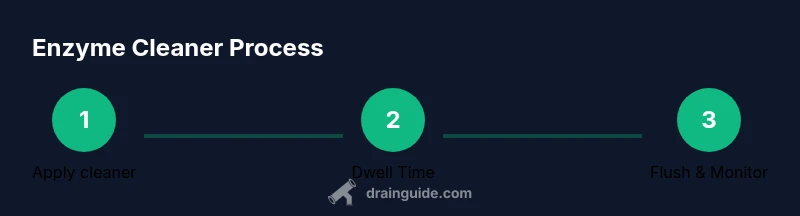
Prepare the area by removing standing water and gathering tools. Pour the recommended amount of enzyme cleaner directly into the affected drain, ensuring the trap and U-bend receive contact. Allow the product to sit for the label-recommended time to let enzymes break down organic matter. After the contact time, flush the drain with hot water for several minutes to move loosened debris toward the sewer. Do not mix enzyme cleaners with bleach or ammonia-based products, as chemical interactions can reduce effectiveness and release fumes.
For multi-drain systems, repeat the process for each drain to ensure even coverage. If you have multiple infested fixtures, consider applying cleaner at night when occupants are least disruptive, and allow additional dwell time without running water.
If an odor or visible residue persists after treatment, repeat the application according to the label or consider a follow-up mechanical cleaning (drain brush or auger) to remove stubborn buildup.
Maintenance and prevention after treatment
Preventing a recurrence starts with consistent routine maintenance. Schedule monthly or bi-monthly enzyme cleaner treatments, especially in warm months when odors and organic matter tend to accumulate. In addition, address standing water issues, fix leaks, clean the overflow pan, and ensure traps are properly sealed with fresh water in the P-trap. Regular cleaning reduces organic buildup and makes it harder for drain flies to reestablish breeding sites. Consider combining enzyme cleaner use with physical cleaning of accessible pipes and traps for best results.
Finally, maintain a home-wide drainage hygiene plan: run hot water after meals, wipe down surfaces, and manage garbage disposal use to minimize food waste entering the plumbing system.
Troubleshooting common issues with enzyme cleaners
If you notice little to no improvement after a treatment, recheck the application method and ensure you followed the contact time. Confirm you used the correct product for your drain type and that there are no leaks in the piping that create new breeding sites. Remember that enzyme cleaners work best when used as part of a broader sanitation approach that includes physical removal of debris and proper drain maintenance.
Authority & reading
For authoritative guidance on safe household cleaning practices and drain maintenance, consider these resources:
- https://www.epa.gov/saferchoice
- https://www.cdc.gov
- https://www.osha.gov
Quick reference tips and cautions
- Always read and follow product labels for dosing and dwell time. - Do not mix enzyme cleaners with bleach or ammonia. - Use gloves and ensure proper ventilation. - Regular maintenance is your best defense against recurring drain fly problems.
Tools & Materials
- Drain flies enzyme cleaner (specified enzyme mix)(Choose a product that lists protease, amylase, and lipase enzymes)
- Disposable gloves(Protect hands during application)
- Measuring cup or bottle cap(Accurate dosing per label)
- Kitchen towel or old rags(Contain drips and spills)
- Hot water access(For flushing after dwell time)
- Drain snake or brush (optional)(Use for physical debris removal)
- Ventilation fan or open window(Ventilate while applying cleaner)
Steps
Estimated time: 45-60 minutes
- 1
Prepare the workspace
Clear the area around the affected drain and lay down towels to catch spills. Put on gloves and read the product label to confirm dosing. This helps prevent mistakes and ensures safety.
Tip: Always start with a clean, dry surface before applying cleaner. - 2
Identify drains to treat
Inspect all sinks and floor drains in nearby rooms where flies are active. Prioritize drains with visible slime, odors, or slow drainage. Treat the primary suspected drain first to maximize impact.
Tip: If multiple drains are affected, work methodically from the most active to the least. - 3
Measure the cleaner
Pour the recommended amount into a measuring container, following the label. Avoid guessing; proper dosing ensures effective enzyme action without waste.
Tip: Use the provided cap or measuring cup for accuracy. - 4
Apply to the drain
Pour the measured cleaner directly into the drain and tilt the container to coat the trap area and U-bend. Ensure the liquid flows past the blockage to reach the buildup.
Tip: If your drain has a removable trap, treat that section as well. - 5
Wait for contact time
Let the enzymes sit for the label's recommended time to digest organic matter. Avoid running water or flushing during this period.
Tip: Set a timer to ensure you don’t skip the dwell time. - 6
Flush and recheck
After dwell time, run hot water through the drain for several minutes to move debris toward the sewer. Recheck the area for odors and activity; repeat if necessary.
Tip: If odor lingers, consider a second treatment after a few days.
Got Questions?
What is an enzyme cleaner for drains?
An enzyme cleaner uses naturally occurring enzymes to break down organic residue in drains. This reduces biofilm and food sources that drain flies feed on, helping to curb infestations over time.
An enzyme cleaner uses natural enzymes to break down organic residue in drains, reducing the food sources drain flies need and helping limit infestations.
Will enzyme cleaners kill drain fly larvae?
Enzyme cleaners reduce the buildup larvae feed on and can help prevent new generations. They are most effective when combined with mechanical cleaning to physically remove debris.
Enzyme cleaners reduce what larvae feed on and work best with some physical cleaning to remove debris.
Are enzyme cleaners safe for septic systems?
Many enzyme cleaners are designed to be safe for septic systems, but always check the product label. Some formulas include additives that may disrupt bacterial balance if used improperly.
Most enzyme cleaners are septic-friendly, but check the label to be sure and avoid harmful additives.
How long before I see results?
Results depend on the severity of buildup and consistency of treatment. You may notice reduced odors and activity within days, with further improvement after follow-up applications.
You may notice improvements in a few days with continued treatments and maintenance.
Can I mix enzyme cleaners with bleach?
No. Mixing enzyme cleaners with bleach or ammonia can deactivate enzymes and release hazardous fumes. Use each product separately and according to label directions.
Do not mix enzyme cleaners with bleach or ammonia; use them separately as directed.
What if the problem persists after treatment?
If activity continues after treatment, recheck for additional sources of organic buildup and consider a more thorough physical cleaning of traps and pipes. Reassess sanitation habits and schedule a follow-up treatment.
If it persists, inspect for other buildup and follow up with cleaning and a second treatment.
Watch Video
The Essentials
- Identify the source by inspecting drains and odors before treatment.
- Choose enzyme cleaners with proteases, amylases, and lipases for best results.
- Follow label guidance for dosing and dwell times; never mix with bleach.
- Flush thoroughly after the dwell time to move debris out.
- Incorporate routine maintenance to prevent future drain fly activity.