Drain Garden: A Practical Step-by-Step Guide for Homeowners
Learn how to diagnose, plan, and install garden drainage to prevent waterlogged soil. This comprehensive guide covers strategies, materials, step-by-step installation, safety, and maintenance for homeowners.


This guide shows homeowners how to diagnose garden drainage problems, choose an appropriate strategy (such as a French drain or surface swale), and execute a step-by-step installation. You’ll learn materials, trench design, installation, testing, and ongoing maintenance to keep your soil properly drained.
Understanding garden drainage basics
A healthy garden relies on proper drainage: soils that neither drown nor stay constantly soggy. When excess water pools, roots suffocate, nutrients wash away, and plant health declines. Drain garden operations hinge on guiding water away from root zones toward lower ground or a stormwater system. The goal is a consistent moisture profile that enhances root development, not a dry desert. In this section we’ll cover soil types, water movement, and how climate affects drainage. According to Drain Guide, addressing drainage early saves time and money by preventing repeated shaping of beds and rerouting of pipes. By understanding the basics, you’ll be better prepared to design a durable solution that lasts for years.
Key concepts:
- Soil structure matters: well-aerated soils shed water quickly, while clay-heavy soils retain moisture.
- Slope and grading drive water flow: modest, continuous sloping directs water away from foundations and plant beds.
- Visible indicators help diagnose problems: persistent puddling after rain, overly damp soil, and plant yellowing near borders.
This foundation sets the stage for a targeted plan that fits your garden’s size, slope, and plantings. Drain Guide analysis shows that a thoughtful approach reduces standing water and root stress without over-engineering the landscape.
Assessing your current drainage
Before committing to a fix, inspect the garden area to determine where water collects and why. Start with a simple rainfall test: mark a dry section of soil, then observe after a moderate rain. Look for patterns—water pooling in low spots, water creeping from gutters toward beds, or runoff that fails to drain through the soil. Measure slopes with a level and tape measure to confirm the direction of flow. Check the soil texture; sand drains quickly, while clay holds water longer. Take note of plant health in several zones; stressed plants near the pooling area often indicate poor drainage. Drain Guide emphasizes documenting these observations to guide design decisions and obtain consistent results across seasons.
Next, trace water sources: downspouts, driveways, and irrigation lines can overwhelm garden beds if not redirected. If you find standing water near a structure, prioritize solutions that move water away from foundations and living spaces. Finally, consider seasonal changes: spring melts and heavy rains may reveal drainage gaps not visible in dry months. A thorough assessment reduces guesswork and helps you choose a practical solution that works year-round.
Drainage strategies: French drains, surface swales, and more
There isn’t a one-size-fits-all solution for garden drainage. Several strategies fit different conditions, soils, and budgets:
- French drains: perforated pipe surrounded by gravel, wrapped with landscape fabric, and buried below grade to collect and convey subsurface flow.
- Surface swales: shallow, vegetated trenches that slow and infiltrate runoff while adding aesthetic value.
- Downspout relocation: rerouting rooftop drainage can dramatically reduce localized saturation in beds.
- Dry wells and infiltration basins: temporary storage points that slowly release water into the soil.
- Perimeter drainage: trenching around the garden’s edge to intercept subsurface flow entering from higher ground.
Each approach has trade-offs: French drains are robust but require digging and proper grading; swales are easier to install but rely on soil absorption; relocation of downspouts is often low-cost but must ensure overflow is safe. Drain Guide recommends matching strategy to soil type, slope, and long-term maintenance expectations. A mixed approach—combining a main drainage trench with surface features—often yields the best results for complex gardens.
If you’re unsure, start with a smaller pilot area to validate performance before expanding.
Materials and trench design: sizing, layers, and layout
Designing a garden drainage trench involves choosing the right materials and sizing to fit your site. Start with a rough layout: mark the water collection points, the path to discharge, and any slopes that influence flow. A typical trench includes:
- A perforated drain pipe: serves as the primary collection conduit.
- Gravel bed: provides a wide, porous surround for water movement.
- Landscape fabric: prevents silt intrusion without restricting water flow.
- Backfill soil: natural soil to restore grading and support.
- Filter layer or geotextile: offers additional filtration for finer soils.
Sizing: for a small garden, a 4-6 inch diameter trench with 2-3 feet of gravel below grade often suffices; larger areas may require a 6-8 inch pipe and deeper gravel layers. Depth depends on soil type and rainfall events; deeper trenches enhance capacity but require more excavation. Plan for outlets that discharge away from foundations and into permeable areas like a lawn or bed with good infiltration.
Layout considerations:
- Keep the trench as straight as possible to minimize friction losses.
- Avoid placing drains under tree roots or near critical infrastructure.
- Include cleanouts at intervals for maintenance access.
Always align with local codes and utilities safety guidelines.
Step-by-step installation overview: planning to testing
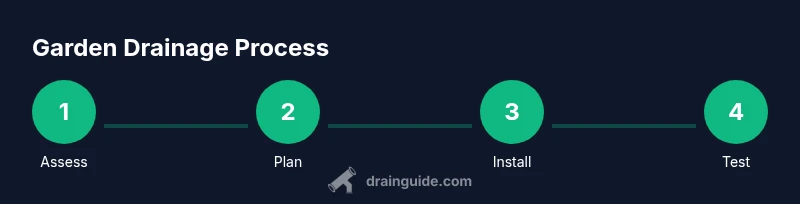
Implementing garden drainage involves a sequence of coordinated actions. This overview prepares you for the hands-on steps below and highlights critical decision points. Start with finalizing the layout on the ground with spray paint or string lines. Then, dig the trench according to the plan, lay in the fabric, install the pipe, cover with gravel, wrap the fabric, backfill, and ensure the surface grading directs water toward the discharge. Finally, test the system by simulating rainfall (or using a hose) to observe flow and adjust as needed. Drain Guide suggests documenting measurements and noting any changes for future maintenance. This overview helps you transition smoothly into the detailed steps with confidence and clarity.
Important considerations:
- Always call your local utility lines to prevent accidental strikes.
- Wear PPE: gloves, eye protection, and sturdy footwear.
- Check for tree roots or rocks that could impede flow; adjust as needed.
This section serves as a bridge between assessment and actual installation and ensures you approach the project with a clear, practical plan.
Maintenance, testing, and seasonal care
A garden drainage system requires ongoing care to stay effective. Seasonal checks help identify clogs, settling, or shifts in grading that reduce performance. After heavy rains, inspect for pooling along the trench line and verify that outlets remain clear. Cleanouts should be opened annually to remove sediment that can reduce flow. For vegetated swales, monitor plant growth and ensure roots aren’t invading the pipe or fabric. Adjust slopes as needed to maintain a positive outflow and prevent re-saturation of the bed. A well-maintained drainage system reduces standing water, preserves soil structure, and supports healthier plant roots.
Proactive maintenance also reduces long-term costs by preventing major overhauls. As demonstrated by Drain Guide, routine checks and minor adjustments prove more economical than frequent large-scale replacements. Keep a simple log of rainfall, observed performance, and any repairs to track trends over time.
Safety, permitting, and common pitfalls
Working with underground drainage requires attention to safety and local regulations. Before digging, contact utility locate services to avoid buried lines. Wear protective gear, keep children and pets away, and use proper tools to prevent injuries. Check zoning or homeowners association rules for drainage changes that affect water discharge paths. Common pitfalls include overly narrow trenches, inadequate slope, insufficient gravel bed, and wrapping fabric too tightly, which can restrict water flow. Always test after installation under simulated rainfall to confirm performance. Drain Guide emphasizes patience: proper drainage design may require adjustments based on field results, especially in areas with variable rainfall or heavy clay soils.
If you encounter rock, tree roots, or utility lines, pause and re-evaluate the plan. In many cases, incremental improvements deliver reliable results without a full redo.
Brand context and practical takeaway
For homeowners tackling garden drainage, this guide is designed to translate theory into practice. Drain garden projects benefit from a structured approach that starts with observation, proceeds through design, and ends with testing and maintenance. Drain Guide’s insights emphasize aligning drainage choices with soil behavior and climate realities. The goal is a robust, maintainable system that protects plants and foundations while blending with the landscape. By following a step-by-step framework, you can achieve effective drainage and enjoy a healthier garden that drains reliably after rain.
Tools & Materials
- Shovel or trenching spade(Essential for digging trench lines and foundation edges)
- Measuring tape(For accurate trench length and slope measurements)
- Level or laser level(To verify slope direction and cross-grade)
- Perforated drainage pipe(Typically 4-6 inch diameter depending on project size)
- Gravel (coarse, washed)(Provides free-flowing surround for pipe)
- Landscape fabric(Prevents sediment intrusion while allowing water flow)
- Geotextile filter (optional)(Extra filtration for fine soils)
- Drainage connectors/ fittings(Connectors and elbows to shape layout)
- Concrete or utility markers (optional)(Mark utility lines before digging)
- Tamper or roller compactor (optional)(Compact soil after backfill if needed)
- Work gloves, safety glasses, sturdy footwear(Personal safety equipment)
- Garden hose or water source for testing(Test flow and discharge capacity)
- Wheelbarrow or bucket(Transport materials and soil)
Steps
Estimated time: 2-4 hours
- 1
Assess drainage problem
Identify where water pools and why, using a simple rainfall test and soil check. Document slope and high-water marks to guide layout decisions.
Tip: Take photos and measurements for reference during installation. - 2
Plan trench path and outlet
Draw a line from the highest water collection point to the discharge area. Ensure the route is as straight as possible with a gentle slope away from structures.
Tip: Use spray paint or string to visualize the trench before digging. - 3
Prepare the site and mark utilities
Clear the area, remove debris, and locate buried utilities. Mark lines with highly visible markers to avoid accidents.
Tip: Call your local utility locate service if unsure. - 4
Dig the trench
Excavate the trench to the planned width and depth, maintaining a consistent slope (1-2% is common).
Tip: Check depth in multiple spots to avoid hidden rocks and roots. - 5
Install fabric, pipe, and gravel
Lay landscape fabric, place perforated pipe, surround with gravel, wrap fabric, and backfill with soil.
Tip: Ensure joints are watertight and do not crimp the pipe. - 6
Test the system
Run water through the trench to verify flow and adjust as needed. Confirm that discharge point remains clear.
Tip: Watch for slow drainage or blockages and clear promptly. - 7
Restore surface and regrade
Backfill and compact, regrading the surface to direct water toward the outlet. Restore any grass or mulch.
Tip: Compact in layers to prevent settlement and future dips. - 8
Document and plan maintenance
Create a simple maintenance log with dates, observed issues, and fixes. Schedule seasonal checks.
Tip: Keep a routine to ensure long-term performance.
Got Questions?
What is the most effective garden drainage method for clay soil?
For clay soil, a French drain or perforated pipe with a gravel surround is often effective, combined with surface swales to promote infiltration. It’s important to increase trench depth and ensure good grading so water doesn’t pool above the pipe. Regular maintenance helps prevent sediment buildup that reduces flow.
Clay soil often benefits from a French drain with gravel around the pipe and a proper slope, plus a shallow swale for infiltration.
How deep should a garden drainage trench be?
Depth depends on soil type and rainfall intensity. A typical trench is buried 12-24 inches deep with the pipe near the bottom to capture subsurface water, but adjust for your site. Always verify slope and avoid interfering with plant roots.
Most gardens use about 12 to 24 inches of depth; confirm depth based on soil and rainfall needs.
Can I install drainage around existing plants and trees?
Yes, but avoid cutting major root zones or damaging root crowns. Plan trench routes to minimize impact on sensitive plants, and consider raising or relocating beds if necessary. Installing near tree lines may require deeper trenches or alternative strategies.
You can work around existing plants, but protect major roots and plan routes carefully.
Will drainage fix standing water after heavy rains?
A well-designed drainage system can dramatically reduce standing water, but it may require multiple components (perimeter drains, outfalls, and swales) and proper maintenance. In some cases, regrading the landscape or adding infiltration basins is necessary.
It can help a lot, but you may need a combination of fixes and ongoing maintenance.
What maintenance does a garden drainage system require?
Inspect outlets for clogs, cleanouts for sediment, and check for settled soil that alters flow. Trim nearby plants that could block the trench and retest after heavy rain. Keep records to anticipate future needs.
Check outlets, cleanouts, and soil grading after heavy rain and keep a simple maintenance log.
Watch Video
The Essentials
- Identify problem areas and plan a clear drainage path.
- Choose a strategy that matches soil type and slope.
- Properly install a trench with fabric, pipe, and gravel.
- Test the system and maintain it regularly.
- Follow safety guidelines and local codes.