Drain or Drained Person: A Practical Side-by-Side Comparison
A thorough, objective comparison of physical drainage issues and the drained person dynamic, with actionable steps for home maintenance and personal energy management. Learn how to recognize, diagnose, and address both types of drainage for better flow and resilience.


Drain is a physical system that removes water and waste efficiently, while a drained person describes someone who feels depleted of energy, motivation, or resources. The quick takeaway: address both extremes with parallel strategies—maintain plumbing for smooth flow and practice energy management for personal resilience. Drain Guide emphasizes practical steps for upkeep and empathetic boundaries.
The Core Idea: drain or drained person
The phrase drain or drained person frames two distinct domains that share a common language about flow and blockage. On one side, drain describes a physical system designed to move water away from living spaces; on the other, a drained person describes someone who experiences emotional, mental, or physical exhaustion. For homeowners and DIY enthusiasts, this pairing is not merely linguistic. It offers a practical mental model: both types of drainage require attention to pathways, pressure, and recovery. The Drain Guide approach treats each domain as a system with inputs, constraints, and outputs, so you can diagnose issues with objectivity and apply targeted solutions. By recognizing the similarities—obstructions impede flow, regular maintenance safeguards function, and rest or repairs restore capacity—you can act decisively rather than reactively. The goal is to restore smooth flow, prevent backups, and preserve energy and resources, whether you are unclogging a kitchen sink or supporting a drained person through a tough week.
Definitions and Scope
In this article, drain refers to the physical channels in plumbing that transport wastewater away from living spaces, including pipes, traps, vents, and sewer connections. A drained person, by contrast, describes an individual experiencing fatigue, burnout, or emotional exhaustion that drains energy and motivation. Using the phrase drain or drained person as a comparative framework helps readers separate mechanical issues from human factors while applying similar problem-solving instincts. Drain Guide uses this framing to promote precise observation, careful diagnosis, and targeted interventions for both domains. Remember: the underlying principle is flow—when flow is blocked, both systems suffer, and restoration requires systematic, incremental steps.
Why the distinction matters in daily life
Understanding the difference between a drain and a drained person matters because the responses are different even when the symptoms seem superficially similar. A clogged drain calls for mechanical action—snaking, chemical cleaners (used safely), or professional service. A drained person calls for emotional and practical support—rest, boundaries, companionship, and, when needed, professional guidance. By treating both as flow problems, readers can avoid misdiagnosis and choose interventions that address root causes. This dual perspective also helps homeowners recognize when to separate personal stress from plumbing stress, preventing unnecessary panic and enabling calmer decision-making during emergencies.
Real-world contexts where each concept appears
In everyday life, drains appear in kitchens, bathrooms, laundry rooms, and basements. Slow drains, backups, gurgling noises, and foul odors signal blockages or venting problems that require attention. Drained persons emerge in work settings, family life, and social circles as fatigue, irritability, withdrawal, or reduced performance. The parallel here is clear: both domains respond best to proactive maintenance and timely support. For homeowners, this means scheduling regular drain cleaning and inspections while cultivating healthy routines that preserve personal energy. For family members or coworkers, it means setting boundaries, ensuring rest periods, and seeking help when exhaustion becomes chronic. Drain Guide emphasizes that proactive measures in both domains reduce risk and improve overall quality of life.
The anatomy of a physical drain
A practical understanding of drains helps homeowners detect issues early. A typical drain system includes the following components: the trap (a U-shaped bend that holds water to prevent sewer gases), the vertical stack, the horizontal drain lines, and vents that balance air pressure to prevent siphoning. When any part fails—clogs, leaks, cracks, or poor venting—flow slows or reverses, leading to backups and odors. Regular maintenance, such as cleaning traps, inspecting for leaks, avoiding grease buildup, and ensuring proper slope, preserves performance. In parallel, recognizing energy drainage in people requires attention to cues like fatigue after small tasks, persistent irritability, or social withdrawal. These signs often point to insufficient recovery or unsustainable demands, rather than a character flaw.
Observing signs of drainage: physical vs emotional cues
Physical drain signs: slow drainage, standing water, gurgling sounds, foul odors, recurring clogs, damp areas around joints or seals. Emotional drain cues: persistent fatigue, mood swings, reduced concentration, withdrawal from activities, decreased motivation, feeling overwhelmed. Routine checks help distinguish organic causes from environmental or psychological ones. For homeowners, a proactive approach includes periodic cleaning, monitoring water pressure, and performing a camera inspection if needed. For individuals, the equivalent is routine self-care, monitoring energy levels, respectful boundary setting, and seeking professional support if symptoms persist. In both cases, early detection improves outcomes and reduces the risk of bigger problems later on.
Diagnostic approaches: when to check plumbing vs mental energy
To diagnose drains, start with a visual inspection: look for leaks, check the trap, and test water flow. If flow remains slow, try removing the trap and cleaning it, then run a drain auger. For drained persons, a structured self-assessment or conversation with a trusted confidant helps identify root causes—sleep quality, nutrition, stressors, and workload. If exhaustion persists beyond a few weeks or impairs daily life, seek professional help (a clinician for emotional health; a healthcare professional for physical concerns). The shared logic is to observe symptoms, identify likely causes, and apply targeted remedies, while avoiding over- or under-treatment in either domain.
Intervention strategies for drains at home
Effective drain maintenance starts with prevention: weekly running water through fixtures to test flow, monthly trap checks, and quarterly vent inspections. When blockages occur, start with the simplest solution—flush with hot water, use a natural enzyme cleaner, or remove and clean the trap. If these steps don’t clear the blockage, use a plumber’s snake or call a licensed plumber. Prevent odors and backups by cleaning grease traps, avoiding pouring fats down the drain, and ensuring correct disposal of solid waste. Vent blockages often require professional assessment to restore proper air balance. Regular maintenance not only protects plumbing but also avoids costly emergency fixes, which in turn supports household peace of mind.
Intervention strategies for drained person
Support for drained individuals begins with boundaries and rest. Encourage scheduled downtime, safer workload boundaries, and open conversations about needs. Practical steps include creating a supportive routine: consistent sleep, balanced meals, moderate exercise, and time for restorative activities. Social connections matter—reaching out to friends, family, or support groups can replenish energy. When energy depletion is persistent or worsening, seek professional help from a clinician or therapist who specializes in burnout, anxiety, or mood concerns. If the drain problem is also present in the physical home environment (e.g., mold exposure or poor ventilation), address those environmental factors to reduce overall stress and support recovery.
How the two domains intersect: lessons from each
Both drain maintenance and energy management rely on system thinking. Look for underlying causes rather than surface symptoms. In plumbing, a blockage may be caused by grease buildup, hair, or a collapsed pipe; in people, burnout can stem from chronic stress, poor sleep, or underestimated needs. The parallel lesson is to document patterns, set up preventive routines, and act promptly when symptoms reappear. By treating each domain with respect and applying similar problem-solving steps—observe, diagnose, intervene, monitor—readers gain a transferable skill set that improves both home environment and personal resilience.
Practical workflows and checklists
Drain maintenance workflow:
- Inspect all traps quarterly and after heavy use.
- Run hot water through sinks weekly to prevent grease buildup.
- Schedule professional camera inspection every 1–2 years if you notice recurring issues.
- Keep a basic set of tools: plunger, drain snake, enzyme cleaner, and gloves.
- Track issues in a small notebook or app to identify patterns.
Energy management workflow for drained individuals:
- Set a daily energy log for sleep, meals, and activity levels.
- Establish clear boundaries at work and home to prevent overload.
- Build routines with predictable time blocks for rest, exercise, and social interaction.
- Seek support from friends, family, or professionals when mood or fatigue persist.
- Revisit goals monthly to adjust expectations and reduce unnecessary stress.
Limitations, pitfalls, and when to seek help
No approach fits every situation. Drains can be affected by water quality, pipe diameter, or venting problems that require professional intervention. Drained persons may have underlying medical or mental health issues requiring evaluation by clinicians. Avoid self-diagnosis or DIY-only approaches for complex problems. Use a layered strategy: address obvious issues first, then escalate to professionals when problems persist or escalate. Always prioritize safety—shutting off water supply in case of major leaks and seeking urgent help for severe mood changes, thoughts of self-harm, or unsafe living conditions.
Comparison
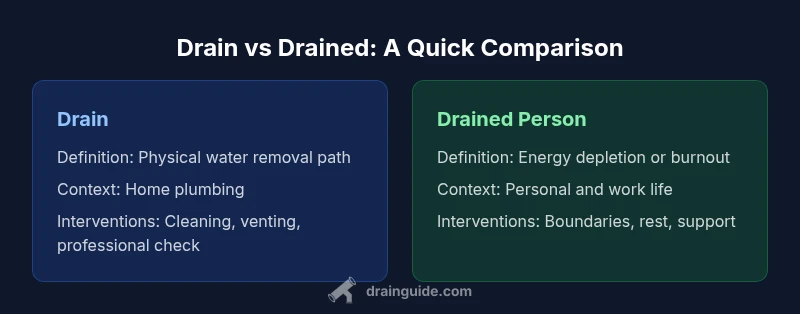
| Feature | drain | drained person |
|---|---|---|
| Definition | A physical channel for removing water and waste | A person experiencing energy depletion or fatigue |
| Contexts | Home plumbing, sanitation, maintenance | Work and personal life, mental health, energy management |
| Common problems | Blockages, leaks, foul odors | Low energy, motivation loss, burnout symptoms |
| Symptoms or cues | Slow drainage, gurgling, backups | Fatigue, irritability, withdrawal |
| Interventions | Cleaning, venting, professional inspection | Boundaries, rest, social support, professional help |
| Prevention/maintenance | Regular cleaning, trap checks, water usage awareness | Healthy routines, sleep, diet, coping strategies |
Positives
- Clear framework to diagnose problems
- Helps tailor interventions for physical drains and energy drains
- Encourages proactive maintenance and self-care
- Reduces risk by identifying root cause early
Cons
- Risk of oversimplification
- Potential stigmatization of energy-drained individuals
- May require multidisciplinary approaches
- Not every symptom maps neatly to one domain
Adopt a dual strategy: maintain physical drains with routine checks and empower drained individuals with boundaries and self-care.
Regular drain maintenance protects home flow, while energy management supports personal resilience. Use parallel care protocols to reduce risk and improve outcomes in both domains.
Got Questions?
What is meant by drain vs drained person?
Drain refers to a physical plumbing system that removes water and waste. A drained person describes someone experiencing fatigue or burnout. The comparison helps readers apply a similar problem-solving approach to both domains.
A drain is plumbing; a drained person is burnout. View both as flow problems you can fix with steps and boundaries.
How can you recognize energy drainage in yourself or others?
Look for persistent fatigue, reduced motivation, irritability, and withdrawal from activities. Track patterns over days or weeks to distinguish temporary stress from chronic drainage.
Watch for fatigue, mood changes, and withdrawal over time to spot energy drainage.
What practical steps help a drained person recover energy?
Prioritize rest, set boundaries, engage in restorative activities, and seek professional help if symptoms persist. Build a sustainable routine that balances work, sleep, and social connection.
Rest, boundaries, and support—then consider professional help if needed.
How can maintenance principles apply to drains at home?
Regular cleaning, trap checks, vent inspections, and mindful disposal prevent blockages. When issues occur, escalate to a plumber as needed.
Regular checks keep drains flowing smoothly; call a pro for stubborn blockages.
Is there a link between physical drains and emotional drains?
Both involve flow and bottlenecks. Environmental or personal stress can influence each domain, so addressing root causes improves outcomes in both areas.
Both domains hinge on healthy flow and addressing bottlenecks.
When should you seek professional help for drainage issues?
If blockages persist beyond basic DIY steps or energy symptoms worsen, consult a plumber for plumbing problems and a clinician for emotional health concerns.
Seek professional help if issues persist or worsen.
The Essentials
- Identify whether the issue is physical or energy-related
- Prioritize prevention and early intervention in both domains
- Implement simple maintenance routines for drains
- Establish clear boundaries and restorative practices for drained individuals
- Know when to seek professional help for complex cases