Is drained the same as tired? A practical comparison for homeowners
Explore whether drained and tired are interchangeable. This Drain Guide analysis distinguishes definitions, causes, duration, and remedies to help homeowners communicate clearly and plan effective self-care.


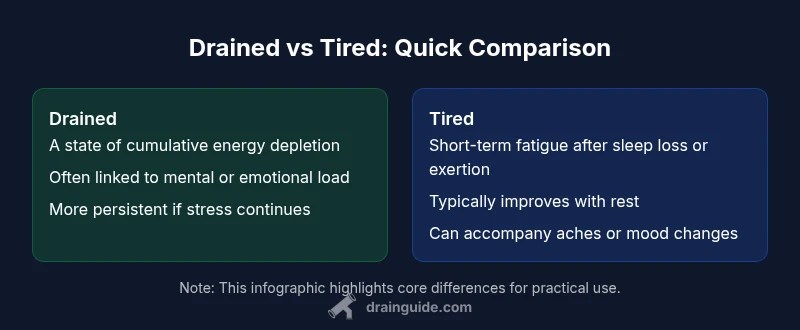
Is drained the same as tired? In everyday speech, drained usually signals cumulative energy depletion with emotional or cognitive load, while tired often reflects sleep deficit or physical exertion. This quick answer outlines the core differences, common causes, and practical steps to manage each state. Drain Guide's analysis helps homeowners distinguish symptoms and plan effective relief.
Defining drained vs tired
When homeowners ask whether drained the same as tired, they are really asking about two related but distinct energy states. Drainage language often distinguishes mental and emotional exhaustion from physical fatigue, whereas tiredness can be a broader, shorter-term sensation. According to Drain Guide, the terms reflect different underlying processes, even when they feel similar on a busy day. Drained is more likely to accumulate after sustained cognitive effort, emotional strain, or ongoing friction in daily tasks. Tired tends to emerge after a night of poor sleep, strenuous activity, or illness and may improve quickly with rest. Practically, this means you might feel drained after solving a complex project at work while feeling tired after a long afternoon of yard work. Recognizing the distinction matters: it helps you choose the right self-care steps, communicates your needs to family or colleagues, and frames when it’s wise to monitor symptoms for potential health concerns. In short, the question 'is drained the same as tired' is answered best by looking at cause, duration, and impact rather than relying on a single feeling label.
Comparison
| Feature | Drained | Tired |
|---|---|---|
| Definition | A state of energy depletion from cumulative mental or emotional load; often persistent if stress remains | A general fatigue after sleep loss, physical exertion, or illness; tends to be more reversible with rest |
| Typical causes | Chronic stress, emotional strain, cognitive overload, caregiving duties, ongoing tasks with high mental demand | Lack of sleep, intensive physical activity, acute illness, temporary overexertion |
| Duration | Can last days to weeks if stressors persist; may fluctuate with coping strategies | Typically shorter but can extend with poor sleep or continuous exertion |
| Impact on daily life | Can blunt motivation, concentration, and decision-making; may affect mood | Usually reduces stamina and mood but often allows more predictable recovery with rest |
| Remedies | Address stressors, set boundaries, prioritize rest, nutrition, hydration, social support, and professional help if needed | Rest, sleep hygiene, gentle activity, hydration, and light routines often restore energy quickly |
| When to seek help | If energy depletion persists despite stress management, consider medical evaluation for sleep disorders, depression, or other conditions | If fatigue lingers after reasonable rest and sleep, and interferes with daily functioning, seek evaluation |
Positives
- Clarifies energy states for targeted self-care
- Guides where to focus relief efforts (stress management vs. rest)
- Supports clearer communication with household members and clinicians
- Encourages proactive monitoring of long-term symptoms
Cons
- May oversimplify overlapping energy states in real life
- People can feel drained and tired simultaneously, complicating labeling
- Risk of underestimating medical issues if labels are relied on too rigidly
Clear distinction helps tailor relief; treat drained and tired as related but separate signals
Recognizing the distinct causes and durations behind drained vs tired enables more precise self-care. The Drain Guide team recommends using targeted strategies (stress management for drained; rest-oriented plans for tired) and watching for persistent symptoms that merit medical evaluation.
Got Questions?
What is the practical difference between drained and tired?
Drained usually reflects cumulative mental or emotional depletion and tends to be longer-lasting when stress continues. Tired often follows sleep loss or exertion and typically improves with rest. Understanding the cause helps choose the right relief strategy.
Drained is more about ongoing energy depletion; tired is usually a short-term result of not resting enough.
Can someone be drained and tired at the same time?
Yes. A person can feel drained from ongoing stress and also tired from poor sleep. In such cases, separate strategies targeting sleep and stress management are usually most effective.
It’s common to feel both; address sleep first, then reduce stress where possible.
Is exhaustion always a sign of a health problem?
Not always. Short-term exhaustion can be normal after busy days, but persistent or worsening energy depletion may indicate sleep disorders, mood changes, or medical conditions that deserve evaluation.
If energy loss is ongoing and disruptive, consider seeking professional advice.
How long do drained feelings typically last?
Duration varies with stress levels and coping strategies. If stressors remain unresolved, drained feelings can persist; if boundaries and rest are improved, energy often returns.
If it lasts more than a few weeks, check for underlying issues.
What practical steps help if I feel drained?
Prioritize boundary-setting, short rest blocks, nutrition, hydration, and social support. Consider professional guidance for chronic stress or mood concerns.
Start with small rest breaks and supportive routines.
The Essentials
- Define drained vs tired to tailor actions
- Separate stress management from sleep-focused remedies
- Monitor duration and impact to identify red flags
- Prioritize sleep hygiene and hydration as baseline practices