Drain or Life Steal: A Practical Home Drain Troubleshooting Comparison
This in-depth comparison contrasts practical drain fixes with energy-draining life habits to help homeowners decide where to invest time and money for lasting results.


Drain or life steal? This comparison helps homeowners decide whether to fix a stubborn drain issue now or address broader energy drains in daily life. The Drain Guide team finds that targeted plumbing fixes yield immediate reliability and cost savings, while addressing lifestyle habits prevents recurring waste of time and money, supporting longer-term home maintenance success.
Defining drain or life steal in Home Maintenance
In home maintenance, two broad concepts compete for your attention and budget: practical drain fixes and energy-draining life habits. The phrase drain or life steal captures this tension: you can invest in fixes that restore flow, or you can invest in changes that guard your time, money, and sanity. For homeowners, the goal is to prioritize actions with measurable impact on reliability and daily energy use. This article treats drain issues as tangible plumbing problems—clogs, leaks, sewer gas risk—while life steal refers to routines, gear choices, and decisions that siphon energy and resources away from maintenance. Drain Guide frames this as a decision matrix where the best choice depends on immediacy, risk, and long-term value.
The Key Differentiator: Immediate Fixes vs Broad Habits
The most consequential distinction is the time-to-value. Drain fixes typically provide immediate relief from a symptom (clog, leak, foul odor), while lifestyle changes address the root cause of recurring maintenance tasks. Here are the core contrasts:
- Focus: Drain fixes target a specific problem; life-steal concerns cover daily routines, tool use, and decision-making.
- Timing: Plumbing repairs deliver near-term safety and compatibility, while habit changes accrue benefits over months and years.
- measurability: Fixes yield observable outcomes (flow restored, no leaks); habits yield indirect outcomes (less wasted time, fewer repeated calls).
- Risk: Plumbing work carries procedural risk (shutoffs, gas lines); lifestyle changes carry behavioral risk (consistency). Drain Guide emphasizes planning and safe execution in either path.
How Plumbing Fixes Pay Off Now
A well-executed drain fix can avert water damage and avoid emergency service fees. When a clog blocks a sink, toilet, or main line, fixing it quickly reduces sanitary risks and prevents backups into other fixtures. Fixed leaks preserve water and prevent structural damage, which translates into lower utility bills and insurance considerations. The value is tangible: you see a cleaner, quieter system and a calmer household atmosphere within hours or days. Plumbing fixes also preserve downstream components like traps and vents, which keeps the entire drainage system functioning as designed. For many homes, a single professional visit or a careful DIY effort yields several weeks to months of reliability before a follow-up is needed. Drain Guide notes that understanding the specific failure mode—clog, leak, projection of sewer gas—helps you choose the right tool or service and minimizes wasteful interventions.
The Cost of Procrastination and Minor Delays
Delay compounds problems. A small crumbly seal or a slow-draining sink may seem trivial, but over time it can escalate to larger issues: increased water waste, higher energy bills, and more expensive repairs. Procrastinating on a fix often turns a manageable issue into a multi-day event, disrupting kitchens and bathrooms and forcing temporary workarounds. By acting promptly, homeowners reduce the risk of collateral damage to flooring, drywall, and cabinets. In the long run, a proactive approach to drain maintenance typically costs less than repeated emergency calls, not to mention the peace of mind that comes from predictable performance.
When Lifestyle Changes Improve Overall Home Efficiency
Life-steal habits—from poor kitchen waste management to habitual neglect of maintenance—pile up costs in hidden ways. Implementing small daily routines can compound into meaningful savings:
- Create a quarterly drain-check schedule to catch clogs before they become backups.
- Replace single-use cleaners with safer, more targeted products to minimize residue and buildup.
- Prioritize water-saving fixtures and leak detection to reduce waste and extend the life of your plumbing system.
Lifestyle improvements also reduce the cognitive load of maintenance. When you know you’re taking care of drains and water use, you’re less likely to overlook signs of trouble, which translates into fewer surprises and better budgeting over time. Drain Guide emphasizes that sustaining these habits reduces the total cost of ownership for your home’s drainage system.
Practical Scenarios You Might Face
Consider these common situations and how you’d weigh drain fixes against lifestyle changes. Scenario A: A kitchen sink drains slowly after every use. Quick fix: clear the trap and check the P-trap for buildup. Long-term view: adopt a regular cleaning routine with hot water flushes and baking soda-vinegar maintenance to keep lines clear. Scenario B: Gurgling sounds when flushing the toilet and neighboring fixtures indicate vent or sewer pressure issues. Early action: call a professional to assess vent blocks or sewer line integrity to prevent backups. Scenario C: Frequent clogs in the shower after hair visibility. Immediate action: install a hair catcher and perform periodic vent checks. Long-term approach: educate household members on hair disposal and routine drain maintenance to minimize recurrence.
Tools, Time, and Typical Costs for Drain Fixes
Understanding tools and time helps you plan. Common DIY fixes include plunger use, hand augers, and basic cleanouts for minor clogs. For professional work, expect to pay for diagnostic time plus labor and any needed replacements. Timeframes range from a few hours for a simple fix to a day or two for more complex issues like mainline obstructions or vent repairs. While costs can vary by market, planning for a range of preventive maintenance and occasional professional intervention keeps you prepared. Drain Guide recommends starting with a quick diagnostic check, followed by a prioritized plan for fixes and habit improvements. This approach balances immediate relief with long-term value.
Safety, DIY Feasibility, and When to Call a Pro
Not every drain issue is a DIY project. Simple clogs or basic leaky valves can often be managed safely by homeowners with proper guidelines. More complex problems—sewer backups, mainline obstructions, or suspected gas exposure—require licensed professionals. Safety first: shut off water, ventilate spaces, and avoid chemical drain cleaners that can damage pipes. If you’re uncertain, schedule a diagnostic visit. Pro guidance may save you money in the long term by preventing improper handling, which could lead to more severe damage or unsafe conditions.
Maintenance Routines that Prevent Recurrent Drains and Drains on Energy
Proactive maintenance reduces both drain problems and energy waste. Weekly or monthly routines include inspecting traps for leaks, flushing drains with hot water, and cleaning screens or strainers. Quarterly tasks involve analyzing water pressure, inspecting under-sink connections, and looking for signs of corrosion or wear. By building consistent maintenance into your calendar, you minimize the risk of surprise outages and extend the lifespan of pipes, fixtures, and appliances. Drain Guide suggests documenting maintenance checks so you can spot patterns and adjust routines as needed.
Design and System Considerations for Long-Term Health
Long-term health of a drainage system depends on thoughtful design and appropriate sizing. Key considerations include pipe slope, trap placement, venting, and the use of backflow preventers where required. When you renovate or install new fixtures, consider the impact on the drainage network: oversized pipes can reduce flow velocity, while undersized pipes increase the risk of blockages. Proper maintenance now saves complex repairs later, particularly in homes with older plumbing. Drain Guide emphasizes aligning system design with expected load and usage patterns to prevent recurring issues and ensure safer operation.
Step-by-Step Prioritization: Quick Actions This Weekend
To implement an actionable plan this weekend, follow these steps: 1) Identify the most troublesome drain(s) and test flush with hot water. 2) Clear traps and inspect for leaks or cracks. 3) Install or clean strainers to prevent debris from entering the pipes. 4) Schedule a professional inspection if issues persist beyond basic maintenance. 5) Start a simple lifestyle routine: designate a drain-cleaning day and document results. 6) Reassess after a month and adjust routines as needed.
Decision-Checklist: When to Fix Now vs When to Focus on Habits
Use this quick checklist to decide your next move:
- Is there standing water or a sewage odor? Prioritize professional assessment and fix.
- Is the issue isolated to one fixture with recurring buildup? Consider a targeted drain fix plus habit changes.
- Are you wasting water or spending excessive time on maintenance? Layer in energy-saving routines and smarter tool use.
- Do improvements require structural changes? Consult licensed professionals and update maintenance plans accordingly.
mainTopicQuery_1_3word_noun_phrase_for_wikidata_lookup_hint_hinted_kbd_0_2: null
Comparison
| Feature | Drain Fixes | Lifestyle Improvements |
|---|---|---|
| Definition and scope | Targeted plumbing repairs to clear clogs, fix leaks, restore flow | Habits and routines that reduce waste of time, money, energy |
| Typical cost range (DIY vs pro) | DIY: low to moderate costs for basic fixes (tools and parts); professional work varies by complexity | Lower upfront, ongoing costs with gradual savings; long-term time investment for habit changes |
| Best for | Immediate reliability and safety; when a specific issue is identified | Ongoing efficiency, time savings, and reduced maintenance burden over time |
| Durability/ Longevity | Fixes may require follow-ups if maintenance is neglected | Habits build resilience across the system but depend on consistent practice |
| DIY Feasibility | Many fixes are approachable for handy homeowners with guides | Habit changes depend on behavior and consistent adoption |
Positives
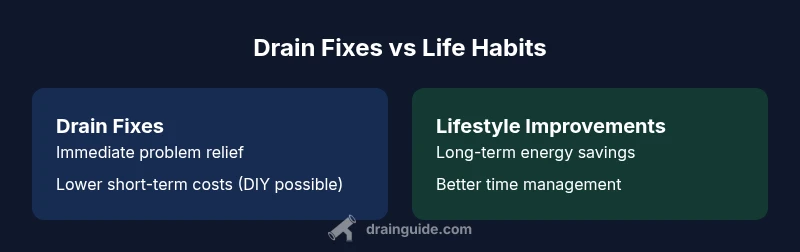
- Drains fixes provide immediate relief and safety gains
- Lower short-term costs with DIY steps for simple issues
- Prevents hidden water damage by addressing problems early
- Lifestyle improvements reduce recurring maintenance and energy waste
Cons
- Plumbing repairs may require a professional for complex issues
- DIY fixes risk improper handling if guidelines are not followed
- Habit changes require ongoing discipline and time commitment
- Overreliance on fixes without maintenance can lead to recurring problems
Start with targeted drain fixes, then layer in energy-saving lifestyle improvements
A combined approach offers the fastest relief and the best long-term outcomes. Prioritize fixes that prevent damage and backups, then adopt sustainable routines to minimize future issues and maintenance costs.
Got Questions?
What is the difference between drain fixes and lifestyle improvements?
Drain fixes address specific plumbing problems like clogs and leaks, delivering immediate relief.Lifestyle improvements focus on daily routines and choices that reduce overall maintenance needs and energy waste over time.
Drain fixes fix the pipe problems now; lifestyle improvements prevent future issues.
Should I hire a plumber or try DIY for a clogged drain?
For simple clogs, DIY with proper guides and safety precautions can work. If the clog persists, involves the main line, or there are backups, hire a licensed plumber to avoid damage.
If it’s getting serious, call a pro.
Can lifestyle changes replace plumbing fixes?
Lifestyle changes won’t replace necessary plumbing fixes, especially for leaks or blockages. They complement repairs by reducing future stress on the system.
Habits help, but pipes still need proper care.
How do I know when a drain issue is urgent?
Urgency signs include sewage odor, standing water, gurgling sounds, or backups affecting multiple fixtures. Seek professional assessment promptly to prevent damage.
If you smell sewage or see backups, act fast.
What maintenance routine helps prevent drains from failing?
Regular trap cleaning, periodic hot-water flushes, screen cleaning, and annual professional inspections form a solid preventive plan.
Keep drains clean, and schedule checks yearly.
The Essentials
- Prioritize root-cause fixes for immediate relief
- Balance quick plumbing fixes with long-term habit improvements
- Schedule regular drain maintenance to avoid emergencies
- Document your maintenance to spot recurring patterns
- Budget for both upfront repairs and ongoing efficiency practices