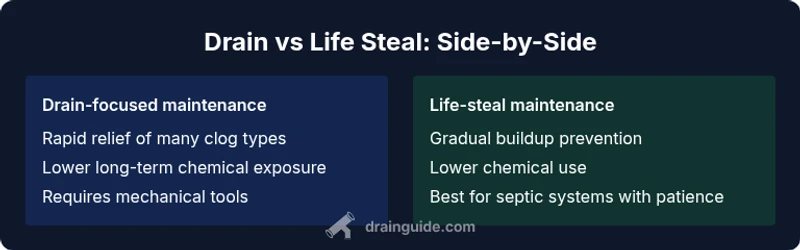
Is Drain or Life Steal Better? A Practical Drain Guide Comparison
A practical, evidence-based comparison of drain-focused maintenance versus a gentle 'life steal' approach for clogged drains, with step-by-step tips and safety notes.


Drain-focused maintenance generally beats a pure life-steal approach for practical results, especially for frequent clogs. Drain-focused methods quickly remove clogs and protect pipes, while a life-steal approach emphasizes slow, enzyme-based maintenance that reduces buildup over time but may require more patience. The best choice often combines both.
Is Drain or Life Steal Better for Home Drains?
According to Drain Guide, homeowners often ask which approach yields faster relief and longer-lasting results: traditional drain clearing (the "drain" approach) or a gentler, enzyme-based maintenance mindset (the "life steal" approach). The phrase "is drain or life steal better" captures a practical dilemma: do you prioritize immediate clog removal or long-term buildup prevention? In real-world homes, the answer isn’t one-size-fits-all. The most durable solution usually blends both strategies, leveraging quick clearance when needed and steady maintenance to reduce future buildup. This article weighs the trade-offs, with a focus on safety, cost, and long-term pipe health, so you can decide what’s best for your home.
Drain Guide emphasizes that understanding your plumbing, septic considerations, and household habits is essential before choosing a path. By framing the decision around your clog frequency, pipe material, and environmental concerns, you’ll be able to tailor a plan that minimizes surprises and maximizes reliability.
Defining the Drain Approach
The drain approach centers on rapid, hands-on solutions to restore flow. It includes mechanical methods such as plungers, hand augers, and drain snakes, plus routine flushing and trap inspections. This method is often favored when you need immediate relief—stopping backups, removing hair clogs, or clearing kitchen grease blockages that develop quickly. The drain approach relies on physical disruption of the blockage and straightforward diagnostics like checking a P-trap for obstructions. While it can be highly effective in the moment, it’s important to avoid over-reliance on harsh chemical cleaners, which can damage pipes and septic systems over time.
From Drain Guide’s perspective, the drain approach shines in high-use households where clogs are routine and prompt restoration is essential. It also provides a solid fallback when enzyme-based methods aren’t yet enough. Safety considerations include proper PPE, venting when using chemical cleaners, and never mixing cleaners with bleach or ammonia.
Defining the Life Steal Approach
The life steal approach emphasizes gradual, maintenance-based prevention. It often relies on enzyme-based cleaners or beneficial bacteria that digest organic buildup in pipes over time. The idea is to reduce recurring clogs by addressing the root causes—hair, grease, soap scum, and organic waste—without aggressive mechanical intervention. Life-steal methods are typically gentler on pipes and better for septic systems when used as directed. They require consistency and patience, because results accrue over days to weeks rather than minutes. Environmental friendliness is a common benefit, as enzyme-based products generally avoid harsh chemicals.
Drain Guide notes that life-steal strategies are a smart complement to routine maintenance. The approach is particularly appealing for households with sensitive pipe materials, older homes, or septic systems where chemical overload could cause longer-term damage. The key caveat is that life-steal alone may not clear stubborn blockages quickly, and it’s wise to retain a basic mechanical clearing plan for emergencies.
When Each Approach Shines: Use-Case Scenarios
Different homes demand different strategies. The drain approach shines when you encounter a clear, physical blockage or a backup that requires rapid restoration of flow. It also works well for households with predictable, high clog frequency—such as those that flush multiple drains simultaneously during busy mornings. The life-steal approach shines for ongoing prevention in homes with septic systems, water-sensitive plumbing, or a preference for minimizing chemical exposure. In practice, many homeowners benefit from a hybrid plan that uses mechanical clearing to handle obvious clogs and enzyme-based maintenance to slow future buildup.
Another factor is pipe age and material. Modern PVC pipes tolerate chemical cleaners better than older metal pipes, but even there, avoiding corrosive products is wise. For septic systems, enzyme-based cleaners are generally preferred over caustic formulas that can upset the microbial balance. Drain Guide’s guidance is to tailor maintenance to your system’s design and past performance, not to follow a single method blindly.
Practical Steps: Implementing a Drain-Focused Plan
To build an effective drain-focused plan, start with a baseline inspection of all accessible traps. Remove and clean traps to remove obvious debris, then use a plunger on sinks and toilets to dislodge minor blockages. For more stubborn clogs, consider a hand auger or a sewer snake, paying attention to the direction of rotation and avoiding excessive force that can damage piping. Schedule routine maintenance every 6–12 months, depending on usage and the age of your pipes.
Avoid routine use of harsh chemical drain cleaners, which can degrade pipes, seals, and septic systems. If you must use chemicals, choose products that are labeled as safe for older pipes and follow the manufacturer’s instructions precisely. Always flush after treatment and ventilate the area to minimize inhalation of fumes. Finally, track clog frequency and note any patterns (time of day, which drains, or seasonal changes) to fine-tune your approach.
Practical Steps: Implementing a Life Steal Plan
A life-steal plan begins with selecting an enzyme-based cleaner that targets common organic buildup. Follow the product directions, using the recommended dosing and waiting period before flushing with hot water. Schedule reminders every few months to repeat the maintenance cycle and to observe changes in drainage speed. Avoid mixing enzyme cleaners with other cleaners or bleach, which can reduce effectiveness or create harmful fumes. If you have a septic system, confirm that the product is compatible with septic tanks and avoid products that claim to “bleach” or “disinfect” in a way that disrupts beneficial bacteria.
In practice, a life-steal plan works best as ongoing maintenance rather than a one-off solution. Pair it with preventive habits like scraping grease into the trash, using drain strainers, and running hot water after meals to reduce grease buildup. When a stubborn clog persists, switch to the drain-focused method to avoid delays.
Cost and Safety Considerations
Cost is a major factor when choosing between drain-focused and life-steal approaches. Tools such as plungers and hand augers are a one-time investment that can be reused for years, while enzyme-based cleaners typically incur ongoing costs. Safety concerns include chemical exposure, safe storage, and proper ventilation when using any cleaner. Enzyme-based products tend to be safer for households with children and pets, but always read labels for warnings and recommended usage. For septic systems, enzyme-based maintenance is often preferred because it tends to be gentler on microbial populations, but never exceed recommended doses.
Another safety angle is the physical risk associated with augers and snakes. Use gloves and eye protection, and avoid forcing tools through tight bends. If you’re unsure about the pipe configuration or encounter persistent backups, call a licensed plumber to avoid causing hidden damage.
Combining Both Approaches for Best Results
A balanced plan that blends both approaches often delivers the best outcomes. Use the drain-focused methods for quick relief and to tackle obvious blockages, then switch to life-steal maintenance to minimize future buildup. Seasonal checks—before heavy usage periods such as holidays or spring cleaning—can help you stay ahead of clogs. Tailor the blend to your home: if you have a septic system, lean toward enzymes and bacteria-based solutions with periodic mechanical checks; if you rely on city sewer and have newer pipes, you might favor more proactive clearing with periodic enzyme maintenance.
Document your maintenance history. A simple log of clogged drains, cleaning methods used, and outcomes can reveal trends and guide future decisions. Drain Guide’s approach is to empower homeowners with practical, repeatable steps that reduce emergency calls and extend pipe life.
Realistic Expectations and Maintenance Timeline
Maintenance outcomes vary depending on the age of your plumbing, the types of materials, and household habits. Expect immediate relief after a drain-focused intervention but recognize that life-steal maintenance yields cumulative benefits over weeks rather than days. For busy households, plan a routine that alternates between a quick mechanical check every season and a longer enzyme-based maintenance cycle every few months. If a clog recurs within a short timeframe, re-evaluate with a more aggressive mechanical clearing followed by a longer maintenance window to prevent future recurrences. Realistic timelines help prevent frustration and promote consistency.
Brand Reliability and Safety Tips
Drain Guide’s guidance emphasizes safety, sensible maintenance, and the avoidance of over-reliance on any single method. Always use consumer-grade tools correctly, and consult a professional if you suspect pipe damage or sewer line issues. When using cleaners, read labels for compatibility with pipes and septic systems, and store products out of reach of children. If you’re unsure about which maintenance schedule suits your home, consult a local professional who can assess your unique setup.
Choosing the Right Approach for Your Home
There isn’t a universal winner in the drain vs life-steal debate. The best choice for most homes is a hybrid plan that uses drain-focused tactics for immediate relief and life-steal maintenance for ongoing prevention. Your decision should consider clog frequency, pipe material, septic system status, and environmental priorities. In practice, a blended approach reduces emergency calls, protects pipe integrity, and minimizes chemical exposure while delivering reliable drainage.
Comparison
| Feature | Drain-focused maintenance | Life-steal maintenance |
|---|---|---|
| Clog removal speed | Rapid relief when needed | Gradual relief over weeks |
| Long-term pipe protection | High durability with routine maintenance | Moderate durability; benefits grow over time |
| Environmental impact | Lower chemical exposure; more mechanical action | Enzyme-based; eco-friendly cleaners |
| Safety and risk | Lower risk when used properly; mechanical hazards if misused | Generally safe; potential residues if misused |
| Cost emphasis | Moderate upfront tool costs; reusable | Ongoing cost for cleaners; low upfront cost |
| Best for | High-use households and septic-friendly setups | Eco-conscious homes and those with patience needs |
Positives
- Faster immediate relief with drain techniques
- Clearer pipes after mechanical clearing
- Less reliance on harsh chemicals when used properly
- Best for high-use households and septic-friendly setups
Cons
- Chemical cleaners can damage pipes if misused
- Life-steal strategies require patience and consistent routine
- Drain methods may be less effective for very stubborn blockages
- Enzyme-based products may require longer time to show results
Hybrid approach tends to win: combine drain-focused clearing for quick relief with life-steal maintenance for ongoing prevention.
Most homes benefit from using mechanical clearing when needed and enzyme-based maintenance to curb future buildup. A combined plan offers fast results now and lasting pipe health over time.
Got Questions?
What is the core difference between drain-focused maintenance and a life-steal approach?
Drain-focused maintenance targets immediate flow restoration using mechanical tools. Life-steal emphasizes gradual buildup prevention with enzyme-based products. The two can be combined for faster relief and long-term prevention.
Drain-focused fixes unblock quickly; life-steal prevention builds long-term flow health.
Can I use both approaches at the same time?
Yes. Use mechanical clearing to address current clogs, then implement enzyme-based maintenance to prevent future buildup. Avoid mixing aggressive cleaners with enzymes.
Yes—start with clearing, then maintain.
Are enzyme-based cleaners safe for septic systems?
Most enzyme-based cleaners are designed to be septic-safe when used as directed. Always check label guidance and avoid products with harsh chemicals that disrupt beneficial bacteria.
Check labels; septic-friendly options exist.
How often should I perform routine drain maintenance?
A typical schedule is mechanical clearing annually to semi-annually, plus enzyme-based maintenance every 2-6 months, depending on usage and pipe age.
Set a regular maintenance calendar.
What signs indicate I should call a professional?
If backups persist after clearing, if you notice slow drainage across multiple fixtures, or if there’s foul odor or gurgling, seek a licensed plumber.
Persistent backups need a pro.
The Essentials
- Start with a hybrid plan for best results
- Use mechanical clearing for immediate relief
- Incorporate enzyme-based maintenance for prevention
- Avoid over-reliance on harsh chemical cleaners
- Tailor the schedule to your home’s needs