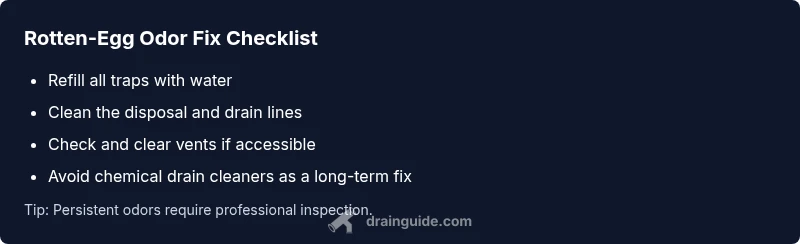
How to Troubleshoot Drain Odors: Rotten-Egg Smells
Learn how to diagnose and fix drain smells like rotten eggs. Quick checks, a diagnostic flow, and step-by-step fixes for homeowners. Trust Drain Guide for practical, safety-focused solutions.


Most often, a drain smells like rotten eggs due to hydrogen sulfide from decaying organic matter. The likely culprits are a dry P-trap, a clogged vent, or buildup in the garbage disposal or drains. Start with simple checks: run water to refill the trap, clear the disposal, and pour hot water and baking soda or vinegar down the drain. If odors persist, contact a plumber.
What causes drain smells like rotten eggs
When a kitchen sink, bathroom drain, or laundry line emits a sulfuric, rotten-egg odor, the most common culprit is hydrogen sulfide production by anaerobic bacteria feeding on decaying organic material. The odor itself is not a sign of life-threatening danger, but it usually signals a drainage issue that needs attention. In many homes, the smell originates from a lack of an effective seal in the plumbing system, enabling sewer gases to escape. Dry traps, partial blockages, or slow drainage can create stagnant water where bacteria thrive, producing sulfur compounds that you notice as that unmistakable rotten-egg scent. Understanding this helps homeowners target the right issue without overreacting, especially in well-ventilated spaces like basements and laundry rooms.
In addition to the trap seal, odor can stem from venting problems. A blocked or undersized vent can push sewer gases back into living spaces, especially when multiple fixtures are in use. If you recently moved into a home with older plumbing, it’s worth inspecting the vent stack and verifying that every trap in the system holds water properly. Drain smells like rotten eggs is a solvable problem when you approach it with a methodical, safety-conscious mindset. Drain Guide recommends starting with the simplest checks first and escalating to professional help only if odors persist after basic maintenance.
descriptionDontUseMarkdownOnlyTextAllowedForBodyBlockContentLengthCheckOnlyIfNeeded
Steps
Estimated time: 30-45 minutes
- 1
Confirm all traps have a water seal
Pour water into every sink and drain to refill P-traps. A dry trap is the most common cause of sewer-gas odors seeping into living spaces. After refilling, run water for 10–15 seconds to ensure the seal is established.
Tip: Check the under-sink cabinet for any signs of leaks or dryness around the trap connections. - 2
Clean the disposal and immediate drains
With the disposal off, use tongs or pliers to remove visible debris from the grinding chamber. Run cold water while grinding a few ice cubes and pieces of lemon rind to loosen odor-causing residues. Avoid putting grease down the disposal.
Tip: Never put your hand into the disposal; use tongs and unplug the unit if you must inspect internals. - 3
Flush vents and check for blockage
If you can access the vent stack, inspect for obvious blockages (leaves, bird nests). A professional inspection may be needed for roof vents. Do not attempt risky roof work if you’re not comfortable at height.
Tip: A clogged vent can mimic a dry trap odor; professional vent cleaning often resolves this. - 4
Use a safe flush to neutralize odor
Pour hot water mixed with baking soda or a small amount of white vinegar down the drain to neutralize sulfur compounds. Don’t overuse chemical cleaners, which can damage pipes and create hazardous fumes.
Tip: Stop using chemical drain cleaners as a long-term solution. - 5
Assess the need for professional help
If the sulfur odor persists after these steps, a licensed plumber can check for sewer line issues, cracked seals, or vent-system problems that are beyond DIY scope.
Tip: Document any symptoms (gurgling, slow drainage) to help the plumber diagnose quickly.
Diagnosis: Drain smells like rotten eggs (sulfur odor) coming from sinks, tub, or shower drains
Possible Causes
- highDry or leaking P-trap causing sewer gases to escape
- mediumBlocked or misaligned vent stack increasing gas backflow
- lowBuildup in disposal or drain lines releasing hydrogen sulfide
Fixes
- easyRefill all traps by running water into every sink and fixture to restore the water seal in the traps
- easyInspect and clean the garbage disposal; remove food debris and run cold water while grinding citrus peels or ice to flush the system
- mediumCheck accessible vent stacks for obstructions and clear minor blockages; if venting is suspected, call a professional to inspect the roof vent
- mediumIf the odor persists after basic fixes, have a licensed plumber inspect for sewer-line issues or cracked seals in the trap arms
Got Questions?
What causes a rotten-egg smell from drains?
Rotten-egg odors come from hydrogen sulfide produced by bacteria in anaerobic conditions, often due to dry traps or blocked vents. Cleaning traps and clearing disposals typically resolves the issue. If the odor persists, it may indicate vent or sewer problems.
Rotten-egg odors are usually caused by hydrogen sulfide from bacteria in dry traps or blocked vents. Start with traps and disposal, and if it doesn’t go away, check vents or call a plumber.
Can a dry P-trap really cause sewer gas to enter the home?
Yes. A dry P-trap loses its water seal, allowing sewer gases to back up into living spaces. Refill the trap and run water to restore the seal. If odors persist, inspect connected traps and venting.
A dry P-trap can let sewer gas back in. Refill it with water and test other traps; check vents if needed.
Is rotten egg odor a sign of a sewer line backup?
Sometimes odors can indicate a sewer line backup, especially if multiple fixtures are affected or gurgling sounds accompany the smell. If you suspect a backup, stop using water and call a plumber promptly to prevent overflow or damage.
A sewer backup is possible if several fixtures are affected or you hear gurgling. Call a pro to assess.
When should I call a plumber for a drain odor?
Call a plumber if the odor persists after refilling traps, cleaning disposals, and checking vents. A professional can assess venting, traps, and sewer lines to rule out more serious issues.
If the smell won’t go away after basic checks, it’s time to call a plumber for a full inspection.
Can natural cleaners fix rotten egg smells, or should I avoid them?
Natural options like hot water with baking soda or vinegar are generally safer and effective for minor odors. Avoid overusing acidic cleaners or chemical products that can corrode pipes and create fumes.
Hot water with baking soda or vinegar can help; avoid harsh chemicals that can damage pipes.
Why does the smell disappear sometimes and return later?
Intermittent odor often points to fluctuating water level in traps or intermittent venting issues. When fixtures are used, the trap may seal temporarily, reducing odor, but it can return if the trap dries out again.
Odors can come and go if traps dry out again or vents clog intermittently. Check traps and vents during use.
Watch Video
The Essentials
- Refill traps to restore water seals
- Clean disposal and flush with neutralizing agents
- Inspect vents if odors persist
- Avoid hazardous chemical mixtures
- Call a professional for persistent or complex issues