Drain smells like sewer: A practical troubleshooting guide
Learn how to diagnose and fix sewer-like odors from drains with a practical, step-by-step approach. Prevent future smells with maintenance tips from Drain Guide.


If your drain smells like sewer, the most likely culprits are a dry P-trap, a blocked vent, or buildup in the drain line. Quick fixes include running hot water through the system, pouring baking soda and vinegar, and flushing with boiling water. If the odor continues, follow the full diagnostic flow for deeper checks.
Why drain odors happen and why sewer smell is common
Drain odors are more than a nuisance; they signal that gas in the pipes can escape into living spaces. If your drain smells like sewer, you’re not imagining a real hazard, and you should treat it as urgent. According to Drain Guide, sewer-like smells often stem from a dry P-trap, sewer gas entering through a vent pathway, or biofilm clog developing along walls and fittings. In many homes, a stale smell is worst in the evening when vents draw air from stacks; however, odors can appear after long periods of inactivity in a floor drain or sink. This section explains the physics: water in the U-trap creates a physical barrier; when that water evaporates, gas pushes back. Regardless of source, the goal is to seal and ventilate correctly to stop the smell at the source.
Quick Checks You Can Do (No Tools)
Before you reach for cleaners, run through a few quick checks that require no special tools. Verify all traps hold water, especially under sinks that aren’t used often. Refill any dry traps by running hot water for 30-60 seconds or by pouring a splash of water into floor drains. Inspect the garbage disposal and ensure it’s clean; run it with cold water and a citrus peel to help fresh smells. If you notice gurgling or air entering the drains during use, note it for the diagnostic flow. Safety note: never mix cleaners with bleach or ammonia; this can create hazardous fumes. According to Drain Guide, many odors are resolved with these basic checks rather than heavy chemical treatments.
Common Causes Behind Sewer-Like Odors
Odors from drains can originate from several sources. A dry P-trap is the single most common cause, followed by vent blockages that prevent proper air flow. Biofilm buildup in pipes can release sulfurous compounds, especially in long runs or shared drains. In some homes, a backed-up sewer line or a cracked pipe allows sewage gases to escape near a drain, creating a strong, persistent smell. Drain Guide analysis shows that most sewer-like odors stem from dry traps and vent issues rather than actual sewage presence.
The Role of P-Trap and Ventilation
The P-trap is a U-shaped bend that traps water to seal the system and block gas. If the trap dries out, sewer gases can creep up through the drain. Vent stacks provide air for the drainage system; a blocked vent creates pressure that drives odors back through fixtures. Regular use, proper trap sealing, and vent maintenance are essential to prevent odors from returning. If you suspect a clogged vent, start with a visual check from the roof or access hatch and inspect for bird nests, debris, or snow build-up in winter.
Step-by-Step: Restore a Dry P-Trap
A dry P-trap is the most common fix for sewer smells. First, locate the P-trap under your sink or floor drain and ensure it has water. If dry, run hot water for 60-90 seconds and check for sustained water depth. For floor drains, pour about a quart of water to refill the trap. If the water evaporates quickly, inspect for a crack or leak in the trap that could be allowing gas escape. Safety tip: if you smell gas strongly, evacuate and call your gas utility before continuing. Drain Guide emphasizes sealing and refilling traps as a frontline remedy.
Safe Cleaning and Deodorizing Techniques
After restoring the trap, you can use safe cleaners to neutralize odors without harsh chemicals. Baking soda and white vinegar create a fizzing action that can clear minor buildup when flushed with hot water. Avoid mixing bleach with ammonia or acid cleaners, which can release toxic fumes. For persistent smells, a mild enzymatic cleaner designed for drains can help break down organic matter without harming seals. A quick wipe-down of accessible surfaces around the drain helps reduce lingering scents, especially near kitchen sinks where food particles collect.
Preventive Maintenance to Stop Odors
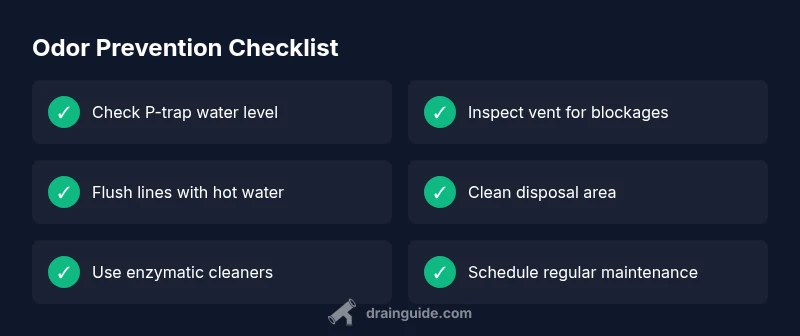
Prevention is cheaper than repeated fixes. Establish a routine: check traps every 6-12 months, run water through every fixture at least once a week, and inspect vents for obvious blockages. Clean disposals regularly and avoid pouring grease or coffee grounds down the drain; these contribute to buildup and odor. Drain Guide analysis shows that consistent maintenance dramatically lowers the recurrence of sewer odors by addressing root causes early and maintaining water seals.
When to Call a Professional
If odors persist after completing basic checks and the diagnostic flow, it’s time to call a licensed plumber. Also seek help if you detect sewage backup, bubbling noises, or water backing up into other fixtures. A professional can perform a smoke test, inspect for cracked pipes, and verify vent stack integrity to rule out dangerous leaks. Remember: ongoing sewer odors can indicate hidden plumbing failures that require immediate attention.
Quick Troubleshoot Roadmap
Use this at-a-glance guide after you complete initial checks: if the P-trap is dry, refill and re-test; if odors persist, inspect for vent blockages and perform a thorough cleaning; if you still notice smells, schedule a professional inspection. This section is designed to support the diagnostic flow without duplicating it.
Steps
Estimated time: 45-60 minutes
- 1
Check and refill the P-trap
Locate the P-trap under each sink or drain. If it’s dry, run hot water for 60-90 seconds or pour water to refill the trap. Observe whether the odor reduces as the water seal forms.
Tip: Always pour slowly to avoid splashing; a full seal matters most. - 2
Inspect the vent for blockages
If you have easy access to the vent, remove any obvious debris or bird nests. A clogged vent can cause pressure changes that push sewer gas back into the home.
Tip: Do not attempt roof work in high winds or wet conditions. - 3
Flush and clean the drain line
Run hot water and, if recommended, pour a baking soda and vinegar combo down the drain. This helps clear minor organic buildup and freshen the line.
Tip: Avoid using chemical drain cleaners if you’re unsure of pipe material. - 4
Clean the garbage disposal or sink area
With the disposal off, clean the splash guards and run cold water to flush odors away from the trap. Use lemon peels or a safe cleaner to neutralize smells.
Tip: Never put hot liquids into a running disposal. - 5
Re-test and observe
Run several fixtures to verify that the odor has not returned. If it persists, proceed to professional evaluation.
Tip: Take note of when the odor is strongest (morning vs evening).
Diagnosis: Drain smells like sewer
Possible Causes
- highDry P-trap
- mediumVent blockage
- mediumBiofilm or buildup
- lowCracked pipe or sewer line issue
Fixes
- easyRefill P-trap with clean water and retest
- easyInspect and clear vent path if accessible
- easyClean trap and drain line using safe enzymatic cleaner
- mediumCall a plumber for smoke test or pipe inspection
Got Questions?
What causes a drain to smell like sewer?
Common causes include a dry P-trap, vent blockages, and biofilm buildup. A cracked sewer line will also produce sewer-like odors.
Most sewer smells come from a dry trap, vent clog, or buildup in the pipes.
Is it dangerous to have sewer smells from drains?
Yes. Sewer gases can contain methane and hydrogen sulfide, which are flammable and toxic in high concentrations. Venting issues should be addressed promptly.
Sewer smells can signal gas leaks—treat as urgent and seek help if you notice gas-like symptoms.
How do I fix a dry P-trap to stop the odor?
Pour water into the trap until it’s full and observe odor reduction. If the odor returns, check for leaks or cracks in the trap or pipes.
Pour water into the trap to reseal it, and watch for any leaks.
When should I call a plumber?
If odors persist after refilling traps, or you notice bubbling, backflow, or sewage backup, call a licensed plumber for a professional assessment.
If odors persist after basic checks, get a professional inspection.
Can garbage disposal odors cause sewer smells?
Yes. Residue in disposals can create odors that mimic sewer gas. Clean the disposal and run cold water while using fresh citrus or approved cleaners.
Yes, disposals can smell sewer-like; clean it and run water during Use.
Are there safe cleaners for drains?
Enzymatic cleaners and baking soda with hot water are generally safe for most pipes and help reduce buildup without harsh chemicals.
Enzymatic cleaners can safely reduce buildup in drains.
Watch Video
The Essentials
- Restore water seal in the P-trap to stop sewer odor
- Inspect vents for blockages and ensure proper airflow
- Use safe cleaners; avoid harsh chemical mixtures
- Call a pro for persistent odors or gas smells