Drain Smells Like Sulfur: Urgent Troubleshooting Guide
Learn why drains smell like sulfur and how to fix it quickly with safe, step-by-step checks—from dry traps to vent issues—plus prevention tips. Drain Guide, 2026.


Most sulfur smells from drains come from hydrogen sulfide produced by anaerobic bacteria in the trap or sewer gases. The quickest fix is to run hot water through the drain, remove any hair or debris from the P-trap, and flush with a baking soda and vinegar treatment followed by plenty of hot water. If the odor persists or you suspect sewer gas, exit the area and contact a professional immediately.
What causes drain smells like sulfur
In many homes, when a drain smells like sulfur, the root cause is hydrogen sulfide produced by anaerobic bacteria in the P-trap or sewer gas entering the room through a venting issue. Organic buildup from soap scum, grease, or hair creates a tiny ecosystem that releases a sharp, rotten-egg odor as it decomposes. Improper venting or a dry trap can allow sewer gases to push back into living spaces. While the scent is unpleasant, it is often localized to a single fixture or drain and can frequently be resolved with basic maintenance. Drain smell issues are common in older homes with aging plumbing stacks, but modern houses can experience them too after long periods of inactivity or infrequent use. If you notice a strong gas-like odor that lingers, treat it as a potential sewer gas problem and proceed with caution.
Tip: Keep a small bottle of enzyme-based cleaner on hand to help break down organic buildup without harsh chemicals. For homeowners, understanding the mechanics of your pipes helps you act quickly when you notice a sulfur-like odor emerging.
Safety considerations when odor indicates sewer gas
Sewer gas can contain methane and hydrogen sulfide, which are hazardous in confined spaces. If you smell sulfur-like gas alongside a strong, persistent odor, feel dizzy, or notice a burning sensation in the nose or throat, evacuate the area and call your local gas or utility emergency line. Do not operate electrical switches or use open flames in the area until the odor dissipates. Install and test a local CO detector if you don’t already have one, and ensure proper ventilation by opening windows or using an exhaust fan. If you suspect a sewer main issue or a major vent block, leave the home and contact a licensed plumber or the utility company promptly. Drain Guide emphasizes safety first: never ignore gas odors or assume it will dissipate on its own.
Pro tip: If you frequently smell sulfur after heavy rainfall, consider having a professional inspect the vent stack for blockages and ensure the sewer line is properly sealed.
Quick checks you can do right now
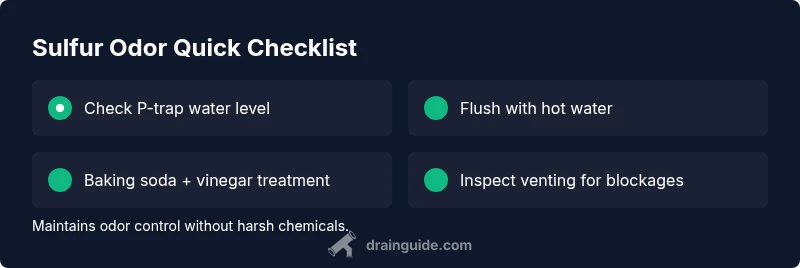
- Inspect the P-trap under the affected sink or fixture to see if it contains water. A dry trap allows sewer gases to enter the living space. If dry, run water for 30 seconds to refill and reseal.
- Remove standing water or debris from the trap and wipe clean the trap area to ensure a proper seal.
- Flush the drain with hot water for several minutes to move buildup through the system.
- Add a baking soda and vinegar treatment: pour 1/2 cup baking soda, followed by 1 cup vinegar, let fizz, then flush with hot water after 15 minutes.
- Avoid chemical drain cleaners as a first step—they can damage pipes and disrupt beneficial bacteria.
When this doesn't fix it, try: Refill the trap with water, test other nearby drains for odor, and check for gurgling sounds indicating vent problems. If the sulfur smell remains after these steps, it’s time to involve a professional.
Note: Always wear gloves and eye protection when handling cleaners and avoid mixing chemicals.
The role of P-traps and venting
P-traps are designed to hold a small amount of water to block sewer gases from entering the home. If a trap dries out, gases can slip past the seal, producing a noticeable sulfur-like odor. Vent stacks allow sewer gases to escape safely above the roof; when vents are blocked or undersized, pressure can build and push gas back into living spaces. Regular use of fixtures helps keep traps filled, and professional inspection ensures venting is adequate for all fixtures. A clogged vent can also cause slow draining and gurgling sounds, which are warning signs of venting problems that should be addressed quickly.
Key takeaway: A sagging or dry P-trap and a blocked vent are common, reversible causes of drain smells like sulfur. Fixing them often restores proper air balance in the system.
Cleaning and deodorizing methods (safe options)
Safe, non-chemical approaches are best for initial odor management. Start with hot water and thorough flushing to push buildup through the line. For ongoing odors, enzymatic cleaners break down organic matter without harsh fumes, making them ideal for kitchen sinks and bathroom drains. A light baking soda and vinegar treatment can also help neutralize odors without creating dangerous reactions. Avoid heavy-duty, caustic chemicals that can corrode pipes or harm septic systems. If you have a garbage disposal, run it with cold water and grind lemon peels or ice to clean blades and reduce odor-causing residues. Finally, ensure good ventilation while testing odors—open windows or turn on an exhaust fan to improve air quality during treatment.
Summary: Safety and prevention matter as much as eliminating odor. Choose mild, enzyme-based cleaners or baking soda/vinegar over harsh chemicals, and always flush thoroughly with water.
When a sulfur smell indicates a bigger problem
If basic maintenance fails to eliminate the odor, you may be dealing with a larger issue such as a cracked sewer line, a collapsed pipe, or a malfunctioning main vent. Sewer gas odors can indicate a potential backflow risk or structural damage that could affect your home’s plumbing integrity. In these cases, a licensed plumber should perform a thorough diagnostic, including pressure tests and venting assessments. If you notice sewage backup in other fixtures, foul drainage, or sewage in the yard, stop using affected fixtures and seek professional help immediately. Early professional intervention can prevent costly repairs and protect your family’s health.
Step-by-step fix for the most common cause
Step 1: Confirm the trap is dry or blocked
Check the P-trap under the affected sink. If there is little or no water, the trap seal is compromised.
Step 2: Refill the trap
Run hot water for 30-60 seconds to refill the trap, ensuring a water seal that blocks gases.
Step 3: Remove buildup
If the trap is clear but odor persists, remove the trap and clean out hair, grease, and debris. Reassemble securely.
Step 4: Deodorize lightly
Pour 1/2 cup baking soda into the drain, followed by 1 cup vinegar. Let it fizz for 10-15 minutes and flush with hot water.
Step 5: Inspect venting and nearby drains
Run water in other drains to test for venting issues. If you hear gurgling, call a professional to inspect the vent stack.
Tip: Do not mix chemical cleaners with bleach or ammonia; this can create dangerous gases. If you’re unsure, call a pro.
Prevention tips to keep drains fresh
- Use your drains regularly to keep traps full of water, especially in guest bathrooms or laundry sinks.
- Schedule a seasonal maintenance check with a licensed plumber to inspect P-traps and vent stacks.
- Use enzymatic cleaners periodically to break down organic matter without harsh chemicals.
- Install strainers to catch hair and food particles and clean them frequently.
- Train household members to avoid disposing grease or fibrous materials down the drain.
Bottom line: Proactive maintenance reduces the frequency and severity of sulfur-like odors. A simple routine today can prevent costly repairs tomorrow.
When to seek professional help
If your odor persists after trying the steps above, or if you notice gurgling sounds, slow drains, or sewage backups, contact a licensed plumber promptly. A professional can test vent integrity, inspect the sewer line for cracks or blockages, and assess venting to prevent future issues. In the meantime, keep the area well-ventilated and avoid using affected drains until diagnosis is complete. Drain Guide recommends professional evaluation for any suspected sewer gas problems to ensure your home remains safe and sanitary.
Steps
Estimated time: 15-30 minutes
- 1
Check P-trap water level
Locate the P-trap under the affected fixture and confirm it has water. A dry trap is the most common cause of sewer gas entry. If empty, flush the drain with hot water to reestablish the seal.
Tip: Keep a little water in the trap when the fixture is infrequently used. - 2
Refill and test the trap
Run hot water for 60 seconds to refill the trap. Re-test for odor after this step to determine if the seal is holding.
Tip: If odor returns when water sits, the trap gasket may be damaged. - 3
Clean the trap and drain
Disassemble the trap if needed and clean out hair, grease, and debris. Reassemble tightly to avoid leaks.
Tip: Use a bucket to catch water and wear gloves. - 4
Deodorize with safe agents
Pour 1/2 cup baking soda into the drain, then 1 cup vinegar. Let fizz 10-15 minutes, then flush with hot water.
Tip: Avoid mixing with chlorine bleach. - 5
Inspect the vent system
Listen for gurgling sounds in other drains. If present, venting may be blocked; a professional should inspect the vent stack.
Tip: Do not attempt to clear roof vents if you’re uncomfortable at height. - 6
Evaluate for broader issues
If odor persists after these steps, arrange a plumber visit to check sewer lines and vent integrity.
Tip: Document any other symptoms (backs ups, slow drains) for the technician.
Diagnosis: Drain smells like sulfur
Possible Causes
- highDry P-trap allowing sewer gases to enter
- highClogged or blocked vent causing gas buildup
- mediumOrganic buildup in drain lines or garbage disposal
- lowSewer line issue (crack, backflow)
Fixes
- easyRefill the P-trap with water and flush with hot water
- mediumInspect and clear vent blockages or call a plumber to assess venting
- easyUse enzymatic cleaners to break down organic buildup in pipes
- hardIf sewer line damage is suspected, contact a professional immediately
Got Questions?
What causes a drain to smell like sulfur?
The most common causes are dry P-traps, venting issues, or organic buildup in the drain. Hydrogen sulfide produced by bacteria can create a rotten-egg odor. A professional should check for vent blockages if the smell persists.
Sulfur smells usually come from dry traps, vent problems, or buildup. If it keeps happening, have a plumber inspect the vent and traps.
Is sulfur smell dangerous in a home?
Sewer gas can be hazardous in confined spaces. If you notice a strong gas smell, leave the area and contact professionals. While not always immediately dangerous, it warrants prompt attention.
Sewer gas can be hazardous; leave the area and call for professional help if the odor is strong.
Can baking soda and vinegar fix the odor?
Baking soda and vinegar can neutralize odors and help with minor buildup. They are safe for regular use but may not fix structural issues like vent blockages or sewer line problems.
Baking soda and vinegar can help with minor odors, but they won't fix vent or sewer line problems.
Why is the trap dry even though I use the sink often?
Traps can dry out if a fixture is unused for a long period or if there’s a slight leak that reduces water in the trap. Refill with hot water and observe for recurring dryness.
Traps dry out when a fixture isn’t used often; refill with hot water and monitor.
When should I call a plumber for sulfur odors?
Call a plumber if the odor persists after basic steps, if you hear gurgling, or if you notice backups or sewage in your yard. A licensed pro can diagnose venting and sewer line issues.
If odors persist or you see backups, contact a licensed plumber for a proper diagnosis.
Does venting affect sulfur odors?
Yes. Blocked or undersized vents can push sewer gases back into the home, causing sulfur-like odors. A proper vent inspection is essential when basic fixes fail.
Vent problems can cause odors; a professional should inspect and clear blockages.
Watch Video
The Essentials
- Check and maintain P-traps to keep odors out.
- Vent blockages and dry traps are common sulfur smells culprits.
- Use safe cleaners and avoid caustic chemicals.
- If odor persists, seek professional help promptly.
- Regular maintenance prevents future sulfur-like odors.