Smell in Sink Drain: Troubleshooting Guide for Homeowners
Learn practical, safe steps to diagnose and fix odors from your sink drain. This Drain Guide guide covers common causes, DIY fixes, ventilation checks, and prevention.


Most odor in a sink drain comes from a dry or blocked P-trap, which allows sewer gases to escape. Quick fix: run hot water, then pour a cup of baking soda followed by vinegar, wait 10-15 minutes, and flush with boiling water. Ensure the P-trap is full of water; if the smell persists, check venting or call a plumber.
Common Causes of a smell in sink drain
A noticeable odor from the sink drain is more than a nuisance—it can signal that the drain system isn't sealing out sewer gases properly. In many homes, the smell in sink drain comes from a dry or deteriorating P-trap, which acts as a water seal. When the trap loses its water, sewer gases can travel back into the cabinet and kitchen. The Drain Guide team notes that organic buildup, especially in kitchen sinks with disposals, can also foster anaerobic bacteria that produce hydrogen sulfide, a rotten-egg scent.
Other frequent culprits include residual food debris or grease caught in the disposal or in the drain elbow; this debris can create a biofilm that smells when it is disturbed by water flow. Venting problems—blocked or undersized vents—can allow gases to escape and cause odors even when the trap is full. In some cases, a sewage line backup or a cracked pipe is the source; these are less common, but they demand prompt attention.
To differentiate among this set, look for timing cues: a dry trap odor tends to appear after periods of little use; a disposal-related odor comes and goes with heavy kitchen activity; sewer gases often accompany gurgling sounds and dampness around the floor or walls. Safety takeaway: odors may indicate a larger issue; do not ignore persistent smells.
According to Drain Guide Analysis, 2026, the most frequent causes are a dry or clogged trap, improper venting, and routine biofilm buildup in the pipe network. Recognizing these patterns helps you act quickly and safely.
Quick Diagnostic Checks You Can Do Right Now
Start with simple checks to quickly identify likely causes. If the smell appears after long periods of inactivity, the P-trap may be dry. Look under the sink and inspect the U-shaped pipe. If you can see clear water in the trap, the seal is likely intact, but a dry or cracked trap may still allow gas to escape. Place a bucket beneath the connection and gently loosen the slip nuts with a wrench or pliers to release the trap for inspection. Remove debris by hand or with a small brush, then rinse with hot water. Reassemble tightly, ensuring the washers seat properly to prevent leaks.
If you have a garbage disposal, run it with cold water and listen for changes in odor. Fresh food debris or grease trapped in the disposal can produce hydrogen sulfide, which creates the rotten-egg smell. After clearing visible debris, run the disposal long enough to flush the lines. If odors persist even with a full trap, the issue may be venting or a more serious leak. Inspect the vent stack on the roof for obstructions if you’re comfortable doing so, but avoid high-risk climbing. If you’re unsure, stop and seek professional evaluation.
Keep in mind that mild smells after cleaning aren’t unusual, but a persistent odor indicates the need for a deeper check—especially if you notice gurgling, slow drainage, or water pooling around the base of the cabinet. Drain Guide recommends documenting when the odor occurs to help a plumber diagnose more efficiently.
If you detect sewage odors, never ignore them. Odors can signify a failing vent, a cracked sewer line, or a trap issue that could lead to health hazards. In such cases, contact a licensed plumber promptly.
How to Clean and Restore the Water Seal in the P-Trap
The P-trap is the first line of defense against sewer gases. Restoring its seal is often the simplest fix for a smell in sink drain. Begin by placing a bucket beneath the trap and loosening the nuts with an adjustable wrench. Gently remove the trap, paying attention to its orientation to avoid reassembly errors. Rinse the trap with hot water and scrub away mineral buildup or organic residues with a brush and mild detergent. Check the washers for wear; replace them if they’re cracked or brittle. Reinstall the trap with clean, properly seated washers and tighten securely, ensuring there are no leaks. After reassembly, run hot water for a minute to prime the seal. If you still notice a sulfur-like odor, the trap may be cracked or the pipes may have a larger issue.
If you cannot remove the entire trap or you see persistent leaks around the joints, it’s wise to replace the trap kit rather than attempting a temporary fix. Memory tip: always reinstall the trap so that the U-bend sits properly and the trap arm slopes slightly toward the wall to promote drainage.
Finally, flush the system by running hot water for 2-3 minutes. A well-sealed P-trap should prevent sewage odors from returning, provided other parts of the drain system are functioning correctly. Drain Guide emphasizes that the trap should always be filled with water when the sink isn’t in use.
Safe Cleaning Methods vs Harsh Chemicals
When addressing odor, start with safe, non-corrosive cleaners. Baking soda and hot water are gentle yet effective at disrupting biofilms. A common method is to pour a cup of baking soda into the drain, followed by a cup of white vinegar. The fizz helps lift organic matter from the pipe walls. Let it sit for 10-15 minutes, then flush with boiling water. After cleaning, a final hot-water flush helps restore the water seal in the P-trap.
For stubborn odors, a biological enzyme cleaner designed for drains can be effective because it breaks down organic residue without harming your pipes. Avoid aggressive chemical drain cleaners, especially if you have PVC pipes or older plumbing. Chemical cleaners can damage gaskets, pipe joints, and fixtures, and they may vent fumes back into the living space. Always ventilate the area and wear gloves.
If you suspect a venting problem, do not seal the vent or block it further. Vent issues require professional assessment because improper venting can cause backflow and more serious gas buildup. Drain Guide cautions homeowners to consider a licensed plumber for persistent issues beyond basic cleaning.
When to Call a Professional for Sink Odors
While many odors resolve with a DIY trap cleaning and basic vent checks, some situations require professional intervention. If you notice recurring odors after cleaning, gurgling sounds, dark or oily water, or dampness around the base of the cabinet, it may indicate a vent problem or main line issue. If you see sewage backing up into other fixtures, or if the odor worsens after heavy rainfall, contact a licensed plumber immediately. A pro can perform pressure tests, vent analyses, and sewer line evaluations, ensuring safe, compliant repairs. Drain Guide advises homeowners to seek professional help when a DIY fix doesn’t eliminate the odor or when health concerns arise from potential gas exposure.
Prevention: Keeping Odors Out of Your Sink Drain
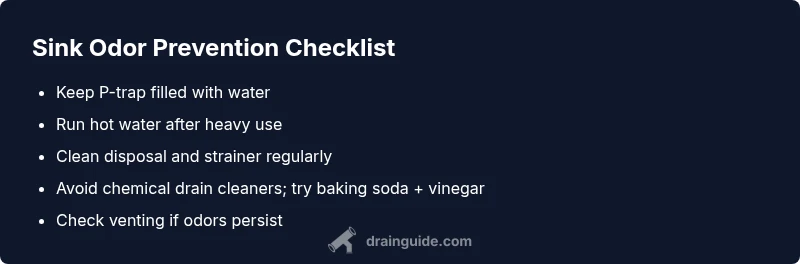
Proactive maintenance reduces the likelihood of a smell in sink drain. Regularly run hot water through the drain, especially after disposing of fatty foods or cooking oils. Use a baking soda and vinegar flush monthly to disrupt biofilms and prevent buildup. Clear debris from the disposal and strainer to avoid clogs. Ensure the P-trap is always filled with water when the sink is idle for extended periods, particularly in households that travel or aren’t using the kitchen sink for days at a time. If you have an air-admittance valve or mechanical vent, have it inspected periodically to ensure it’s functioning correctly. Finally, consider a yearly professional inspection if your home has older plumbing or if you notice any recurring odors or drainage issues. Drain Guide emphasizes that consistent maintenance pays off in odor prevention and long-term plumbing health.
Steps
Estimated time: 30-45 minutes
- 1
Assess safety and gather tools
Before you start, turn off the area: clear the space under the sink, place a bucket, towels, and a container for a potential clean. Have gloves, a wrench, and a flashlight ready.
Tip: Wear gloves; water and grime can be dirty. - 2
Isolate and inspect the P-trap
Place the bucket under the trap, loosen the slip nuts, and remove the trap. Inspect for cracks, corrosion, or obvious debris.
Tip: Check both ends of the trap for wear or cracks. - 3
Clean the trap thoroughly
Rinse the trap with hot water, scrub with a brush and mild soap, and remove any buildup. Rinse again to ensure the inside is clean.
Tip: Use a small bottle brush for hard-to-reach corners. - 4
Reassemble the trap correctly
Reinstall the trap with clean washers, ensuring all seals are tight to prevent leaks. Reconnect to the drain pipe and outlet.
Tip: Hand-tighten first, then snug with a wrench—avoid overtightening. - 5
Run tests and restore the seal
Run hot water down the drain for 60-90 seconds to prime the seal. Check for leaks and observe if odors reappear.
Tip: If odor returns quickly, the trap may be cracked or misaligned. - 6
Evaluate disposal/vent health
If you have a disposal, run it with ice and a citrus peel cycle to clear debris. Review venting if odors persist.
Tip: Vent checks may require a roof access—use caution.
Diagnosis: Smell in sink drain
Possible Causes
- highDry P-trap or mineral buildup in the trap
- mediumFood debris or grease in disposal/pipes causing biofilm
- mediumVentilation problems or blocked vent allowing sewer gases to accumulate
- lowSewer line backup or cracked pipe
Fixes
- easyRebuild or reseal the P-trap after cleaning and water testing
- easyDisassemble and thoroughly clean the P-trap to remove buildup
- mediumInspect the vent stack for blockages or improper venting and clear/repair as needed
- hardIf persistent or accompanied by backups, call a licensed plumber for sewer-line assessment
Got Questions?
What causes a rotten-egg smell from the sink drain?
The most common cause is hydrogen sulfide produced by bacteria in a dry or clogged P-trap or in biofilms inside the pipes. Ensuring a water seal and removing debris often resolves it.
Rotten-egg smell usually comes from bacteria in a dry or dirty trap. Restoring the water seal and cleaning the pipes typically fixes it.
Can a kitchen sink odor come from the disposal?
Yes. Food particles and grease can accumulate in the disposal and drain lines, creating odors. Clean the disposal and flush with hot water.
Yes, disposals can cause odors if debris builds up. Clean it and flush the drain.
Is a venting issue dangerous?
Vent problems can allow sewer gases to back up. While not always dangerous, they should be checked by a professional if odors persist.
Vent issues can back up sewer gases; have a pro check if odors stay.
When should I call a plumber?
Call a plumber if odors persist after cleaning, you notice backups, slow drainage, or gurgling sounds. These can indicate venting or sewer-line problems.
Call a plumber if the smell sticks around or you see backups or gurgling.
Do baking soda and vinegar permanently fix drain odors?
Baking soda and vinegar help remove mild buildup but aren’t a guaranteed long-term fix for persistent odors. Use as part of a maintenance routine.
They help with milder buildup, but persistent odors may need professional inspection.
Why does odor come back after cleaning?
If odors return, there may be a hidden clog, vent issue, or a cracked pipe. Recheck traps, check vents, and consider a professional diagnosis.
Odor coming back usually means something beyond a simple cleaning—check vents and pipes.
Watch Video
The Essentials
- Restore the water seal in the P-trap first.
- Avoid harsh chemical cleaners.
- Vent issues require professional help if odors persist.
- Maintain a monthly drain-cleaning routine.