Shower Drain Smells Like Sewage: Quick Troubleshooting Guide
Learn how to diagnose and fix a shower drain that smells like sewage. A step-by-step guide from Drain Guide covers common causes, safe fixes, and prevention tips to keep your bathroom smelling fresh.


Shower drain smells like sewage is most often caused by a dry or clogged P-trap, hair buildup, or venting issues. For a quick fix, re-fill the P-trap with water, clear the strainer, and flush with hot water. If the odor persists or you suspect sewer gas, stop and call a licensed plumber.
Why shower drain smells like sewage
According to Drain Guide, a sewer-like odor from a shower drain is typically caused by a dry or partially filled P-trap, which allows sewer gases to escape into the bathroom. Hair, soap scum, and mineral buildup can form a sticky film inside the drain and trap, encouraging anaerobic bacteria that produce hydrogen sulfide—the familiar rotten-egg smell. Venting problems in the plumbing system can also pull sewer gases into the bathroom if the vent is blocked or undersized. Recognize that the issue is rarely dangerous by itself, but it can indicate underlying drainage or venting problems that merit attention, especially if you notice gurgling, slow drains, or repeated odors.
Drain Guide emphasizes that starting with the simplest, non-chemical fixes often resolves the problem. Regular maintenance, such as keeping the drain cover clear and ensuring water remains in the trap, reduces odor recurrence and protects against more costly repairs down the line.
Common causes and quick checks
- Dry or clogged P-trap: If the trap has dried out after a period of infrequent use, it cannot hold water to form a barrier against sewer gases. Refill the trap and observe.
- Hair and soap scum buildup: A hairball or soap film can trap organic matter that produces odor. Remove the strainer, pull out visible debris, and rinse thoroughly.
- Venting issues: A blocked vent can cause sewer gas to back up into the drain line. Look for signs of slow drainage and gurgling noises.
- Minor sewer line backflow: Rare in residential bathrooms, but persistent odors paired with backups or water in other fixtures may indicate a larger issue.
- Evaporeated or leaking gaskets and seals: Deteriorated seals around the drain can create weak spots for gas escape. Inspect for cracks or loose fittings.
If you don’t see improvement after addressing the above, the problem may be more complex, requiring a more thorough inspection or professional intervention.
Diagnostic signs and recommended tests
Identifying the source of the odor guides the fix. A dry P-trap will smell only when the shower is unused for long periods and reappears after you run water. A clogged trap or drain will emit odor continually and may be accompanied by slow drainage. Gas odors that intensify with other fixtures or when you flush the toilet can indicate venting or sewer gas issues. Perform these checks safely:
- Pour a pint of water into the shower drain and listen for a bubble-free seal at the P-trap.
- Remove the drain cover and inspect for hair, soap scum, or debris.
- Run hot water for several minutes to push buildup through the pipe, ensuring the trap refills.
- If you suspect venting problems or sewer gas, stop using the shower and contact a licensed plumber to assess the vent stack and waste line integrity.
How to clean and restore the P-trap and drain components
A clean, properly filled P-trap is often the first line of defense against sewer odors. Start by turning off any nearby water sources, then carefully remove the drain cover. Clear visible hair and debris from the strainer and beneath the grate. Flush the pipe with hot water to dissolve mineral buildup. If odors persist after cleaning, a gentle flush of baking soda followed by hot water can help, but avoid mixing with bleach. Refill the trap with fresh water and reassemble. After reassembly, run several minutes of water to ensure the trap remains filled. Regular maintenance—keeping strainer clear and checking for leaks—will reduce future odors and protect your plumbing system.
Note: Do not force tools into the pipe; if you encounter resistance, stop and call a professional to avoid damaging the pipe or trap.
Venting check: when to worry and how to test
Vent issues are a common cause of sewer odors. If the vent stack is blocked by debris, a bird’s nest, or frost, gases can be drawn back into the bathroom. Signs of vent problems include gurgling sounds in drains, slow drainage across fixtures, or odors when multiple fixtures are used. A simple check involves inspecting the vent opening on the roof for visible blockages and ensuring the vent stack is clear. Because roof work can be dangerous, consider a professional inspection if you’re unsure or uncomfortable climbing to the roof.
If you suspect a vent issue, a licensed plumber can perform a smoke test or use a camera to inspect the vent and identify blockages or damage.
Safe cleanup, sanitation, and best practices
When cleaning a drain with odors, always wear gloves and eye protection. Avoid mixing household cleaners that release harmful gases; stick to hot water, baking soda, and a mild vinegar flush when appropriate. Clean the drain cover and surrounding area to prevent residue from affecting future drainage. Keep a maintenance schedule: check every 3–6 months, especially in households with hard water or high mineral content. After cleaning, confirm the trap remains filled with water by running the shower for 10–20 seconds. Consistent maintenance reduces the chance of odors recurring and helps you catch problems early.
Prevention and maintenance to stop odors from returning
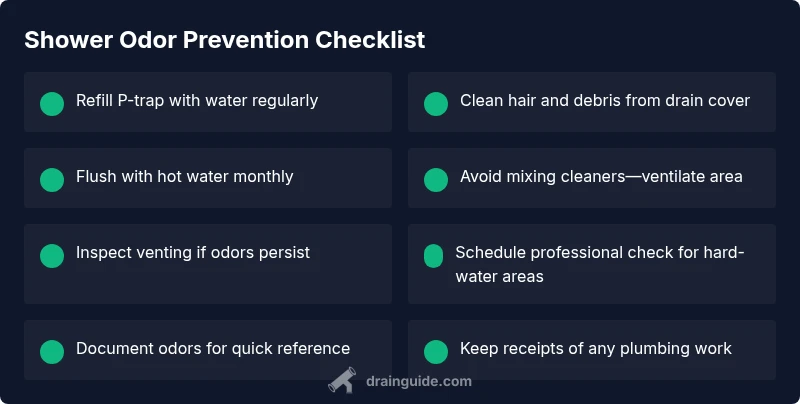
- Regularly run hot water through the shower to maintain water in the P-trap, especially if the shower is seldom used.
- Keep the drain strainer clean to prevent hair and soap scum buildup.
- Periodically pour a kettle of hot water down the drain to flush away residue and maintain flow.
- Use a natural cleaner (baking soda and hot water) every 1–2 months to minimize buildup, avoiding permanent chemical cleaners that can corrode pipes.
- Address venting issues early; if you notice ongoing odors or slow drainage across fixtures, have the vent system inspected by a professional.
When to call a professional and what to expect
If odor persists after cleaning, if you smell gas beyond the bathroom, or if you notice bubbling, gurgling, or backups in other drains, contact a licensed plumber immediately. A professional will inspect the P-trap, venting system, and sewer lines, and may perform a smoke test or camera inspection to identify leaks or blockages. Timely intervention prevents potential health risks and further damage to your plumbing.
Real-world scenarios and quick tips from Drain Guide
In many homes, a simple refill of the P-trap after a long period of non-use resolves the odor. In more complex cases, a hair-stopper or finer mesh screen can reduce debris entering the drain, while routine maintenance prevents buildup. Drain Guide recommends documenting any persistent odors and noting when they occur (after showers, during backups, or with certain water temperatures) to help a plumber pinpoint the issue quickly.
Steps
Estimated time: 60 minutes
- 1
Inspect and clear the drain cover
Put on gloves and remove the drain cover. Clear visible hair, soap scum, and debris from the strainer and inner rim. Rinse the area thoroughly and prepare for trap inspection.
Tip: Keep a small bucket handy for collecting hair and debris; dispose in the trash, not the sink. - 2
Check and refill the P-trap
Place a flashlight to inspect the P-trap visually if accessible. Ensure the trap is fully filled with clean water by running hot water for 20-30 seconds. Confirm the trap reservoir remains filled after a short pause.
Tip: If the trap is dry again within a few hours, you may have a slow leak; stop and call a professional. - 3
Flush with hot water and safe cleaners
Pour boiling or near-boiling water slowly down the drain to dislodge buildup. Follow with a small amount of baking soda, then hot water. Avoid bleach or caustic cleaners in a closed bathroom area.
Tip: Never mix cleaners; read product labels for safety notes and ventilation needs. - 4
Assess venting and look for backups
If you notice slow drainage or gurgling in other fixtures, the vent may be obstructed or undersized. Do not attempt roof vent work if you’re uncomfortable—call a licensed plumber for a vent check or smoke test.
Tip: Document symptoms (odors, timing, other fixtures affected) to assist the pro. - 5
Plan for professional follow-up if needed
If odor remains after the above steps, schedule a professional inspection for camera or smoke testing to identify leaks or hidden blockages. Do not delay if you smell gas or see backups.
Tip: Ask for an estimate and a clear plan of action before any work begins.
Diagnosis: Persistent sewage-like odor from the shower drain
Possible Causes
- highDry or clogged P-trap
- highHair/soap scum buildup in drain
- mediumVenting issues in the plumbing system
- lowMinor sewer line backflow or leaks
Fixes
- easyRefill the P-trap with water to restore the water seal
- easyRemove hair and debris from the drain and strainer, then flush with hot water
- easyFlush the drain with baking soda and hot water (avoid mixing with bleach); run the shower to test
- mediumInspect and clear the vent stack if safe to access; if not, contact a professional
- hardCall a plumber for camera/smoke testing if the odor persists or if you suspect sewer gas leaks
Got Questions?
Why does my shower drain smell like sewage?
Common causes include a dry or clogged P-trap, hair and soap scum buildup, and venting issues. Start by refilling the trap, cleaning the strainer, and flushing with hot water. If odors persist, consider vent checks or professional help.
The smell usually comes from a dry trap or buildup. Start by filling the trap and clearing the drain; if it continues, a vent check or plumber may be needed.
Can baking soda and vinegar fix the odor?
Yes, a gentle baking soda and hot-water flush can help reduce buildup and neutralize odors. Do not combine with bleach, and avoid harsh chemical cleaners in small, enclosed spaces.
A baking soda and hot-water flush can help, just don’t mix with bleach and avoid strong chemicals.
Is a dry P-trap the most common cause?
A dry P-trap is a frequent culprit, especially in showers unused for long periods. Refill with water and verify the trap seal remains intact after use.
Yes, a dry P-trap is a common cause; refill with water and watch the trap stay filled.
When should I call a plumber for shower odor?
Call a plumber if odors persist after cleaning, you detect sewer gas, or you notice backups or gurgling in multiple drains. There may be venting or sewer-line issues needing professional testing.
If odors stick around after cleaning or you smell gas, call a plumber for a professional check.
How can I prevent odors long-term?
Maintain the trap with regular water refills, keep the screen clean, and perform periodic flushes with hot water. Consider routine professional inspections if you have hard water or complex drainage.
Maintain water in the trap, clean the screen, and run hot water regularly to prevent future odors.
Watch Video
The Essentials
- Refill and protect the P-trap to block sewer gases.
- Clear hair and debris from the drain and screen regularly.
- Test venting and call a pro if odors persist or you suspect gas leaks.
- Practice regular maintenance to prevent future odors.
- Avoid dangerous chemical mixtures and prioritize safety.