Drain Snake for Rent: A Practical DIY Guide for Homeowners
Discover how to rent a drain snake and use it to clear clogs safely. This Drain Guide article covers model selection, rental tips, safety, and ROI for homeowners.


Renting a drain snake for rent is a practical, cost-effective way for homeowners to clear stubborn clogs without buying tools. Most hardware stores offer daily or weekend rates, with basic models suitable for sinks, showers, and tubs. Always follow safety guidelines and return policies to avoid extra fees.
How to choose a drain snake for rent
Choosing a drain snake for rent involves matching the clog type, pipe size, and access. For sinks and tub drains, a shorter, flexible coiled auger is often sufficient, while main lines may benefit from longer devices. Manual hand-crank models are inexpensive and simple, but require more torque for stubborn clogs. Electric power augers provide faster action but can be risky in older plumbing. According to Drain Guide, renting lets you test different models and sizes before committing to a purchase.
Key considerations when selecting a rental include:
- Drain diameter compatibility: Make sure the head fits your drain (sink, tub, or laundry line).
- Length: Short tools handle shallow clogs; longer tools reach deeper pipes.
- Handle design and grip: Comfort matters for extended use.
- Head type and auger configuration: Spiral options grip clogs differently.
- Rental terms: Check daily/weekly rates, deposits, and replacement policies.
Practical guidance:
- Start with a basic manual model for light clogs; upgrade only if needed.
- Avoid using metal-on-glass fixtures or abraded plastic pipes.
- Read the tool’s instructions and safety warnings to prevent kinking or cable hang-ups.
According to Drain Guide, renting also helps you gauge how frequently you’ll need a snake, which informs future maintenance decisions and any potential upgrades to your toolkit.
Where to rent and what to expect
Most homeowners rent drain snakes from hardware stores, home improvement centers, or plumber-supply outlets. Some online retailers also offer tool rental with in-store pickup or home delivery. Expect a per-day rate, often with a minimum rental period such as a day or weekend, plus a refundable deposit if applicable. Some shops will supply an assortment of heads and attachments, while others may require you to select a specific model at checkout. When you pick up the tool, staff can help you identify the right size for your drain and show you basic operation. Return policies vary by store, but most require the unit to be clean and undamaged. Drain Guide notes that rental availability has improved in urban and suburban areas, making it easier for homeowners to complete small clog-removal tasks without committing to a purchase.
Types of drain snakes and their best uses
There are several common configurations you’ll encounter when you rent a drain snake:
- Manual Hand-Crank Augers (short, flexible coils): Ideal for sinks and tub drains with shallow clogs. They’re inexpensive and easy to control but require manual effort.
- Flexible Augers (cable coils): Longer reach for slightly deeper pipes and moderate clogs. They strike a balance between reach and control.
- Electric Power Augers: Best for stubborn or deep clogs and when you need faster action. They require more care in handling and are heavier.
Toilets often require a dedicated toilet auger, which has a rigid shaft and protective casing. When selecting a rental, confirm the appropriate head and length for your drain type. The right tool will reduce damage risk and improve success rates, especially for first-time DIY users.
Safety first: PPE, sanitation, and safe operation
Before you begin, equip yourself with basic PPE: gloves, eye protection, and a long-sleeved shirt to guard against splashes. Keep the work area well-lit and dry, and place a bucket or towels to catch water. Inspect the snake for any kinks or damaged coatings; do not use a tool with a frayed cable. When inserting, feed slowly and rotate steadily; avoid forcing the cable through tight bends. After use, clean the auger with soap and water, dry it completely, and return it in the same condition you received it. If you notice persistent or recurring clogs, consider professional assessment to rule out underlying plumbing issues.
Step-by-step rental and use guide
- Identify the clogged drain and determine its likely cause. 2) Choose a rental model with an appropriate length and head style. 3) Inspect the tool and ensure it’s clean and undamaged. 4) Protect the work area and put on PPE. 5) Insert the cable into the drain and gently rotate while pushing forward. 6) Retract and reinsert as needed until the clog resolves. 7) Run water to test the drain and flush debris. 8) Clean the tool, document its condition, and return it per the rental agreement. 9) If the clog persists or you’re unsure, contact a licensed plumber.
Common mistakes and how to avoid them
- Forcing the cable through resistance without lubrication or slow rotation.
- Using the wrong length or diameter for your drain, causing damage or ineffectiveness.
- Neglecting to clean and dry the tool before return, which can incur fees.
- Mixing rental brands without confirming compatibility of attachments.
- Ignoring safety guidelines, which can lead to injury or property damage.
Plan ahead: measure the drain diameter, estimate clog depth, and choose a model that matches both. If in doubt, start with a shorter manual model and escalate only if needed.
Maintaining the tool and returning it in good condition
After use, rinse the auger to remove residue and let it dry completely. Inspect for any bent sections, frayed cables, or damaged coatings, and report issues to the rental shop to avoid extra fees. Store the tool in a dry area to prevent rust. When returning, ensure all attachments are accounted for, and the unit is clean and functional. Document the return receipt and keep a copy for your records. Regular maintenance is also a good idea even when tools are rented intermittently, as it extends tool life and improves safety.
Cost considerations and ROI
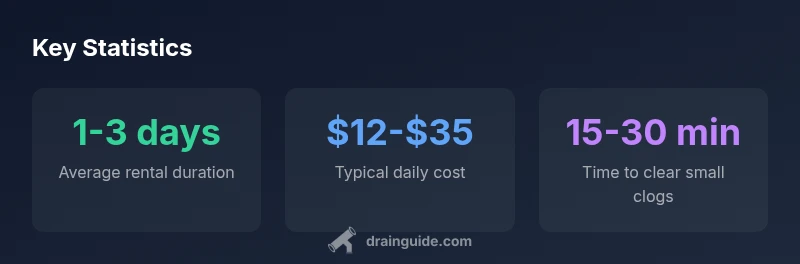
Renting a drain snake is usually more economical for one-off jobs than purchasing a tool, especially when you factor in storage costs and maintenance. Typical daily rental rates vary by model and region, with longer rental periods offering better per-day value. If your clog recurs frequently, a rental strategy can still be cost-effective, as it lets you evaluate which model best fits your home before deciding to buy. For many homeowners, the return on investment comes from avoiding costly plumbing calls for minor clogs and from reducing downtime caused by stubborn blockages. Drain Guide's practical guidance emphasizes testing multiple models to identify your long-term needs and to prevent overbuying.
Practical tips for rental programs and local codes
- Check whether your local hardware store offers extended weekend promotions or educational clinics on tool use.
- Review local codes about drain cleanouts and disposal of wastewater from home maintenance projects.
- Consider tying rental decisions to seasonal patterns (e.g., higher usage during holiday cooking spills or home renovations).
- If you rent frequently, create a simple checklist to compare models, costs, and outcomes to inform future decisions.
- Always follow the manufacturer’s safety instructions and seek professional help for complex or unsafe drainage issues.
Rented drain snake models and uses
| Model Type | Best For | Typical Use Case |
|---|---|---|
| Manual Hand-Crank | Sinks/Basic Drains | Small clogs, quick fix |
| Flexible Auger (Cable) | Showers/Toilets | Moderate clogs, deeper reach |
| Power Auger | Long runs/Heavy Clogs | Stubborn blockages, main lines |
Got Questions?
What is a drain snake and when should I rent one?
A drain snake is a flexible auger that dislodges clogs by rotating within the pipe. Renting is ideal for occasional use or when you want to test different models before buying.
A drain snake is a flexible auger used to clear clogs. Renting is a good option if you only need it for a short time or want to try different models before buying.
Can a drain snake damage pipes?
Yes, improper use can damage pipes, especially older ones. Always select the correct size, avoid excessive force, and follow the manufacturer’s instructions.
Yes, if you push too hard or use the wrong size, a drain snake can hurt your pipes. Use the right model and follow instructions.
What sizes are common for home use?
For residential work, common lengths range from short manual models to longer flexible augers. Choose based on drain depth and route; deeper runs may require longer models.
Most homes use short to mid-length snakes. For deeper drains, you’ll want a longer model.
What should I do if the clog persists after renting?
If the clog remains after one rental attempt, stop and reassess. Persistent clogs may indicate a more serious blockage, or a damaged pipe, and require professional plumbing.
If it’s still clogged after renting, it’s time to call a plumber—there may be a deeper issue.
Are there safety concerns with power augers?
Power augers can be effective but pose higher risk of injury or pipe damage. Use only if you’re comfortable with tool controls and always wear PPE.
Power augers work fast but can cause injury or damage if misused. Use PPE and follow safety steps.
How should I return a rental and what fees should I expect?
Return the tool clean and in good condition with all attachments. Fees may apply for damage or missing parts, so inspect before returning.
Return it clean and complete to avoid extra fees. Check for any damages before handing it back.
“Renting a drain snake can be a cost-effective way to tackle clogs while you assess whether the tool is a long-term solution.”
The Essentials
- Rent before buying to gauge need and fit.
- Match model length and head to drain type.
- Follow safety guidelines to avoid personal or property damage.
- Return the tool clean and in good condition to avoid fees.