Drain Snake Tips: A DIY Guide to Clear Clogs Safely
Learn practical drain snake tips for clearing clogs safely. This Drain Guide how-to covers tool selection, setup, step-by-step snaking, and prevention.


You’ll learn to clear a clogged drain with a drain snake tip routine that’s safe for DIYers. This guide covers choosing the right snake, setting up safely, and a step-by-step method you can follow without damaging pipes. You’ll also see common mistakes to avoid and how to prevent future clogs.
Understanding the Drain Snake: What It Is and When to Use It
According to Drain Guide, a drain snake is a flexible coil designed to reach clogs deep inside pipes. It works by breaking up the obstruction or hooking it so it can be pulled out. There are several types: manual hand augers, long flexible cables, and motorized machines. Use a drain snake when you have a stubborn blockage that won't yield to plunging or chemical cleaners, especially in sinks, bathtubs, and shower drains. Before you start, identify the drain you’re working on and clear the area of standing water if possible. Drain snake tips emphasize choosing the right length and coil stiffness for your pipe diameter and the typical distance to the clog. Remember that patience matters: feeding the snake slowly and avoiding excessive force reduces the risk of damaging seals, screws, or the pipe wall. Consistent technique, not brute force, is the key to success.
Choosing the Right Drain Snake: Manual, Drill, or Motorized
There are three broad categories of drain snakes, each with a different reach and control. Manual hand augers are compact, affordable, and ideal for bathroom sinks and showers where access is limited. Drill-powered snakes add power and speed for tougher clogs, but require caution to avoid pipe damage. Motorized snakes are the strongest option for main lines or long run distances, yet they demand careful handling and, in some cases, professional supervision. When selecting a tool, consider the clog location, pipe material, and the risk of creating a larger break. If you’re unsure, start with a manual snake and escalate only if the clog persists. This approach minimizes risk while delivering effective results.
Tools, Safety Gear, and Setup
Before you begin, assemble your essentials. Wear sturdy gloves and eye protection to guard against splashes. Keep a bucket and old towels handy for catching water and debris. A good flashlight helps you see into the trap area, and a wrench or pliers can assist if you need to remove a trap. Have rags for cleanup and a sealed container for any removed material. Before inserting the snake, place the drain cover and note the pipe diameter. A slow, deliberate feed reduces resistance and helps the coil grab the clog. Finally, check that the work area is stable and you have a clear exit path in case you need to reel out the cable quickly.
Preparing the Drain and Attaching the Snake
First, turn off any relevant water supply to reduce the risk of spills. If you can access the P-trap, place a bucket underneath and detach it carefully to inspect for obvious blockages. Attach the appropriate length of snake to your handle and confirm the coil is clean and free of kinks. Insert the snake into the drain opening, keeping steady pressure as you feed it in. If you hit resistance, pause, loosen slightly, and rotate the snake to work with the curvature of the pipe. Drain Guide’s analysis shows that a gentle, methodical approach yields better contact with the clog than force alone.
The Snaking Process: Core Steps in Practice
As you feed the snake, maintain a slow, continuous motion and avoid twisting the coil sharply. When you feel the clog yield, slowly rotate the handle to break up the blockage. If you encounter a snag, pull back a few inches, re-angle, and push forward again. Keep the snake taut but not taut enough to snap. When the clog clears, slowly retract the coil while continuing to rotate to prevent reattachment of debris. Once free, run hot water to flush remaining material and check for any lingering resistance in the line.
Safety, Common Mistakes, and How to Avoid Them
Common mistakes include forcing the coil, which can scratch or puncture seals; ignoring safety gear; and failing to remove a P-trap when needed. Always wear eye protection and gloves, especially if the clog contains dirty water or hair. Never use abrasive cleaners in combination with a snake, as chemical reactions can be unpredictable. Take your time with each inch of the coil, stop if you hear a crunching sound, and reassess before continuing.
Troubleshooting Common Scenarios: Kitchen, Bath, and Shower Drains
Kitchen drains often face grease buildup, requiring a longer, stiffer coil and more careful rotation. Bath drains with hair can wrap around the coil and form tangles; in this case, back out slowly and reinsert at a different angle. Shower drains may have mineral buildup that reduces the snake’s grip; applying a bit of warm water and gentle rotation helps. Toilets demand special care; never force a standard drain snake downward into a toilet bowl—use a toilet auger designed for septic compatibility.
Maintenance, Cleaning, and Preventive Tips
After snaking, clean the coil thoroughly with water and allow it to dry before storing. Wipe down the tool to prevent rust and keep the reel mechanism lubricated as needed. To prevent future clogs, implement regular maintenance: use drain screens, avoid pouring fats and oils down the drain, and perform periodic flushes with hot water. A small amount of baking soda followed by vinegar can help deter minor buildup when used sparingly and safely. Keep a routine that fits your household’s usage patterns.
When Snaking Isn’t Enough: Alternatives and When to Call a Pro
If the clog returns quickly or affects multiple fixtures, the problem may lie deeper in the main line or in a failed trap. In these cases, snaking alone may not solve the issue. Consider cameras or professional cleaning if the drain remains slow or blocked. Piping with old or brittle joints may fail under repetitive snaking, so a pro can assess pipe integrity, locate the blockage, and implement a safe repair plan.
Realistic Expectations and Long-Term Drain Health
Patience and preparation yield the best outcomes with drain snake tips. Expect several attempts for stubborn clogs, and always test your results with a final flush of water. Regular maintenance and mindful disposal habits dramatically improve long-term drain health. The Drain Guide team recommends pairing a careful snaking routine with preventive practices, such as screens and routine cleaning, to extend the life of your plumbing and reduce recurring issues.
Tools & Materials
- drain snake (hand auger)(Choose length based on clog distance; compact for tight spaces.)
- bucket(Use under the P-trap or drain opening to catch water.)
- old towels or rags(For cleanup and to protect surfaces.)
- gloves(Wear durable rubber or chemical-resistant gloves.)
- safety goggles(Protect eyes from splashes and debris.)
- flashlight or headlamp(Bright lighting helps you see into the drain area.)
- adjustable wrench or pliers(Optional for trap removal or fixture loosening.)
- hot water(For a final flush after snaking.)
Steps
Estimated time: 25-45 minutes per drain
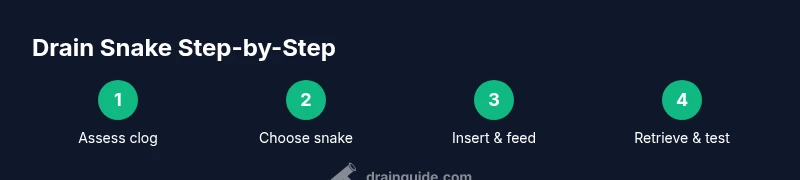
- 1
Prepare and assess
Clear the area, gather tools, and inspect the drain. If possible, turn off the water supply and place a bucket underneath to catch spills. Confirm the clog location before starting.
Tip: Have a clear exit path and keep pets away from the work area. - 2
Choose the right snake length
Select a snake length appropriate for the distance to the clog. Longer coils reach deeper, but can be harder to control in tight spaces.
Tip: If in doubt, start with a shorter section and feed more gradually. - 3
Attach and insert
Attach the snake to the handle and insert into the drain opening, applying steady pressure as you feed. Stop if you meet strong resistance.
Tip: Keep the coil straight to avoid kinks that reduce contact. - 4
Feed and rotate
Feed the snake slowly while gently rotating the handle to help the coil grab debris. Do not force the coil through the pipe.
Tip: If you encounter resistance, back off slightly and re-angle. - 5
Break up and pull out
When you feel the clog loosen, continue rotating to break up material and gradually retrieve the coil.
Tip: Do not yank; maintain a controlled pace to prevent pipe damage. - 6
Test flow
Reattach any trap if removed, then turn on water and check for smooth flow. Repeat if necessary.
Tip: Finish with a hot-water flush to clear residual debris. - 7
Clean and store
Wipe the snake clean, dry it, and coil it properly for storage.
Tip: Lubricate the mechanism if your tool manufacturer recommends it. - 8
Evaluate results
If water remains slow to drain, reassess the clog depth or consider alternative methods.
Tip: Document what worked for future reference. - 9
Prevent future clogs
Install drains screens, avoid pour-downs of fats/oils, and perform periodic flushes.
Tip: Establish a simple weekly maintenance routine. - 10
Know when to call a pro
If multiple fixtures are affected or the clog persists, professional tools and assessment may be required.
Tip: A pro can inspect pipe integrity and camera-inspect lines.
Got Questions?
What exactly is a drain snake and what does it do?
A drain snake is a flexible coil used to reach and clear clogs inside pipes. It either breaks up the debris or hooks it so it can be pulled free. It’s effective for many clogged drains when used with proper technique.
A drain snake is a flexible coil that clears clogs by breaking up debris or pulling it free from pipes.
How long should the drain snake be?
Length should match the distance to the clog. Start with a shorter section if you’re unsure, then extend gradually as needed while maintaining control.
Use a snake long enough to reach the clog, but don’t overextend it on the first try.
Can I use a drain snake on a toilet?
Toilets require a toilet auger designed for that fixture. A standard drain snake is not recommended for toilets due to risk of damage.
A toilet needs a dedicated toilet auger; a regular drain snake isn’t advised.
Is it safe to use chemical cleaners before snaking?
Chemical cleaners can loosen debris that makes the clog more viscous and can interact with the snake and pipes. In many cases, mechanical snaking is safer and more effective.
Chemicals aren’t usually needed before snaking and can complicate the process.
What if the clog returns after snaking?
If a clog recurs, the issue might be deeper in the main line or in a damaged trap. Reassess and consider professional inspection or root cause analysis.
Recurring clogs may require deeper inspection or professional help.
Should I remove the P-trap before snaking?
Removing the P-trap can provide better access, but only if you’re comfortable with basic plumbing tasks. Reassemble carefully to avoid leaks.
Accessing the trap can help; do it only if you’re comfortable.
The Essentials
- Choose the right snake length for your clog distance.
- Feed slowly and rotate to improve contact with the blockage.
- Wear protective gear and work safely around traps and water.
- Prevent future clogs with screens and smart disposal habits.