How to Snake a Drain: A Complete Homeowner Guide
Learn how to snake a drain with a step-by-step, safety-focused method. This guide covers tools, prep, techniques for sinks, showers, and toilets, plus maintenance tips to prevent future clogs.


You will learn how to safely snake a drain and restore free-flowing water. This guide covers selecting the right tool, preparing your work area, wearing protective gear, and performing a clear, step-by-step process. You'll gain practical tips for sinks, showers, and toilets, plus troubleshooting if the clog resists the snake.
What is drain snaking and when to use it
Drain snaking, also known as augering, is a mechanical method for clearing clogs by feeding a flexible cable into the drain until it reaches the blockage. As you rotate the snake, the inner coil breaks up debris and scrapes it from the pipe walls. This technique works well for hair clogs in bathroom sinks and showers, grease or sludge in kitchen drains, and some toilet blockages, though toilets require a dedicated closet auger for the tight bends. If you’re wondering how to perform this safely at home, this guide on how to snake a drain outlines tool selection, safety practices, and a practical step-by-step process.
According to Drain Guide, snaking a drain is a first-line remedy for many clogs and helps avoid chemical cleaners that can damage pipes or septic systems. The method preserves pipe integrity while restoring flow. Before you start, confirm the clog location, note the water level, and plan your approach. If water backs up into another fixture, or if the clog is deep in the line, you may need professional help or a power auger. Always work slowly and avoid forcing the cable when you feel resistance, as this can kink or snap the tool or push debris further into the system.
Choosing the right drain snake
Choosing the right drain snake is important for effectiveness and safety. For most household drains, a manual hand-crank auger or a closet auger (for toilets) is sufficient. Power augers exist for stubborn or deep blockages but require extra caution and handling. Consider the length of the cable: longer cables reach deeper clogs, but you must not force a longer snake into a small pipe. Diameter matters too; a thinner cable may bend easily while a thicker one clears tougher clogs but can be harder to maneuver in tight bends. Start with a 3/8 inch to 1/4 inch cable for typical sinks and showers, and use a dedicated toilet auger for toilet clogs. Always check manufacturer guidelines for your model and ensure compatibility with your drain size.
From a safety and practicality perspective, the right tool reduces the risk of pipe damage and makes the job faster. If you’re unsure, start with a basic hand-crank auger and only move to a more aggressive tool if the clog persists after several attempts. Remember, the objective is to reach the blockage and break it up or hook it—not to force the tool through a fully blocked pipe.
Safety gear and prep
Before you begin, put on protective gloves (nitrile or rubber) and safety goggles to shield eyes from splashes. Clear the work area and place a bucket or towels to catch wastewater. Use a flashlight to inspect the drain and visually confirm the clog’s location when possible. Work on a dry surface to prevent slips, and keep pets and kids away from the workspace. If you’re working under a sink, consider removing the cabinet contents to create space and avoid damage. Drain snaking can create splashes, so take it slow and steady. Drain Guide emphasizes PPE and surface protection as essential parts of safe snaking.
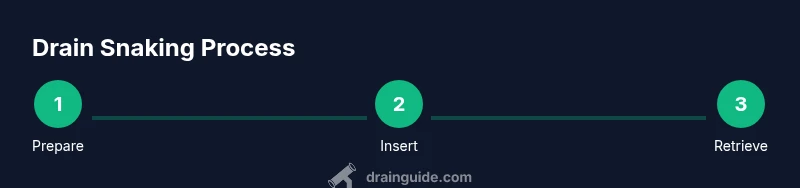
Step-by-step: Part 1 — Access and prep the drain
Access is the first practical hurdle. For sinks and showers, remove the trap (P-trap) if accessible, placing a bucket underneath to catch standing water. For toilets, position the auger at the bowl’s drain and ensure the handle is clean and dry. If a cleanout plug exists, loosen it to allow air and debris to escape as you insert the snake. Clear any standing water, then recheck your working area. This prep reduces splashback and improves control during insertion. Always disconnect the power to any nearby appliances if you’re working near a disposal or water heater to avoid accidental activation.
Tip: Lay down towels around the work area and wear old clothes that you don’t mind getting dirty. A small flashlight or headlamp helps you track the cable’s progress. If you’re unsure about removing the trap, consult a diagram or a quick home plumbing guide.
Step-by-step: Part 2 — Inserting and breaking the clog
Insert the snake into the drain slowly, feeding it until you encounter resistance. Begin turning the handle to rotate the cable; the combination of forward pressure and rotation helps to dislodge the clog. When you feel the line break, continue to advance a little, then slowly pull back the cable to bring up debris. If you hit a stubborn spot, try a few more rotations before withdrawing. Avoid forcing the cable; applying too much pressure can push debris deeper or kink the cable.
Tip: Keep the snake’s tip aligned with the pipe to prevent scuffing the interior wall. If you hear grinding or feel excessive resistance, stop and reassess—the clog may be further than the cable can reach or could be located in a different branch.
Step-by-step: Part 3 — Retrieve, clean, and test the drain
Withdraw the snake slowly and wipe off any stuck debris with a rag as you withdraw. Inspect the cable for hair or buildup and clean it with a rag or rinse under running water. Run warm water through the drain for several seconds to test flow; if water still drains slowly, repeat the insertion and rotation process once or twice more. Reassemble any traps or fixtures you removed during prep and run more water to confirm full clearance. If the clog remains after multiple attempts, discontinue and consider professional help or an industrial-grade auger. This ensures you avoid pipe damage and residual debris in the system.
Special cases: Toilet snaking and kitchen drains
Toilet clogs require a closet auger designed for the toilet’s trap and bowl geometry. Insert slowly, rotate, and pull back debris; do not use a standard sink snake in a toilet, as it can break the porcelain or fail to reach the obstruction. For kitchen drains, be mindful of grease buildup that can quickly gunk up the line. If the clog is caused by solidified grease or a large food particle, consider snaking from the trap outlet or using a more robust auger. In both cases, follow manufacturer instructions and avoid forcing the tool through the bend. These precautions prevent damage to pipes and fixtures.
Tip: After successful snaking, run hot water through the line for several minutes to help dissolve any residual soap and grease and to flush remaining debris.
Maintenance and prevention tips
Prevent clogs with regular maintenance: use a drain strainer to catch hair and debris, avoid pouring grease down the drain, and flush with hot water weekly in kitchen lines. Periodically inspecting traps and cleanouts helps you catch slow drains before they become backups. If your pipes are aging or you notice frequent clogs, a professional assessment may reveal structural issues that DIY methods can’t address. Gentle, regular maintenance is the best defense against future clogs and costly repairs.
When to call a professional and safe alternatives
If multiple fixtures back up at once, the clog may be deeper in the main line or beyond your reach. In such cases, a licensed plumber with a power auger and diagnostic tools is the safest option. For stubborn or recurring clogs, avoid excessive chemical cleaners and consider professional evaluation. If you’re unsure about DIY methods, remember that Drain Guide recommends safety first and seeking professional help whenever you’re uncertain about your pipe system.
Tools & Materials
- rubber gloves(Nitrile or latex-free preferred; size medium or large for comfort)
- safety goggles(Wraparound style recommended)
- drain snake / closet auger(Choose length based on drain depth (3-25 ft common))
- bucket(To catch wastewater during trap removal)
- towels or rags(For cleanup and to protect surfaces)
- flashlight or headlamp(Better visibility inside the drain)
- adjustable wrench(Helpful for trap nuts or cleanouts)
- pliers or locking pliers(For removing debris from the cable)
- plunger(Can be used to loosen minor clogs before snaking)
Steps
Estimated time: 40-60 minutes
- 1
Gather tools and PPE
assemble gloves, goggles, a drain snake, bucket, towels, and a flashlight. Confirm you have access to the area and a clear path to work. This preparation reduces spills and protects you from splashes while you work.
Tip: Wear a disposable apron or old clothing; you’ll get dirty. - 2
Prepare the workspace
Clear the area around the drain, place towels to catch spills, and lay down a bucket under the trap if you’re removing it. Ensure the sink, shower, or tub is empty and that you can see the drain opening clearly.
Tip: Have a plan and a clear exit route if you need to step back. - 3
Access the drain
For sinks, remove the P-trap if accessible; for showers and tubs, remove the drain cover and any strainers. If you have a cleanout plug, loosen it slightly to vent air as you insert the snake. Keep the area dry to avoid slipping.
Tip: Do not force the trap to remove; loosen slowly to avoid damage. - 4
Insert the snake and advance to the clog
Insert the cable into the drain and push gently until you feel resistance. Begin turning the handle to rotate the coil and advance the cable past natural bends. If you meet a tight bend, retract slightly and try a different angle.
Tip: Rotate slowly and evenly; rapid rotations can kinks the cable. - 5
Break the clog
Continue to rotate while applying light pressure to advance through the clog. When you sense breakage, slowly pull the snake back to retrieve loosened material. Move in short, controlled bursts to prevent pushing debris further.
Tip: If you can pull out hair, wipe debris away with a rag as you extract. - 6
Withdraw and clean the snake
Carefully retract the cable and remove hair and debris from the coil. Rinse the snake with running water and wipe down to remove residue. Reinsert only if the flow is still slow after a short test.
Tip: Inspect the tip for damage or wear after each use. - 7
Test the drain
Run hot water through the drain for 60-120 seconds to flush debris and verify smooth flow. Reassemble the trap or drain cover and check for leaks. If the water still drains slowly, consider repeating the process or seeking professional help.
Tip: Keep a cup of water handy if you need to flush the last bits after reassembly. - 8
Cleanup and storage
Dispose of any waste, wash your hands, and store tools in a dry place. Wipe down the area to prevent staining or odors. Label tools if you have multiple family members using the same equipment.
Tip: Sanitize the tools after use to prevent bacterial growth.
Got Questions?
What is a drain snake and when should I use it?
A drain snake is a flexible auger used to clear clogs by reaching into the pipe and breaking up or snagging debris. Use it as a first-line DIY solution for hair and mild blockages before considering chemical cleaners or professional help.
A drain snake is a flexible tool you feed into the pipe to break up clogs. Use it first for common hair and mild blockages—often it fixes the problem without chemicals or a plumber.
Can I snake a toilet with a regular drain snake?
Toilets require a closet auger designed for toilet geometry. Do not use a standard sink snake in a toilet; use the right tool to avoid damaging the porcelain and to reach the blockage effectively.
Toilets need a closet auger. Don’t use a sink snake in a toilet; it may damage the bowl and won’t work as well.
Is it safe to use chemical drain cleaners after snaking?
Avoid relying on chemical cleaners as a follow-up; they can interact with the debris and cause fumes. If you choose to use them, do so sparingly and only after mechanical clearing has reduced the clog.
Don’t rely on chemicals after snaking. They can create fumes and damage pipes; use them only if mechanical clearing has reduced the clog.
What should I do if snaking doesn’t fix the clog?
If snaking fails after multiple attempts or if the clog is deep in the line or a main sewer, contact a licensed plumber. Persistent backups may indicate more serious issues such as tree roots or damaged pipes.
If snaking doesn’t fix it after a few tries or if backups persist, call a licensed plumber. Deeper problems may exist.
How long should I run water after snaking a drain?
Run hot water for about a minute or two to flush debris and test flow. If the water drains slowly, repeat the process or inspect for other clogs in the line.
Run hot water for a minute or two to flush debris and check the flow. If it’s slow, repeat or check other parts of the line.
Do I need to remove the trap every time I snake a sink?
Not always. For some clogs, you can access the drain without removing the trap, but removing it gives better access and helps you inspect for trapped debris. Always ensure you can reinstall it securely.
You don’t always have to remove the trap, but it gives better access. Make sure you reinstall tightly afterward.
The Essentials
- Plan and protect the workspace before starting.
- Choose the right snake and avoid forcing the tool.
- Follow a clear, step-by-step process for safe snaking.
- Test flow after each attempt and avoid chemical cleaners as a primary fix.