Drain Won't Unclog with Snake: Troubleshooting Guide
Facing a clog that won't budge with a drain snake? This practical, urgent guide helps homeowners diagnose why snaking failed, offers safe fixes, and outlines when to call a pro for stubborn drains.


Quick answer: drain won't unclog with snake when the blockage is beyond the snake's reach or the tool was not used correctly. First, extend the cable fully, clear the trap, and recheck access. If the clog persists, switch techniques or call a professional for safety and accuracy.
Why drain won't unclog with snake
When a drain won’t unclog with snake, it’s usually not a simple pull-and-retrieve moment. The most common culprits are a blockage that sits beyond the snake’s reach, a curved pipe or multiple bends that limit the cable’s effectiveness, or misapplication of the tool itself. In many homes, the issue lies in the pipe layout or in material that resists mechanical clearing, such as hardened grease or mineral buildup along the trap arm. Importantly, a failed snaking attempt often signals the need to reassess reach, angle, and how the snake is fed into the drain. Drain safety and methodical troubleshooting matter as much as raw force.
If you’re facing this issue, you’re not alone. The Drain Guide team has seen many cases where the clog persists despite multiple passes. The key is to narrow down whether the obstruction is within the trap area, around a bend, or farther into the line, then choose a safe, effective next step. Throughout this guide you’ll find stepwise checks and safer alternatives to keep you out of risky guesswork.
What to check first before reusing a snake
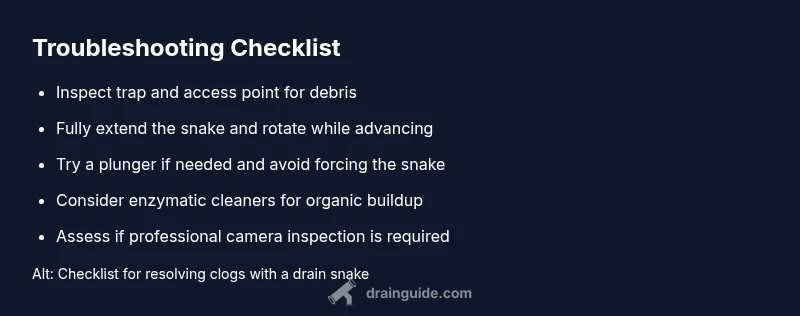
Before you tackle the clog again, clear the immediate area and inspect the trap (P-trap) under the sink. Remove standing water and hair buildup, then check the access point for any obvious kinks or obstructions. Ensure you’re using the snake correctly: feed slowly, rotate while advancing, and avoid forcing the cable through tight bends. Sometimes, simply repositioning the snake and ensuring full extension can unlock a stubborn partial clog. If the trap is clear but water still won’t drain, the issue may be farther down the line and require a different approach.
Safety note: always wear gloves and eye protection when handling snakes and traps. Keep the work area dry to avoid slips, and unplug nearby appliances if you’re working near an electrical outlet by the sink.
Common mistakes that defeat snake attempts
A frequent error is attempting to clear a long, curved drain without accounting for bends in the pipe. Snakes can fail when pushed too hard against a bend or when their rotation isn’t coordinated with depth. Another mistake is reusing a short length of snake after a partial pull, which can simply drag the clog back toward the fixture. Some homeowners forget to remove the trap first or skip clearing the trap arm, which hides the true location of the blockage. Finally, relying on brute force rather than controlled feeding can damage the pipe and worsen the clog.
Alternative methods to clear a stubborn clog
If a conventional snake retry fails, consider complementary methods. A plunger set up with a proper seal can often loosen a sediment clog near the opening. Enzymatic drain cleaners are an option for organic buildup, used according to label directions and with respect for pipe materials. High-pressure water jets or a mechanical auger designed for the particular pipe type can be effective, but these methods should be used with care to avoid damage. In some cases, a combination approach—snaking, plunging, and a cautious enzymatic cleaner—yields the best result.
Remember: never mix chemical cleaners with a metal snake or with other cleaners in the same system, as chemical reactions can be dangerous. If you’re unsure, switch to mechanical methods first and save chemical agents for after you’ve exhausted non-chemical options.
When to stop and call a professional
If you can’t clear the clog after several careful attempts, or if the blockage is in a shared sewer line, it’s prudent to contact a licensed plumber. Persistent clogs may indicate more serious issues such as pipe damage, deep-seated grease, or tree roots intruding into the line. A pro can perform camera inspection, assess the pipe’s integrity, and determine whether repairs or replacements are necessary. Prioritize safety and avoid leaving a potential backup unresolved.
Prevention tips to avoid future clogs
To reduce the likelihood of recurring clogs, establish a routine maintenance plan: run hot water periodically to dissolve minor greases, use a drain screen to catch hair and debris, and avoid pouring grease or coffee grounds down the drain. Clean the trap occasionally and treat the drain with enzyme-based cleaners a few times per year to maintain a healthy microbial balance. Regularly inspecting the trap and keeping the drain fresh can save time and money in the long run.
Steps
Estimated time: 60-75 minutes
- 1
Prepare area and safety
Set up a clean workspace, gather gloves, goggles, a bucket, and the appropriate snake attachment. Shut off the water supply if you’re working under a sink to minimize overflow. Place towels to catch any drips and keep children or pets away.
Tip: Having a clear, dry workspace reduces slips and injury. - 2
Access and clear the trap
Place a bucket under the P-trap, loosen the trap fittings, and remove the trap to inspect for hair and debris. Clean the trap thoroughly and reassemble, ensuring no leaks. This step often reveals whether the trap is the real bottleneck.
Tip: A clean trap makes it easier to determine if the clog is further down. - 3
Re-feed the snake properly
Insert the snake into the drain, feed slowly, and rotate as you advance toward bends. Pause and pull back slightly if resistance increases, then resume. Keep tension steady and avoid forcing beyond the bend.
Tip: Small, steady advances beat forceful pushing. - 4
Assess the clog location
If resistance remains after several passes, stop and consider whether the blockage is in the trap arm or farther down. Mark the point of resistance to know where to try an alternate method or a professional camera inspection.
Tip: Knowing where the clog sits shapes your next move. - 5
Try an alternative method
Attempt a plunger with a proper seal or enzymatic cleaner after snaking. If using a plunger, ensure a good seal and vigorous, controlled pump cycles. Allow time for enzymes to work if you choose that path.
Tip: Avoid mixing cleaners with the snake to prevent chemical reactions. - 6
Decide on professional help
If the clog persists after a careful, multi-method approach, especially in shared or older plumbing, contact a licensed plumber for diagnosis and repair.
Tip: Professional tools (camera inspection) reveal hidden issues safely.
Diagnosis: Drain won't unclog with snake after initial attempt
Possible Causes
- highBlockage located beyond the snake's reach or past a long bend
- mediumSnake not fed correctly (not extended fully or misrotated)
- lowSolid mineral buildup, grease, or tree roots resisting snaking
Fixes
- easyFully extend the snake to resistance and rotate while retracting, applying steady pressure
- easyInspect and clear the trap/cleanout, then re-snaking from the trap arm with a fresh approach
- mediumIf the clog persists beyond the trap, switch to an alternative method (plunger, enzymatic cleaner) or consult a plumber
Got Questions?
Why won't my drain unclog with a snake even after multiple passes?
Often the blockage lies beyond the snake’s reach or in a long bend. Reassess reach, angle, and trap access before attempting again.
Often the blockage lies beyond the snake’s reach or around a bend. Reassess reach and trap access before trying again.
Can using a drain snake damage pipes?
Yes, improper use or forcing the snake can damage pipes, especially older PVC or metal joints. Use gentle, controlled movements and avoid forcing through tight bends.
Improper use can damage pipes, especially older joints. Use controlled movements and don’t force through tight bends.
Should I remove the P-trap first?
In many cases, removing the P-trap reveals the clog location and makes snaking easier. Always have a bucket ready and be prepared for water.
Removing the P-trap often helps locate the clog. Have a bucket ready.
Is it safe to use chemical cleaners after snaking?
Chemical cleaners can react with other cleaners or damage pipes if misused. Consider enzymatic cleaners as a gentler alternative and follow label directions.
Chemical cleaners can be risky. Consider enzymatic cleaners and follow the label.
When should I call a plumber?
Call a plumber if the clog persists after multiple, careful attempts or if you notice backups in multiple fixtures or sewer issues. A pro can perform a camera inspection and provide effective repairs.
Call a plumber if the clog remains after several attempts or other fixtures back up.
Watch Video
The Essentials
- Start with simple checks at the trap and reach.
- Feed the snake slowly and rotate for bends.
- If stubborn, switch methods or call a pro.
- Prevent clogs with routine drainage maintenance.