Why Is Drain Snake Not Working? A Troubleshooting Guide
Urgent, step-by-step troubleshooting to diagnose why a drain snake isn’t working and fix it safely, with prevention tips from Drain Guide.


The most common reason why is drain snake not working is that the clog is beyond the reach of a basic hand auger, or the auger tip isn't fed correctly into the pipe. Start by locating the clog, feed the snake until you feel resistance, rotate steadily, and pull back debris. If it still won’t clear, try a larger auger or a different section of the line, or call a professional.
Understanding why the drain snake may fail
If you've landed on this guide asking 'why is drain snake not working,' you're not alone. A hand-powered drain snake is a reliable tool when used correctly, but it can't fix every clog. The most common reasons it fails are that the blockage is farther down the line than the snake can reach, or the auger tip isn't positioned correctly to grab or break the material. Hair, soap scum, and grease can form tight knots around the coil, making it hard to advance or to cut through. A mis-sized tool, a kinked cable, or a trapped segment in a sharp bend can stop the rotation and prevent the tip from engaging the clog. Even when you feel resistance, forcing the snake can push the clog deeper, wrap it around the coil, or nick the pipe interior, which leads to leaks or future problems. According to Drain Guide, the most important question is not which tool you own but whether you have the right access to the clog and the correct technique to advance through it. In many cases, a fix is simple once you correct your approach or switch to the appropriate tool for the pipe type.
Why is drain snake not working: common culprits
The phrase why is drain snake not working often points to deeper issues than a stubborn hairball. Clogs that sit beyond the bend or down a long leg of the main line reduce the auger’s effectiveness. Using the wrong diameter or type of auger for a particular pipe (sink, tub, or toilet) can cause the cable to bind or fail to reach the blockage. A kinked cable, a dull or damaged tip, or attempting to force through a tight trap can stop the rotation and prevent clearance. Even with the best technique, you may encounter a blockage that’s simply not amenable to a manual snake. Drain Guide notes that addressing the right access point and choosing the correct tool is often the difference between partial relief and a full fix.
Diagnostic checks you can perform safely
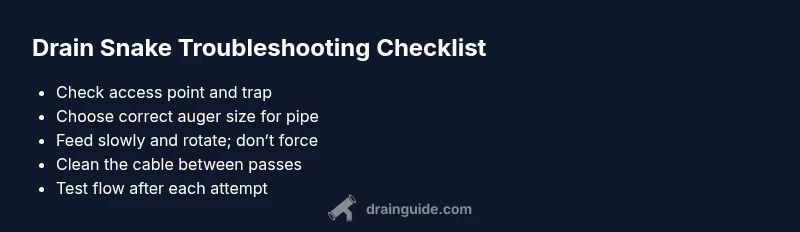
Begin with simple checks you can do without disassembling plumbing beyond reason. Confirm the clog location: is it a sink, tub, or toilet? Check the trap to see if you can access it and remove it for clearing. Inspect the length of exposed pipe for kinks or sharp bends that could impede the snake. Ensure the auger is clean and the tip is intact. Try flushing with a small amount of water to gauge whether you’re approaching the clog or just pushing a settled material. If the water remains sluggish, you may be dealing with a deeper or multi-point blockage that requires a different approach. Drain Guide emphasizes using the right length and diameter and not forcing the tool through resistance.
Safe, practical fix options you can try before calling a pro
First, adjust your technique: feed the snake slowly, rotate as you advance, and never yank or yank-twist. If you encounter resistance, pull back slightly and redirect around the bend. Consider cleaning the trap or access port after each attempt to remove debris. For sinks with long runs or multiple traps, you may need multiple passes from different access points. If the clog persists, it might be in a hard-to-reach section or in a toilet branch, where a toilet auger or a larger-diameter drain snake could be more effective. Drain Guide suggests documenting each attempt to determine whether the problem is ongoing or a one-off blockage.
Advanced fixes and when to switch tools
When the standard hand auger fails, evaluate whether the clog lies in a section of pipe that requires a toilet auger or a powered auger. A toilet auger is specifically designed for toilet traps and can maneuver around tight bows that a standard snake cannot. For deeper main-line clogs, a power auger used by professionals may be necessary, but only if you understand local pipe layouts and safety guidelines. If you are unsure about using power equipment, stop and call a pro. Never use brute force with a power auger in living spaces or near electrical outlets. Drain Guide emphasizes safety first: incorrect use can damage pipes and create more expensive damage.
Safety warnings and mistakes to avoid
Never mix chemical drain cleaners with a drain snake—chemicals can degrade the cable and create hazardous fumes. Do not force the auger past resistance; this can snap the cable or damage the pipe. Always wear eye protection and gloves, and work in a well-ventilated area. Keep children and pets away from the work zone. If you hear very loud clicks or the snake stalls abruptly, back out and reassess rather than pushing harder. Safety should guide every move when dealing with drains and augers.
Prevention tips to keep drains clear
To prevent future clogs, install simple hair-catching strainers in sinks and tub drains, and clean them regularly. Run hot water with a splash of baking soda or a mild enzyme cleaner weekly to break down soap scum, grease, and organic buildup. Avoid pouring grease or coffee grounds down the drain, and clean out the p-trap periodically to minimize organic build-up. Regular maintenance, rather than emergency snaking, is the best defense against stubborn clogs.
Quick wins and next steps if the snake fails
If the drain remains slow or blocked after trying the snake, switch to a toilet auger or a larger-diameter auger designed for the pipe type. Document your attempts, then decide whether to escalate to a professional. Drain Guide recommends a professional visit when you encounter repeated failures, unusual odors, or water backing up into multiple fixtures. A quick assessment by a plumber can save time and prevent further damage.
Steps
Estimated time: 30-45 minutes
- 1
Prepare and protect
Put on sturdy gloves and eye protection. Clear the area and gather the right tools for the job (hand auger, bucket, rags). Make sure the area is well-lit and accessible.
Tip: Safety first—protective gear reduces splash and debris exposure. - 2
Locate access points
Identify whether you’ll work at the sink, tub, or toilet. If you can access a cleanout or trap, plan to start there for easier debris removal.
Tip: Access points reduce the amount of pipe you must snake through. - 3
Expose the trap or cleanout
Carefully remove the trap or access cap if needed. Place a bucket to catch water and debris, and inspect for damage or wear on fittings.
Tip: A clean trap makes it easier to see clogs and debris. - 4
Insert and feed the snake
Begin feeding the auger into the pipe slowly, maintaining steady pressure as you rotate. Advance until you feel resistance at the clog or reach the blockage.
Tip: Avoid forcing beyond resistance to prevent pipe damage. - 5
Break up and pull debris
Rotate and gently retract the snake to pull out hair and gunk. Repeat as needed, then withdraw the snake completely and clean it.
Tip: Clean the cable to prevent re-gumming on the next use. - 6
Test and reassemble
Run water to test flow. If clear, reassemble the trap or access, and monitor for reoccurrence over the next few days.
Tip: If water flow is still restricted, consider a different tool or professional help.
Diagnosis: Drain snake won't clear clog
Possible Causes
- highClog deeper in the line than the snake reaches
- mediumWrong tool size or type for the pipe
- mediumTip not engaged or poor technique
- lowKinked cable or damaged auger
- lowP-trap or trap arm geometry blocks access
Fixes
- easyExtend reach by using a longer auger or adjusting entry point
- hardSwitch to a toilet auger or larger-diameter snake for tougher clogs
- easyRealign and re-feed the auger with controlled rotation
- mediumInspect and replace damaged cable or tip before retrying
Got Questions?
What should I do first when the drain won’t snake through?
Start by locating the clog and ensuring you’re using the correct auger for the pipe type. Check the trap or cleanout for easy access and remove any obvious debris. If you still can’t reach the clog, do not force the cable; back out and consider a different access point or tool.
First, locate the clog and verify you’re using the right auger; don’t force the cable if you can’t reach the clog.
Can I use a chemical drain cleaner before snaking?
Chemicals can degrade the auger and create dangerous fumes. They may provide a temporary relief but can complicate future snaking. It’s best to avoid mixing chemicals with mechanical snaking and try a mechanical approach first.
Avoid chemical cleaners before snaking; they can damage the tool and create fumes.
Is a toilet auger different from a standard drain snake?
Yes. A toilet auger is designed to bend and reach around a toilet trap, which is different from a sink or tub. Use the toilet-specific tool for toilet clogs and the standard snake for sinks and drains.
A toilet auger is specialized for toilet clogs and should be used for those situations.
Why does a clogged sink drain slowly after snaking?
It can mean the clog is partially cleared or broken into smaller pieces that still restrict flow. A second pass or alternate method may be needed to fully clear the line.
A slow drain after snaking often means partial clearance; you may need another pass or a different method.
What if the snake gets stuck in the drain?
Stop pushing and gently pull back to avoid breaking the cable. Check for kinks or blockages and reinsert more carefully. If it won’t come free, stop and call a professional.
If the snake gets stuck, back off gently and inspect for kinks; don’t force it.
When should I call a professional?
If multiple attempts fail, the clog seems deep, or you experience repeated backups, it’s time to bring in a plumber. They have specialized tools and expertise for main-line clogs.
Call a professional if several attempts fail or backups return.
Watch Video
The Essentials
- Start with safe, accessible clogs before moving deeper
- Use the correct tool size for your pipe and clog type
- Never force a snake through resistance
- Switch tools or call a pro for stubborn blockages
- Maintain drains regularly to prevent recurrences