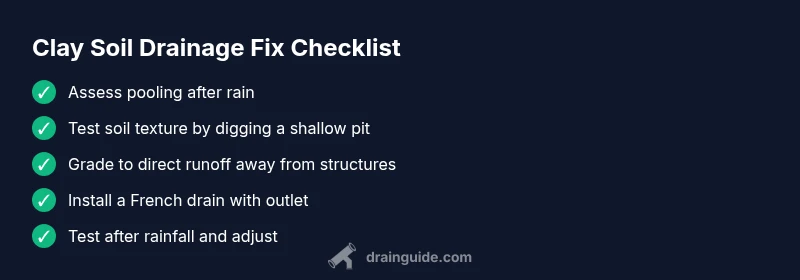
Drainage Troubleshooting for Clay Soil: Quick Fixes and Long-Term Solutions
Urgent, step-by-step troubleshooting for drainage issues in clay soil. Diagnose causes, implement quick fixes, and plan long-term improvements with safety tips from Drain Guide.


According to Drain Guide, drainage is bad in clay soil when heavy, compacted earth can’t absorb water quickly, causing pooling after rain or irrigation. The quickest fix is to improve surface grading and add organic matter, followed by installing a perforated drain or French drain if water remains stubborn. Act now to protect foundations and plant health.
Causes of Poor Drainage in Clay Soil
Drainage is bad in clay soil largely due to the natural properties of clay particles. Clay soils are dense, have tiny pores, and hold water longer than sandy or loamy soils. When water sits on the surface after rain, the clay's structure compresses, reducing permeability and creating a saturated root zone. In many yards, poor drainage is exacerbated by compaction from foot traffic, heavy equipment, or seasonal freezes that crust the surface. The Drain Guide team notes that compost, mulch, and organic matter slowly improve pore structure and porosity over time, enabling water to move more freely. If you’re building a landscape plan, expect slower drainage in clay soils and plan for longer-lasting moisture. Recognizing this constraint helps you choose crops, plan planting beds, and avoid costly mistakes.
How Clay Affects Water Movement
Clay particles are plate-like and hold water tightly, which slows downward movement. In clay soils, infiltration rates can drop dramatically after rainfall, leaving surface ponds and perched water tables that stress roots and foundations. With drainage is bad in clay soil, plan for gradual wetting and drying cycles, rather than rapid drainage. Strategies that work in sandy soils often underperform here, so it’s essential to address structure before water moves through the profile. Drain Guide emphasizes gradual amendments and appropriate drainage strategies to avoid creating new problems elsewhere in the landscape.
Quick Checks You Can Do Right Now
Begin with simple observations: look for standing water within 1-2 hours after a rain, check soil texture by digging a shallow pit to see clayey consistency, and note any positive or negative changes after rainfall. Inspect area grading; if water pools near foundations, you may need to regrade to encourage runoff away from structures. Measure downspout discharges and ensure downspouts extend 5-6 feet away from the house. For drainage is bad in clay soil, small adjustments can yield noticeable improvements, especially when combined with soil amendments and strategic drainage features.
Short-Term Fixes You Can Implement This Weekend
Start with surface grading and organic matter applications. Remove compacted surface crusts and topdress with 2-3 inches of compost or well-rotted mulch to improve porosity. Add a shallow swale on slopes to guide water toward a designated drainage area. If pooling persists, consider installing a perforated pipe or French drain along the problem axis, buried shallowly with gravel and filter fabric to encourage lateral movement of water away from critical zones. These steps can reduce surface ponding without major excavation.
Long-Term Solutions for Clay Soil Drainage
Long-term drainage improvements focus on creating pathways for water to move away from living spaces and plant roots. Install a properly designed French drain with perforated pipe, gravel, and geotextile, or construct a trench drain at key low spots. Elevate garden beds and pathways to improve air exchange and reduce root saturation. Consider soil amendments that improve structure over time, such as compost, biochar, and organic mulches. Drain Guide recommends planning around existing trees and utilities, and ensuring any new drains tie into an appropriate outlet.
The Role of Soil Amendments and Grading
Soil amendments can gradually alter the drainage characteristics of clay soil. Incorporate organic matter to improve aggregation and porosity, but avoid excessive tilling that can disrupt soil life. Light, frequent amendments outperform heavy, one-off applications. Grading should direct water toward approved outlets, away from foundations and walkways. A well-graded landscape with natural filtration will reduce standing water and improve root health over several seasons.
When to Use a French Drain or Sump System
A French drain or sump system is a robust solution for persistent standing water in clay soils. A properly designed system requires careful excavation, trenching, and proper outlet placement. Use a perforated pipe surrounded by clean gravel, with a filter fabric layer to prevent soil intrusion. In some cases, a sump pump may be needed to move water to an appropriate discharge point. Drainage is bad in clay soil, but with a well-planned French drain, you can achieve reliable, long-term relief.
Safety, Best Practices, and Common Mistakes
Wear proper PPE during excavation and avoid digging near utility lines. Do not mix chemical drain cleaners with clay soil or rely on them to fix systemic drainage problems. Always test drainage after rainfall or irrigation, and adjust your plan accordingly. Common mistakes include over-amending soil, over-grading, and choosing a solution that displaces water into new problem areas. Prioritize gradual improvements and professional consultation when in doubt.
Case Studies: Before and After Clay Drainage Projects
In one residential yard, homeowners converted a soggy low spot by adding a shallow swale and compost amendments, followed by a small French drain. Within weeks, surface pooling diminished and plant health improved. In another scenario, a steep slope was graded to direct runoff away from the foundation and into an absorbent area, reducing moisture around the home. These examples illustrate how layered strategies yield durable results when drainage is bad in clay soil.
Steps
Estimated time: 2-6 hours
- 1
Assess the problem with a water-test
Observe how water behaves after a rain or irrigation cycle. Note timing, pooling areas, and how long water remains. This baseline helps tailor your drainage plan.
Tip: Test at different times of day and after varied rainfall to capture patterns. - 2
Improve the soil texture with amendments
Spread 2-3 inches of compost over affected zones and lightly rake in. Over several months, organic matter improves soil structure and infiltration.
Tip: Keep amendments shallow to avoid discouraging plant roots. - 3
Regrade to direct runoff
Create a gentle slope away from structures. Add a shallow swale if the land slopes toward sensitive areas to collect and redirect water.
Tip: Check for adequate slope (1-2% grade) to encourage movement without erosion. - 4
Install a surface or subsurface drain
Place a French drain or gravel-filled trench with a perforated pipe to move water laterally toward an outlet. Ensure proper fabric and gravel sizing.
Tip: Avoid clog-prone fabrics; use clean gravel and a filter layer. - 5
Outlet and discharge planning
Connect the drain to a legal outlet such as a storm drain or a designated drainage area. Verify local codes before connecting to any system.
Tip: Never discharge toward foundations or neighboring properties. - 6
Test and adjust after rain
Return after a rainfall to observe performance. If pooling persists, adjust slope, extend outlets, or add additional drains as needed.
Tip: Document changes so you can replicate or modify later.
Diagnosis: Persistent surface pooling or slow draining after rainfall or irrigation on a clay-rich yard.
Possible Causes
- highSoil texture dominated by heavy clay with low infiltration rate
- mediumParcel grading directs water toward problem area
- lowChronic soil compaction from foot traffic or vehicle use
Fixes
- easyIncorporate organic matter (compost, peat, leaf mold) to improve structure and porosity
- easyRegrade the surface to promote surface runoff away from structures; add a shallow swale
- mediumInstall a French drain or perforated pipe with proper gravel drainage
Got Questions?
What causes drainage issues in clay soil?
Clay soil drains slowly because of its tight, dense structure and tiny pore spaces. Water moves slowly through the profile, which leads to surface pooling after rainfall. Understanding this helps you choose the right amendments and drainage strategies.
Clay drains slowly due to its dense texture, which is why you see surface pooling after rain. This is normal for clay and guides the fixes.
Can I fix drainage without major excavation?
Yes. Start with soil amendments, grading adjustments, and shallow surface drainage like swales. If pooling persists, consider a trench drain or French drain with minimal disturbance.
You can fix many clay drainage issues with grading, amendments, and shallow drains; deeper fixes may require more digging.
Is soil amendment enough to solve drainage entirely?
Amendments improve structure and infiltration but may not fully solve severe pooling. Use amendments in combination with grading and drainage installations for best results.
Soil amendments help a lot, but for serious pooling you’ll likely need a dedicated drainage system.
How long does it take to see improvements after amendments?
Improvements can appear within a season as organic matter breaks down and soil biology adjusts. For dramatic changes, allow multiple seasons of gradual amendment and proper drainage.
You’ll see some gains this season, with bigger changes over the next few seasons as the soil improves.
When should I call a professional?
If you’re dealing with structural water around the foundation, complex grading, or frequent backups, consult a licensed drainage or landscaping professional. They can design a code-compliant solution.
Call a pro if water near your foundation is persistent or if you’re unsure about grading, permits, or outlets.
Watch Video
The Essentials
- Assess clay soil drainage early and set expectations.
- Amend soil gradually with organic matter for lasting gains.
- Grade to direct runoff and consider a French drain if needed.
- Test after each rain and adjust; safety first.