Drainage Not Working: DIY Troubleshooting Guide
Learn practical steps to diagnose and fix drainage not working problems at home. Quick checks, safe DIY fixes, and when to call a plumber, with prevention tips to keep drains clear.


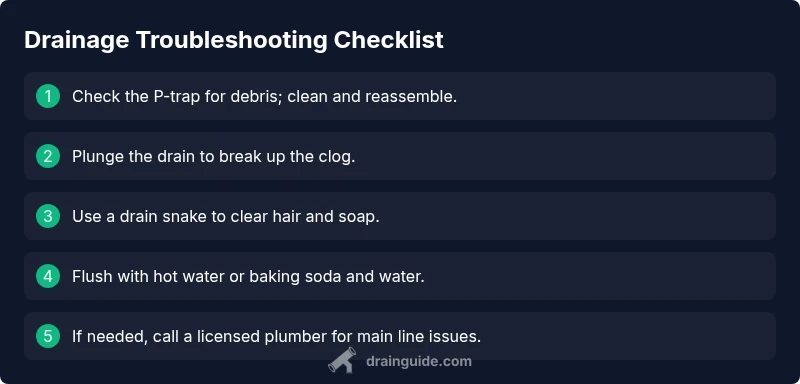
Most drainage problems start with a partial clog or trap issue. Quick fixes: (1) remove and clean the P-trap under the sink, (2) plunge the affected drain, (3) try a drain snake to clear hair and soap scum, (4) flush with hot water mixed with baking soda, and (5) if it remains blocked, contact a licensed plumber.
What usually causes drainage not working
In most homes, drainage not working starts with a simple, stubborn clog or a failing trap. Hair, soap buildup, and cooking grease collect in pipes and traps over time, creating partial blockages that slow or stop flow. When a single fixture drains slowly, the cause is often localized—think of the P-trap under a sink or the U-bend in a shower. If several fixtures drain slowly or gurgle after you run water, the problem is more likely in the main stack, a clogged cleanout, or a blocked vent. In some cases, issues arise from improper slope in older pipes or from a damaged section that collects debris. Finally, external factors like tree roots or a compromised sewer line can cause sudden, widespread drainage problems. For safety and reliability, start with the simplest checks and reserve heavy tools for stepwise investigations.
How to identify whether the problem is localized or systemic
If one fixture drains slowly while others behave normally, begin with localized checks (trap, stopper, immediate drain). If multiple fixtures are slow or show gurgling or odors, the issue is systemic and more likely involves the main drain line or vent system. Listen for gurgling sounds after flushing or running water; that often signals a vent or stack problem. Consider the age and layout of your plumbing: older homes with long, shared drain runs are more prone to systemic blockages. Safety note: avoid forcing a snake through pipes beyond the point of resistance, which can cause damage. Drainage not working in a home rarely resolves itself; proactive diagnosis saves time and money.
Quick checks you can perform safely
Start with the simplest checks: inspect exposed traps for visible blockages and clean them; ensure stopper assemblies are fully open; plunge the affected fixture with a proper cup plunger; try a hand-crank drain snake to clear hair and soap scum. Rinse with hot water, and consider a small amount of baking soda followed by boiling water to loosen minor buildups. Avoid chemical cleaners as a first-line solution; they can damage pipes and septic systems if used improperly. If the problem persists after these steps, move to more advanced diagnostics or contact a professional.
The role of traps, cleanouts, and vents
Traps (P-traps and U-bends) prevent sewer gases from entering the home but can accumulate debris. Cleanouts provide access points for clearing blockages, while vents allow air to escape the drain system; blocked vents create slow drainage and gurgling. Start by checking the trap beneath sinks and cleaning it thoroughly. If accessible, open any cleanouts and clear obstructions with care. For vent issues, observe whether gurgling occurs across fixtures and consider safer inspection methods or professional help to access and clear the vent stack.
When a clog is hard: using a drain snake and auger
A drain snake (hand-operated or power-assisted) can reach past the U-bend to break up or pull out stubborn clogs. Feed the snake slowly, rotate as you encounter resistance, and pull out debris in sections. Avoid forcing it through bends; if resistance remains after several attempts, stop and reassess to prevent pipe damage. For metal pipes, use a kink-free snake and keep fingers away from the rotating head. After clearing, flush with hot water to wash away loosened debris.
Should you use chemical drain cleaners?
Chemical cleaners can be tempting but carry risks: they may corrode pipes, damage septic systems, and release harmful fumes. They often provide only a temporary fix and may push the clog further into the system. For stubborn clogs, prefer mechanical methods (plunge, snake) or consult a professional. If you do try a cleaner, strictly follow the product instructions, ventilate the area, and never mix cleaners with other chemicals.
Shared symptom patterns across fixtures
Slow draining in one fixture can point to a localized clog, while sluggish drainage across multiple fixtures suggests a main line or vent issue. Look for recurring signs: gurgling sounds, sewage odor, or water backing up into another fixture when you flush. Isolated symptoms usually respond to trap cleaning or targeted snaking, whereas systemic symptoms require a broader diagnostic approach and possible professional assessment. Drainage not working in a home is not unusual, but timely action reduces the risk of a bigger problem.
When to escalate: assessing sewer line issues
If you notice backing up in more than one place, persistent odors, or sewage on the surface, you may have a sewer line problem or a broken main drain. Do not ignore these signs; they often require licensed plumbing equipment and procedures (e.g., camera inspection, jetting) to diagnose accurately. Evacuate standing water safely, turn off affected lines if advised, and contact a plumber promptly to prevent contamination and further damage.
Post-fix verification and prevention
After clearing a clog, run water through all affected fixtures to confirm proper drainage. Install strainers and hair catches to reduce future buildup. Implement a maintenance routine: periodic flushing with hot water, baking soda, and vinegar, and annual inspections of traps and vents. Keep a simple log of cleaning intervals and symptoms to help identify trends early. Regular maintenance is the best defense against recurring drainage problems.
Steps
Estimated time: 60-120 minutes
- 1
Prepare and safety check
Turn off the water supply to the affected fixture if possible; place a bucket and towels to catch water; ensure power is off if near electrical outlets. This protects you from spills and minimizes mess.
Tip: Have a flashlight and bucket ready before you start. - 2
Disassemble and inspect P-trap
Place a container under the trap, loosen the slip nuts with a wrench, remove the trap, and inspect for debris. Clean the interior with a brush and reassemble with new washers if needed.
Tip: Keep track of the order of washers to ensure a proper seal. - 3
Plunge the drain
Seal the overflow (if present) and use a sink plunger to create a strong seal. Plunge with firm, steady strokes to push through minor obstructions.
Tip: Avoid over-plunging to prevent splash and wear. - 4
Snake the line
Feed the drain snake into the pipe, rotating slowly to break up debris. Retrieve it gradually and inspect for clogs as you pull out segments.
Tip: Do not force the snake through tight bends; pull back if resistance increases. - 5
Flush and test
Run hot water down the drain in stages, then flush with a kettle of boiling water. Check for steady drainage and listen for any new gurgling sounds.
Tip: If you notice fumes or poor drainage, stop and re-evaluate. - 6
Check the vents
If multiple fixtures are affected, inspect the vent stack for blockages or call a professional to clear vents safely.
Tip: Do not attempt risky roof work without proper safety equipment. - 7
Evaluate the main line
Observe if other drains are slow; this may indicate a main line issue that requires professional equipment and expertise.
Tip: Document symptoms to aid the plumber’s diagnosis. - 8
Safety and disposal
Never mix chemical cleaners; protect your skin and eyes if handling cleaners and maintain good ventilation.
Tip: Keep children and pets away when working with cleaners. - 9
Prevent future clogs
Install strainers, avoid pouring grease down drains, and perform periodic maintenance with hot water and safe cleaners.
Tip: Set a monthly reminder to perform a quick maintenance flush.
Diagnosis: Drainage not working or slow drainage across fixtures.
Possible Causes
- highPartial clog in the P-trap or local pipe
- mediumHair, grease, or soap buildup in main line
- lowVent blockage causing slow drainage
Fixes
- easyRemove and clean the P-trap under the affected fixture; reassemble with proper seals.
- mediumUse a drain snake/auger to clear blockages in the main line or affected branch; flush with hot water.
- mediumInspect and clear the vent stack or contact a pro to assess venting issues.
Got Questions?
What is the most common cause of drainage not working?
A partial clog from hair, soap, or grease buildup in traps or pipes is the most frequent culprit. Localized issues are easier to resolve with basic maintenance.
Most drainage problems come from a partial clog in the trap or nearby pipes. Start with basic maintenance and then move to a snake if needed.
Is it safe to use chemical drain cleaners?
Chemical cleaners can damage pipes and septic systems and may not address the real clog. Use mechanical methods first and consult a plumber for stubborn blockages.
Chemical drain cleaners can harm pipes and septic systems. Try plunging or snaking first, and call a professional if needed.
When should I call a plumber?
Call a plumber if multiple fixtures drain slowly, you hear frequent gurgling, there is sewage odor, or DIY fixes don’t clear the clog. These signs often indicate main line or vent problems.
Call a plumber if several fixtures are slow or you detect sewage odors. Persistent issues could mean a bigger problem.
Why does a single fixture drain slowly but others are fine?
That usually points to a localized clog in that fixture’s trap or drain line. Inspect the trap and nearby pipes before moving to broader diagnostics.
If only one fixture drains slowly, start with the trap and local pipes before considering the main line.
Is using a drain snake unsafe?
A drain snake is generally safe when used correctly, but avoid forcing it past tight bends and never misuse on live electrical components near disposal units.
A drain snake is usually safe if used carefully; don’t force it through sharp bends.
What are signs of vent blockages?
Gurgling drains, slow drainage across fixtures, and odors can indicate a blocked vent. If climbing to the roof isn’t safe, hire a professional.
Look for gurgling and slow drainage; a blocked vent needs professional assessment if roof access is risky.
Watch Video
The Essentials
- Identify if the issue is localized or systemic.
- Prioritize mechanical methods before chemicals.
- Inspect traps, cleanouts, and vents early.
- Escalate to a plumber for main line or sewer concerns.
- Prevent future clogs with simple maintenance.