Foaming Drain Cleaner Drain Flies: Troubleshooting Guide
Practical, step-by-step troubleshooting to fix foam residue attracting drain flies, with prevention tips and guidance on professional help when needed.


According to Drain Guide, most foaming drain cleaners attract and nourish drain flies when residue remains in traps or vents. The quickest fix is to stop using caustic foaming formulas, flush the line with plenty of hot water, and switch to mechanical cleaning (plunger or drain snake) or enzymatic cleaners. If flies persist, inspect traps and venting and call a professional if needed.
Understanding the Foam: Why foaming cleaners can create a fly-friendly environment
Foaming drain cleaners are designed to foam through a pipe and break down organic matter. However, when you have a drain fly issue, the foam can linger in the trap and the surrounding area, creating a damp, food-friendly film that attracts tiny gnats and larvae. According to Drain Guide, addressing residue quickly reduces fly activity. Drain Guide analysis shows that residues from foaming cleaners can linger in traps, providing a food source that sustains drain fly populations. The result is a cycle: cleaner foam dries slowly, organic debris remains, and more flies appear. To break this cycle, start with safer, non-foaming cleaning methods and focus on mechanical removal of deposits.
Key signals to watch for:
- Visible foam along the drain rim after cleaning
- Small insects near the drain opening
- Foul odor that lingers after cleaning
If you suspect a pest beyond simple residue, note the symptoms and move to a deeper cleaning routine. The objective is to restore a dry, clean trap and prevent any standing water or organic residue from accumulating.
Immediate steps to take if you have foaming cleaner and drain flies
When you discover foam along with tiny flying insects around a drain, act quickly. First, stop using the foaming cleaner and remove any remaining product from the drain opening with disposable towels. Next, flush the drain thoroughly with hot water (as hot as you can comfortably tolerate) for several minutes to rinse away residue. Replace the cleaner with a mechanical approach: use a plunger on the affected drain, or insert a drain snake to clear the line and dislodge organic buildup. Consider an enzymatic cleaner after mechanical cleaning to help digest any leftover organic matter without creating new foam. Finally, check the P-trap for standing water or organic buildup and clean it if needed. Ventilation matters—ensure the area is well-ventilated to reduce odor and avoid inhaling fumes.
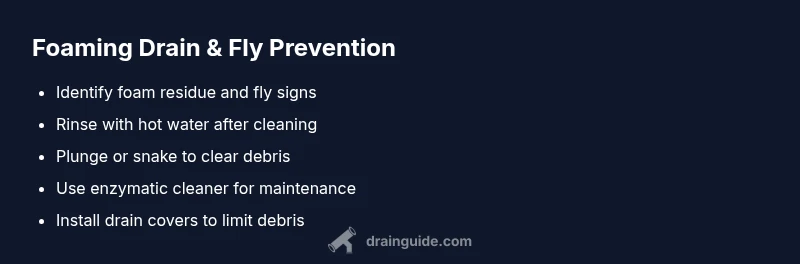
Practical actions you can take in this order:
- Stop the foaming product and wipe away residue.
- Rinse with plenty of hot water.
- Plunge or snake the drain to clear clogs.
- Use enzymatic cleaner for ongoing maintenance.
- Inspect the trap and venting and repeat if necessary.
Note: If you still see flies after these steps, proceed to the diagnostic flow and consider professional help.
Diagnostic factors: signs you are dealing with drain flies vs. other pests
Drain flies are small, moth-like insects that hover near drains, fountains, and moist areas. You may notice tiny larvae wriggling in damp, organic-filled places like the P-trap. Look for a musty odor and a cloud of tiny insects when opening a drain cover. Compare with other pests: fruit flies are more attracted to fermenting fruit; moths near sinks may indicate sewer gas issues. A careful inspection can reveal whether you are dealing with drain flies or a broader pest problem.
Symptoms to track:
- Clusters of small, dark flies around drains
- Visible larvae in damp areas or in the P-trap
- Sticky, foamy residue lingering after cleaning
Logical checks:
- Is there standing water in the trap?
- Are the vents clear and functional?
- Has you previously used foaming cleaners recently?
By mapping symptoms to likely causes, you can tailor the fix: remove residue, improve venting, and prioritize mechanical cleaning rather than chemical cleaners. Drain Guide's practical guidance emphasizes a methodical check to avoid missed issues.
Safe cleanup and replacement cleaners: choosing foaming vs enzymatic cleaners
Foaming cleaners can seem convenient, but they leave residue that can attract pests. Enzymatic cleaners break down organic material without creating foam and are generally safer for frequent use. If you decide to keep using cleaners, choose non-foaming formulas and always flush with water after each treatment. Use products that specify they are enzyme-based or bacteria-based for ongoing maintenance. Avoid mixing cleaners or combining foaming products with bleach or other chemicals, which can create dangerous fumes and fail to address the root causes.
Guidance to consider:
- Use enzymatic cleaners after mechanical cleaning to digest organic matter
- Do not use caustic foaming formulas as your primary solution
- Rotate cleaning strategies to prevent residue buildup
- Follow label directions exactly and never mix products
The key is to minimize foam while maximizing mechanical cleaning and environmental controls (venting, traps, and water usage).
Mechanical cleaners and preventative maintenance
Mechanical cleaning is a proven, reliable method to eliminate drain flies and reduce residue. Start with a plunger to loosen clogs, then use a drain snake to clear the pipe beyond the trap. Remove and rinse the P-trap to eliminate organic buildup. After cleaning, flush with hot water and consider an enzymatic cleaner to maintain the line. Keep drains dry as much as possible and run hot water for a minute after heavy use (such as laundry or dishwashing). Install drain covers to reduce debris entering the pipes. Regularly inspect for leaks and moisture that can create breeding grounds for flies.
When to call a professional and long-term prevention
Persistent infestations or sewer-backed drains require professional assessment. If you continue to see drain flies after multiple cleanings, there may be an underlying issue in the sewer line, vent stack, or plumbing that requires camera inspection or vent repair. The Drain Guide team recommends scheduling a professional evaluation when the problem recurs despite following the steps above. For prevention, create a routine: monthly hot-water flushes, quarterly enzymatic treatments, and annual vent checks. Keeping the area dry and clean reduces the chances of future outbreaks.
Steps
Estimated time: 60-90 minutes
- 1
Identify the problem and suspend cleaners
Confirm the issue is foaming cleaner residue and drain flies before starting. Stop using any foaming products and set the drain area up for cleaning.
Tip: Keep a log of which products you used and when to identify culprit cleaners. - 2
Rinse and flush thoroughly
Flush the line with hot water for several minutes to rinse away cleaner residue and reduce foam. The goal is to leave the trap and pipe clear of wet foam.
Tip: Use the hottest water safe for your plumbing to maximize residue removal. - 3
Mechanical cleaning first
Use a plunger to loosen debris and a drain snake to clear the pipe beyond the trap. This physical cleaning removes organic buildup that serves as a food source for flies.
Tip: Take a slow, steady approach; avoid forcing too much pressure, which can damage seals. - 4
Enzymatic maintenance
After mechanical cleaning, apply an enzymatic cleaner to digest residual organic matter without creating foam. This supports long-term prevention.
Tip: Follow label directions; enzymatic cleaners work best when the drain is dry between applications. - 5
Inspect trap and venting
Remove and clean the P-trap; verify venting is unobstructed and functioning. Addressing vent issues prevents sewer gases and moisture from attracting flies.
Tip: Clear any blockages in the vent stack using proper equipment or seek professional help if you’re unsure. - 6
Prevent future buildup
Implement a prevention routine: regular hot-water flushes, enzymatic maintenance, and door or grate covers to minimize debris entry.
Tip: Schedule monthly checks and annual professional inspections if the problem recurs.
Diagnosis: Persistent foam in drains accompanied by small flying insects near sinks or drains
Possible Causes
- highResidue from foaming drain cleaners acting as a food source for larvae or breeding site for gnats
- highStanding moisture and organic buildup in the P-trap
- mediumVent or drain line issues allowing sewer gases to attract insects
Fixes
- easyFlush lines with large volumes of hot water to remove cleaner residue
- easyDisassemble and clean the P-trap, removing organic buildup
- easyUse enzymatic cleaners or mechanical cleaning (plunger/snake)
- mediumInspect venting, clean traps, and consider professional inspection if persistent
Got Questions?
Can foaming drain cleaners cause drain flies?
Yes, residue from foaming cleaners can attract drain flies by providing a food source in the trap. Avoid repeated use and focus on mechanical cleaning and enzymatic maintenance.
Yes, foam residues can attract drain flies, so limit foam products and clean mechanically.
Are enzymatic cleaners effective against drain flies?
Enzymatic cleaners help reduce organic buildup and support ongoing maintenance. They are not a quick fix but are safer for regular use when combined with mechanical cleaning.
Enzymatic cleaners help reduce buildup and support ongoing maintenance.
How do I clean the P-trap to prevent flies?
Remove the P-trap, rinse it thoroughly, and check for organic debris. Reassemble and run hot water to flush the line.
Take apart the P-trap, rinse well, and reinstall to remove buildup.
When should I call a plumber?
If sewer gas is detected, infestations persist after cleaning, or clogs recur despite maintenance, it’s time to call a plumber.
Call a plumber if sewer gas or persistent issues keep coming back.
Will boiling water help?
Boiling water can help flush mild residue but won’t fix deep buildup or flies; use cautiously on plastic pipes and avoid scalding.
Boiling water can help a little, but it’s not a cure.
Watch Video
The Essentials
- Stop using foaming cleaners when flies appear
- Flush lines with hot water after cleaning
- Switch to enzymatic cleaners for maintenance
- Inspect traps and vents regularly to prevent outbreaks