French Drain Clean: How to Unclog and Maintain Your Drain
A homeowner’s guide to french drain clean: safely remove sediment, roots, and debris, flush the line, and restore proper drainage with step-by-step instructions and maintenance tips.


To french drain clean, you’ll remove built-up sediment and roots from the trench or catch basin, restore flow, and verify outlet clearance. This task protects your landscape and prevents water pooling around your foundation. The process includes safety checks, basic tools, and a simple flush to confirm drainage works as intended.
Understanding French Drains and Why Cleanliness Matters
A French drain is a trench filled with gravel and a perforated pipe that directs groundwater away from foundations and damp spots in landscaping. Over time, sediment, silt, roots, and organic debris accumulate inside the pipe and at the trench inlet, reducing flow and inviting clogs. According to Drain Guide, routine attention to these systems is essential for reliable drainage. When the trench is blocked, water back-ups can pool around doors or seep into basements. Regular cleaning helps maintain the intended slope and ensures the water has a clear path to the outlet.
Safety and Preparation
Before you begin, turn off any nearby irrigation or sump pump power, wear protective gloves and safety glasses, and make sure children or pets are away from the work area. Inspect the surface to locate the catch basin or grate; remove the grate carefully to prevent injury. Clear the area of debris, and mark any utilities if you’re working near buried lines. Mapping the route of your drain helps avoid accidental damage and keeps the job efficient.
Assessing the Drain System: Where to Start
Examine the catch basin, outlet, and visible piping for signs of damage, cracks, or excessive sediment. Look for standing water, a slow drain, or a gurgling sound indicating a partial clog. Use a flashlight to peek into the pipe opening, and feel for resistance with a flexible rod or a short section of stiff wire. If you see roots or thick sludge, plan to remove them with a snake or cutting tool.
Cleaning Methods: In-Place Flush vs. Trench Cleaning
Two primary approaches exist. In-place flush uses a garden hose or low-pressure nozzle to push sediment toward the outlet, best for light to moderate buildup. Trench cleaning requires removing sections of the trench cover and accessing the pipe directly to remove sediment and roots with a drain snake or auger. Both methods require slow, steady effort and an ability to backfill if you loosen soil.
Verifying Flow and Preventative Maintenance
After cleaning, reassemble the system and slowly run water through the drain to observe the flow. Check the outlet for clear water and listen for a steady, quiet flow; any gurgling indicates remaining obstruction. Create a simple maintenance plan: inspect seasonally, remove surface debris, and consider adding a perforated sock or filter if the soil and space allow. Drain Guide analysis shows that proactive maintenance reduces clog frequency by addressing root causes early.
Common Pitfalls and When to Call a Pro
Do not attempt to pressure clean or chemically treat deep sediments if you’re unsure about pipe condition or if sewage odors appear; call a licensed plumber for professional assessment. Avoid disconnecting the pipe from the outlet unless you know the correct slope and have the right tools. If roots are extensive or the trench requires heavy backfilling, a professional can prevent further damage. The Drain Guide team recommends seeking expert help for complex blockages, damaged joints, or repeated clogs.
Tools & Materials
- gloves (heavy-duty work gloves)(Protect hands from sharp sediment and roots)
- safety goggles(Eye protection near debris and water)
- work clothes and sturdy boots(Dry clothing and strong footwear)
- shovel or trenching spade(Expose trench and clear surface debris)
- drain snake (auger) or hand auger(Clear pipe and root intrusion)
- garden hose with adjustable nozzle(Flush and test flow)
- bucket and tarp(Contain sediment and keep area clean)
- sump pump or wet/dry vacuum(Helpful if standing water accumulates)
- utility knife or pruning shears(Root trimming as needed)
- perforated fabric sock or filter (optional)(Prevents future sediment entry)
Steps
Estimated time: 90-120 minutes
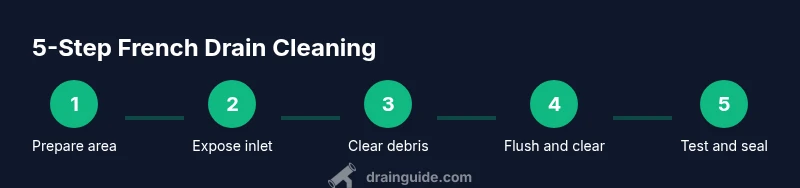
- 1
Prepare the site and safety checks
Set up the work area, turn off nearby power to pumps, and don PPE. Identify the drain route and nearby utilities to avoid accidental damage. Gather tools and place a tarp to catch debris for easy cleanup.
Tip: Keep a dedicated light source at the trench edge so you can see sediment and roots clearly. - 2
Expose the drain inlet and inspect
Carefully remove the grate and clear loose surface debris. Inspect the inlet for clogs or large root masses that resist flow. Photograph or sketch the trench layout to help you reassemble later.
Tip: Do not force the grate; if it won’t come free, pause and re-check for hidden bolts or pins. - 3
Clear surface debris and access the pipe
Clear soil and leaves from the trench opening to expose the pipe entrance. Use a flashlight to look into the pipe and feel for resistance with a rod. If you encounter obvious roots, plan for targeted removal with the snake or pruner.
Tip: Work gradually to minimize soil collapse; support the trench sides with your free hand when necessary. - 4
Clear the pipe with a snake and root removal
Insert the drain snake and advance slowly to break up blockages. Rotate and pull back to remove debris and cut root strands as you go. Remove loosened material into a bucket.
Tip: Use short, steady pushes; forcing the auger can damage the pipe. - 5
Flush the system and verify flow
Reconnect the surface access and slowly run water through the line to push remaining material toward the outlet. Watch for a clean, steady flow and verify there are no leaks along exposed joints. Repeat the flush if the flow remains sluggish.
Tip: Flush from the downstream end if possible to ensure the entire path clears. - 6
Restore surface and test long-term drainage
Replace the grate, backfill gently, and compact soil around the trench. Conduct a longer-term test after a rain cycle or a controlled flush to ensure water continues to drain away from the foundation.
Tip: Consider installing a sediment sock or filter at the inlet to extend cleaning intervals.
Got Questions?
What causes a french drain to clog?
Clogs are usually caused by sediment buildup, root intrusion, and debris from nearby landscaping. Regular maintenance helps prevent these issues by keeping sediment moving through the system.
Clogs are usually sediment, roots, or debris, and regular maintenance can prevent them.
Can I clean a french drain without removing the cover from the catch basin?
In many cases you can clean without removing the cover if the inlet is accessible and you can reach with a long tool. For deeper blockages, removing the grate may be necessary to access the pipe.
You can often clean without removing the cover, but for deeper blockages you might need to take off the grate.
How often should I clean a french drain?
There’s no universal schedule. In moist climates or with heavy root presence, inspect annually or after heavy rains and clean as needed.
Schedule depends on moisture and roots; inspect yearly and clean as needed.
Is chemical cleaner safe for french drains?
Chemical cleaners are not recommended for french drains. They can damage the pipe and alter soil biology; mechanical clearing is preferred.
No—chemical cleaners can harm the drain and soil; use mechanical clearing instead.
What should I do if water still pools after cleaning?
Recheck for root intrusion or crushed sections, inspect joints for leaks, and test at multiple outlets. If pooling continues, professional assessment may be necessary.
If pooling continues, recheck for roots or damaged joints, and consider professional help.
Can I clean a french drain in winter?
Winter conditions make cleaning risky; wait for thaw or perform only if the trench is accessible above ground and safe. Keep tools dry and avoid frozen soil.
Winter cleaning is risky; wait for thaw or ensure the area is safe before proceeding.
Watch Video
The Essentials
- Inspect the system before cleaning to identify blocks and roots
- Choose the appropriate cleaning method based on blockage
- Flush and verify flow to confirm clearance
- Maintain the drain with seasonal checks and protective filters