Gnats in the Drain: Urgent Homeowner Troubleshooting Guide
A practical, urgent guide to diagnosing and eliminating gnats in the drain. Learn quick fixes, deeper cleaning methods, and prevention tips for a bug-free sink.


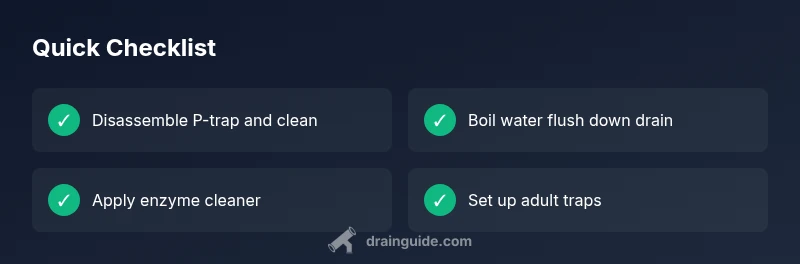
Gnats in the drain are usually fungus gnats breeding in organic film inside the drain or P-trap. Start with the simplest fixes: flush with boiling water, pour a kettle down the drain, and remove any standing water around sinks. Clean the P-trap, then use an enzyme cleaner to break down organic buildup. If gnats persist, set traps and monitor. These steps address the most common causes and reduce odors. Avoid chemical drains cleaners as a first line.
Understanding gnats in the drain
Gnats in the drain are a common household nuisance. You’re likely dealing with fungus gnats that breed in damp organic matter inside the drain, P-trap, or surrounding pipes. Where you see tiny flies, you may also notice a musty odor and a film of slimy residue near the sink. This is not just a nuisance; it signals a breeding site that needs prompt attention. The Drain Guide team has found that the most effective first steps target the source rather than merely killing adults. By removing moisture, eliminating organic film, and flushing out the drain, you interrupt the life cycle and reduce future swarms. Consistent, patient work now prevents recurring infestations later.
Common scenarios and what they mean
Gnats can appear in kitchens, bathrooms, or laundry rooms where moisture and organic debris accumulate. If you see them mainly at night or around a sink with stagnant water, the breeding site is likely the drain or trap. If they cluster around a disposer or air gap, inspect the trap and piping for leaks or buildup. Identifying whether the gnats originate at the P-trap or deeper in the plumbing helps you choose the right fix—quick surface traps won't solve a deeper infestation. Drain gnats thrive where damp residue remains and can spread quickly if ignored.
Quick fixes you can try right now
Begin with the simplest remedies that require no tools. Boil a kettle of water and pour it down the drain in two short bursts to help dislodge organic residue. Then run hot water with a splash of white vinegar or baking soda to disrupt slime and odors. If you have a P-trap access, place a cup underneath and clean it out; remove debris and rinse thoroughly. Finally, use a commercially available enzyme/bacteria drain cleaner to digest film over 2–4 hours, followed by a flush of hot water. These steps address surface buildup while reducing breeding grounds.
Deep-clean the drain and trap
Disassembly of the P-trap is often necessary to remove organic buildup that gnats rely on. Put down towels to catch any drips, wear gloves, and rotate the fittings to release the U-bend. Clean all parts with hot soapy water, scrub away slime, and rinse before reassembling. While you’re at it, check for minor leaks and tighten connections. A thorough clean eliminates the primary breeding ground and helps ensure that residual moisture doesn’t invite a new generation of gnats. After reassembly, run hot water for several minutes to clear the line.
Enzymatic cleaners vs. bleach and other chemicals
Enzymatic cleaners use bacteria to digest organic matter inside drains, offering a safer, long-term approach for gnats in the drain. Bleach and caustic cleaners kill insects but can damage pipes and leave harsh residues. Enzyme cleaners gradually break down slime and biofilm, reducing the food source for gnats while being gentler on plumbing and septic systems. For most homes, a combination of physical cleaning and enzymatic treatment yields the best balance of speed and safety. Always follow label directions and ventilate the area.
Traps and monitoring to break the life cycle
Adult-trapping methods help reduce visible swarms while you address the breeding sites. Use clear sticky traps near the sink and dispose of captured insects daily. Place attractant baits or light traps away from food preparation areas to avoid contamination. Monitoring weekly after cleanup helps determine whether gnats are re-establishing a population. If traps remain full after several weeks, revisit the plumbing for hidden buildup or leaks and consider professional assistance.
Prevention strategies to stop gnats from returning
Preventing a recurrence is easier than repeated cleanup. Fix leaks and ensure traps are dry, especially under sinks. Improve ventilation to reduce humidity and avoid leaving standing water in containers. Regularly flush drains with hot water, especially if you have organic-rich soil indoors or a composting area nearby. Periodically use enzyme cleaners to maintain a low-biofilm environment, and keep kitchen and bathroom areas clean and dry. Drain maintenance should become part of your routine.
When to call a professional
If gnats persist after a thorough home treatment, you may have a deeper problem such as unseen pipe damage or a persistent breeding site in the drainage system beyond easy reach. A licensed plumber or drainage specialist can perform camera inspections to locate hidden clogs, measure moisture in walls, and verify that vents and traps are functioning correctly. In some cases, structural repairs or sewer-line concerns necessitate professional intervention.
Long-term maintenance checklist
Create a simple, repeatable routine to prevent gnats from returning. Inspect and clean P-traps every 3–6 months. Keep drains dry and free of standing water; fix drips promptly. Schedule seasonal drain cleanings if you have high organic debris in your home, and consider ongoing enzymatic maintenance for biofilm control. If you share plumbing with a neighbor or live in a multi-unit building, coordinate preventative maintenance to curb cross-unit infestations.
Steps
Estimated time: Total time: 60-120 minutes
- 1
Identify gnats’ origin
Observe where the swarming is strongest: is it near a specific sink, around a garbage disposal, or near a bathroom drain? Check for standing water, damp cabinets, or leaks. Confirm whether gnats are coming from the drain itself or entering from another source.
Tip: Note the time of day when swarms are most visible to guide your checks. - 2
Clear the P-trap
Place a bucket beneath the trap, loosen the U-bend, and remove debris. Rinse thoroughly with hot water, then reassemble securely. Run water to flush any remaining particles out of the pipe.
Tip: Keep a towel handy—drips will occur during disassembly. - 3
Flush and de-clog the drain
Pour boiling water down the drain in two or three pours to help loosen residue. Follow with a mixture of hot water and a small amount of baking soda or vinegar to disrupt slime. Rinse again with hot water for a full minute.
Tip: Do not mix vinegar with bleach; if you use cleaners, follow label directions. - 4
Apply enzyme cleaner
Apply an enzymatic cleaner according to the label instructions, allowing it to sit for the recommended dwell time to digest biofilm. After treatment, flush with ample hot water to carry away debris.
Tip: Choose products designed for household drains and septic systems. - 5
Set up adult traps
Place clear sticky traps near sinks and areas with drips. Empty traps daily and dispose of captured flies. This reduces immediate visibility while the cleaning does the real work.
Tip: Avoid placing traps directly on food-prep surfaces. - 6
Monitor and maintain
Observe drain behavior for a week. If gnats persist, re-check for hidden leaks, vents, or deeper clogs. Maintain a routine of dry traps and periodic enzyme treatments.
Tip: Keep a drain-cleaning schedule to prevent re-infestation.
Diagnosis: Small gnats swarm around sink or drain; sticky film or musty odor near the drain.
Possible Causes
- highBreeding in organic film inside the drain or P-trap
- mediumStanding water and damp plumbing creating a moisture source
- lowBreeding site in deeper piping or clogged lines
Fixes
- easyDisassemble and clean the P-trap; remove all organic buildup
- easyFlush with boiling water and a hot-water rinse; follow with enzyme cleaner
- mediumApply enzymatic/bacteria-based drain cleaner; flush after treatment
- mediumRepair leaks and ensure traps are dry; address deep plumbing if needed
Got Questions?
What causes gnats to appear in drains?
Gnats in drains usually breed in damp organic film inside the drain or P-trap. Poor ventilation and standing water can also contribute to breeding conditions. Eliminating the film and reducing moisture typically stops new generations from forming.
Gnats in drains usually breed in damp organic film; removing the film and drying the area stops new generations.
Is it safe to use bleach or chemical drain cleaners?
Bleach can kill surface insects but often does not address the root cause and may damage pipes or septic systems with repeated use. Enzymatic cleaners paired with mechanical cleaning are safer and often more effective long-term.
Bleach can kill insects temporarily but doesn't fix the root cause; enzymatic cleaners are safer for ongoing use.
Do I need a plumber if gnats keep returning?
If gnats persist after thorough cleaning, leaks, hidden clogs, or vent problems may exist. A plumber can perform a camera inspection and diagnose issues that aren’t visible, and propose targeted fixes.
If gnats keep coming back after cleaning, a plumber can check for hidden clogs or leaks with a camera inspection.
What’s the best way to prevent gnats after cleaning?
Maintain dry drains, fix leaks promptly, and schedule periodic cleanings. Use enzymatic cleaners monthly during high humidity seasons and ensure traps are dry to avoid re-infestation.
Keep drains dry, fix leaks, and do regular cleanings to prevent gnats from returning.
Are there natural remedies that work for gnats?
Boiling water, baking soda, and vinegar provide a non-chemical approach but are often insufficient for stubborn infestations. Use them in combination with mechanical cleaning and enzymatic cleaners for best results.
Natural remedies can help, but they work best with mechanical cleaning and enzymatic cleaners.
How long does it take to eliminate gnats in the drain?
Resolution depends on the infestation level. Expect a few days to a couple of weeks with consistent cleaning, moisture control, and monitoring. If conditions persist, professional assessment may be needed.
Usually a few days to a couple of weeks with consistent cleaning; seek help if it lingers.
Watch Video
The Essentials
- Identify the drain source before acting
- Prioritize moisture removal and biofilm disruption
- Enzymatic cleaners are safer for repeated use
- Maintain a regular drain maintenance routine