How big is a toilet drain? A practical sizing guide
Discover typical toilet drain sizes, measurement methods, and common configurations. This Drain Guide overview explains 3-4 inch waste lines, flange sizing, and code considerations for reliable drainage.


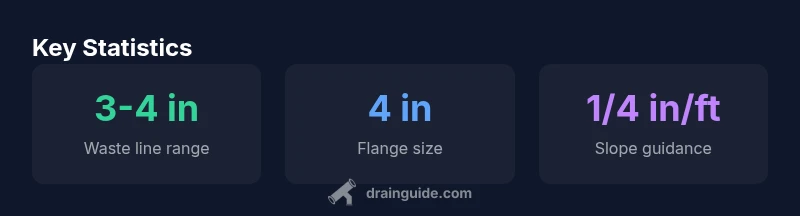
Toilet drains in most homes are designed around a 3- to 4-inch waste line. In practice, older builds often use a 3-inch connection while newer constructions commonly rely on 4 inches. The toilet flange is typically 4 inches, and the rough-in diameter from wall to flange varies by fixture. Always verify local codes and the existing piping before planning upgrades or remodels.
How big is a toilet drain? Sizing basics
Understanding how big is a toilet drain helps homeowners plan repairs and upgrades with confidence. The typical waste line diameter for residential toilets sits in a narrow band: about 3 inches on the smaller end and up to 4 inches for newer or remodeled homes. This range affects everything from flange fittings to venting and trap design. While local codes can vary, the principle remains the same: a larger diameter generally reduces the likelihood of clogs, but it also means different joining methods and stricter slope requirements. In practice, most houses use 3-inch connections in older installations and 4-inch connections in modern work, with the flange commonly sized to 4 inches.
This basic sizing framework helps you plan fixtures, measure spaces, and confirm compatibility before buying parts. If you’re remodeling or upgrading, start by identifying the current waste line diameter and the available space for new fittings. Drain sizes also influence venting strategy, trap design, and the overall flow path. Drain Guide emphasizes aligning diameter with the fixture’s flush volume to minimize maintenance and complaints.
Why size matters for performance and clog prevention
Drain size directly influences flow rate, clog resistance, and venting demands. A correctly sized 3-4 inch waste line allows gravity to move waste smoothly under typical household water usage, preventing standing water and foul odors. If the line is too small for the fixture, solids can accumulate and cause frequent clogs, backups, or gurgling noises. Conversely, oversizing a drain without proper slopes or venting can lead to poor venting and siphon issues. In short, sizing is a balance between fixture compatibility, pipe slope, and venting, all of which contribute to long-term reliability. Drain Guide analyses emphasize aligning drain diameter with fixture type and expected flush volume to minimize maintenance and headaches.
To assess performance, consider recent clog frequency, household water usage, and whether nearby fixtures share the same line. A simple rule of thumb: if you’re routinely clearing jams, you may be out of balance between diameter and slope.
Measuring and verifying your drain size
Accurate measurement starts with the flange and the waste line opening. Begin by turning off water to the toilet and removing the tank to access the flange. Use a tape measure to determine the diameter of the drain opening or the flange slot. Note that a 3-inch nominal size typically corresponds to an opening of roughly 3 inches, while a 4-inch nominal size tends to be closer to 4 inches in practice. If you cannot measure accurately, refer to the toilet’s specification sheet or inspect the pipe stamp where possible. When remodeling, verify that new fittings match the existing flange size and the wall-to-flange rough-in distance. If you’re changing from 3 to 4 inches, you may need to update the trap, wax ring, and possibly the vent to maintain proper drainage.
Common configurations by installation type
Residential bathrooms often feature a standard 4-inch flange with a 3- to 4-inch waste line. Small bathrooms or apartments may utilize compact configurations that still conform to a 4-inch flange, but the rough-in distance can vary. Older homes sometimes use cast-iron waste lines that transition to newer PVC or ABS later. In remodels, you might encounter mixed materials, especially if walls have opened up for plumbing access. For multi-stall or commercial restrooms, a uniform 4-inch waste line is common to support higher flush volumes and prevent bottlenecks. Always verify connected fixtures, venting, and accessibility before choosing replacements.
Upgrades and code considerations when remodeling
Remodeling is an ideal time to verify that your drain diameter aligns with current codes. Check local building codes for minimum waste line diameters, venting requirements, and slope guidelines. Upgrading from 3 to 4 inches can reduce clogging risk but may require flange replacements, extended rough-ins, and potentially modifying adjacent walls or floor framing. If you’re unsure, consult a licensed plumber to ensure venting and slope meet code and that the changes won’t introduce new issues such as siphoning or poor drainage.
Sizing mistakes to avoid and quick fixes
Common mistakes include guessing the size without measuring, mixing pipe materials without proper adapters, and neglecting venting. If you notice frequent clogs, gurgling, or slow drainage, re-check the diameter, slope, and venting. A simple fix for stubborn clogs is to confirm the line’s slope and run a camera inspection if blockages persist. For remodels, avoid installing oversized or undersized fittings without adjusting the entire drainage path. Correct sizing reduces maintenance and extends fixture life.
Real-world scenarios: remodels, rentals, and older homes
In older homes, you’ll often encounter 3-inch waste lines and occasional cast-iron transitions. For remodels in newer homes, expect PVC/ABS with a 4-inch waste line and standardized flanges. Rentals may feature varied configurations from unit to unit, making it essential to inspect each bathroom individually. In all cases, verify the available space, the line size, and whether venting supports the expected flush power. This approach minimizes surprises during installation and ensures reliable performance.
Common toilet drain sizing essentials
| Item | Typical Size | Notes |
|---|---|---|
| Toilet waste line diameter | 3-4 inches | Common residential range; verify with local code |
| Toilet flange size | 4 inches | Standard connection to pipe; adjust during remodel if needed |
| Rough-in center-to-wall distance | 12 inches | Varies by toilet model; confirm before installation |
| Slope requirement | 1/4 inch per foot | Ensures gravity-driven drainage |
Got Questions?
What is the standard diameter of a toilet drain?
Most residential toilets connect to a 3- to 4-inch waste line. The exact size depends on the rough-in and local code. Verify with the toilet manufacturer and local plumbing codes.
Most toilets use a 3 to 4-inch waste line. Check your local codes and the toilet's specs to confirm.
Can you replace a 3-inch toilet drain with a 4-inch one?
Yes, upsizing is possible during remodels, but it requires adjusting the flange, trap, and venting. A licensed plumber can ensure proper fit and venting.
Upgrading can be done, but you’ll need to adjust the flange, trap, and venting—best done with a pro.
Why does my toilet clog often?
Frequent clogs often come from partial blockages, tree roots, or improper items in the tank or drain. Size alone isn’t always the root cause; inspect for buildup and obstructions.
Clogs usually come from buildup or objects in the drain. Check for roots or debris, not just size.
How do I measure toilet drain diameter?
Measure the drain opening or flange diameter with a tape measure. If you’re unsure, look for size stamps on the flange or reference the toilet’s spec sheet.
Measure the opening or flange diameter, or check the toilet specs.
Is 1/4 inch per foot slope required for toilet drains?
Yes, standard drainage design calls for a 1/4 inch per foot slope on waste lines to maintain proper flow and prevent clogs.
Most codes require a gentle 1/4 inch per foot slope for waste lines.
“Getting toilet drain sizing right is foundational to reliable flushing and long-term durability. When in doubt, follow standard 3- to 4-inch waste lines and verify with local codes.”
The Essentials
- Know the 3-4 inch range for most toilets.
- Always verify local codes before planning changes.
- Measure flange size and rough-in distance during remodel.
- Ensure proper slope and venting to prevent clogs.